

Kids’ headphones need to suit the device and listening situation, not just fit a child’s head. A wired model avoids charging, while Bluetooth adds freedom of movement; noise canceling can help on trips, but features and volume controls differ by model.
This comparison of the best kids headphones covers wired and wireless options, listed volume limits, microphones, battery-life claims, and noise-canceling features. Check the connection and volume settings against your child’s device and the way they will listen.

Pros
- Customizable volume and listening-time limits
- Listening reports in the JBL Headphones app
- Claimed 50-hour battery life
- Built-in microphone
Cons
- Who should skip it: Children needing volume above 85 dB

Pros
- Long, braided cable
- Foldable for storage
- Adjustable headband
Cons
- No built-in microphone, remote, or volume control
- Skip if you need inline mic or volume controls

Pros
- Customizable volume and listening-time limits
- Daily and weekly usage reports
- Active noise cancelling
- Built-in microphone
Cons
- Who should skip it: buyers needing stated battery-life or connectivity details

Pros
- Foldable for easier storage
- Adjustable headband
- Built-in microphone
Cons
- Skip if your device lacks a 3.5 mm jack
- Listing gives conflicting volume-limit claims

Pros
- Wireless and wired listening options
- Up to 30 hours of claimed playtime
- Included protective carrying case
- Built-in microphone
Cons
- Who should skip it: listeners wanting higher volume

Pros
- In-line microphone and playback controls
- Audio-sharing jack needs no splitter
- Foldable, with braided cable
Cons
- Requires device with 3.5 mm audio jack
- Who should skip it: buyers seeking wireless headphones

Pros
- Built-in microphone
- Fold-flat design
- Customizable stickers
- JBL-stated 85 dB volume limit
Cons
- Wired connection, skip if wireless headphones are needed
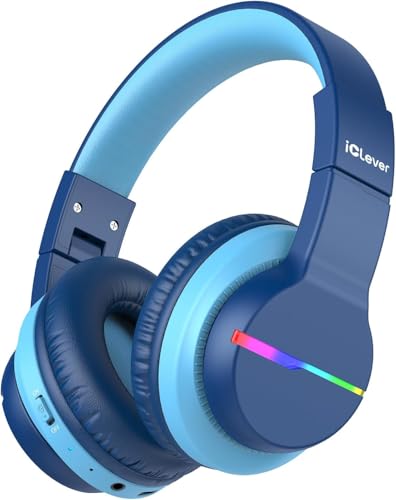
Pros
- Two selectable volume limits
- Manufacturer-rated 85-hour playtime
- USB-C charging and AUX option
- Built-in microphone
Cons
- Volume is limited to 74 or 85 dBA
- No safety certification is specified
- Skip if child needs uncapped volume

Pros
- TÜV Rheinland Hearing Care Certified
- Transparency Mode and wired ANC
- Long stated battery life with ANC off
- Includes storage case
Cons
- ANC-on battery life unspecified
- Skip if ANC-on runtime is essential

Pros
- Stated 80 dBA volume limit
- Two ANC modes
- USB-C fast charging
Cons
- ANC unavailable with wired connection
- Skip if your child needs ANC with wired audio
The Best Kids Headphones by Use Case
Best for App-Based Listening Controls: JBL Junior 320BT – On-Ear Kids Headphones
The JBL Junior 320BT is a wireless on-ear choice for families who want to set listening limits from an app. Its listing specifies an automatic maximum of 85 dB, with options to set a lower limit and daily listening-time limit. Parents can view daily and weekly listening reports in the JBL Headphones app, and protect settings with a PIN.
Reasons to buy:
- App controls support lower volume limits and daily listening-time limits.
- Built-in microphone supports calls and online learning.
- The listing claims up to 50 hours of battery life and USB-C charging.
Reasons to avoid:
- It connects wirelessly, so check that the child’s device supports Bluetooth.
- Its on-ear design may not suit every child as well as an over-ear fit.
Who should skip it: Families who need a wired headset or prefer over-ear cups should compare those options instead.
Best for Wired School Use: JBL Junior 320 Kids Headphones, Wired
The JBL Junior 320 is a straightforward wired pick for school devices with a 3.5 mm headphone jack. The listing specifies an 85 dB maximum, a built-in microphone, a fold-flat design, and a padded headband. It avoids battery upkeep, though the device needs a compatible audio connection.
Reasons to buy:
- The 3.5 mm connection does not depend on Bluetooth pairing or headphone battery charge.
- A built-in microphone supports calls and remote lessons.
- The fold-flat design is intended for packing in a school bag or travel bag.
Reasons to avoid:
- The cable limits movement compared with wireless models.
- Confirm the device has a 3.5 mm jack; newer tablets may need a separate adapter, which is not specified as included.
Who should skip it: Children who need wireless listening or active noise canceling should consider a different model.
Best for Noise-Canceling Travel: iClever Q950 Hearing Care Certified Noise
The iClever Q950 is aimed at travel and noisy surroundings, with hybrid active noise cancellation and a transparency mode. Its listing claims up to 35 dB noise reduction and says ANC works with a wired connection. It also specifies a volume limit below 80 dBA, 60 hours of battery life with ANC off, and an included storage case.
Reasons to buy:
- ANC and transparency mode give families options for noisy travel and greater awareness of surroundings.
- The listing specifies TÜV Rheinland Hearing Care certification and a below-80 dBA limit.
- Smart ear detection and audio sharing are listed features for pausing playback and sharing audio between two headsets.
Reasons to avoid:
- The listed 60-hour battery life applies with ANC off, not with noise cancellation running.
- Confirm the child is comfortable with the fit and controls; the product information does not give sizing dimensions.
Who should skip it: Families who need an inexpensive, uncomplicated wired school headset may not need its extra travel features.
Best for Wireless and Wired Flexibility: Belkin SoundForm Mini Kids Headphones
The Belkin SoundForm Mini supports Bluetooth 5.3 and wired listening through its 3.5 mm port. That makes it useful when a child switches between a compatible wireless device and a device that needs a cable. The listing specifies a built-in microphone, an 85 dB limiter, up to 30 hours of wireless playtime, and a protective case.
Reasons to buy:
- Wireless and wired modes provide a fallback when Bluetooth is unavailable or the battery is depleted.
- The listing specifies kid-sized over-ear cushions and a case with a hard exterior.
- Belkin says the design was durability-tested for 3,000 uses; this is a manufacturer claim, not a guarantee of how a specific child’s pair will hold up.
Reasons to avoid:
- The stated 30-hour playtime is for a full charge; actual use can vary.
- The included AUX cable is 4 feet, which may be shorter than some families prefer for travel.
Who should skip it: Families who want app-based parental listening reports or active noise canceling should compare other picks.
Best for Long Wireless Battery Claims: iClever BTH12 Kids Bluetooth Headphones 85H
The iClever BTH12 is a wireless over-ear model with a wired AUX option for compatible devices. Its listing claims up to 85 hours of playtime and gives two volume-limit settings, 74 or 85 dBA. A microphone supports calls, while the cable includes controls and a sharing jack for connecting another headset.
Reasons to buy:
- The two listed volume settings let a parent select 74 or 85 dBA using a key combination.
- Bluetooth and AUX listening support different device and battery situations.
- The listing specifies USB-C charging and a microphone with call controls.
Reasons to avoid:
- The 85-hour figure is a manufacturer claim, not a guaranteed result for every listening pattern.
- LED lighting is listed, but families who want a plain appearance should check whether that feature suits their child.
Who should skip it: Buyers who want active noise canceling or app-based listening reports should look elsewhere.
Also Considered
The JBL Junior 470NC – Cancelling Kids Headphones could suit families who want ANC plus JBL app-based volume and listening-time controls, but its published details do not specify battery life or wired listening.
The noot products K11 Kids Headphones with Wired Cord is a simple, foldable wired option with a long, braided 5-foot cable and a listed 24-month warranty; it lacks a built-in microphone and headphone volume control.
The Acer Kids Headphones for School, 85-94dB Limiter may suit buyers seeking wired over-ear headphones with two stated limiter modes, but the listing’s 85 to 94 dB range makes it important to check which mode is selected.
The EarFun K1 Kids Headphones Wired with Mic offers a microphone, in-line controls, and an audio-sharing jack for wired listening, but it does not provide wireless playback.
The iClever BTH20 Active Noise Cancelling Headphones could suit travel, with Bluetooth, wired audio, and ANC, but its listing says ANC is unavailable in wired mode.
How to Choose Kids’ Headphones
Check the volume limit and who controls it
Volume limits vary. The listed models include fixed 85 dB limits, selectable limits such as 74 or 85 dBA, and an Acer model specifying 85 or 94 dB modes. Those numbers and units are not interchangeable statements, so read the model’s own listing and instructions rather than assuming every limiter works the same way.
Consider whether you want settings managed on the headset or through an app. The JBL Junior 320BT lists app reports, configurable volume and listening-time limits, and a PIN. A simpler wired model may have fewer settings to manage, but it may not provide the same parental controls. Volume limiting does not remove the need for sensible listening habits and adult supervision.
Match wired or wireless listening to the device
A 3.5 mm cable can be convenient for school devices, but first check that the tablet, computer, or other player has a compatible headphone jack. Some devices may need an adapter, and the published product information does not say that an adapter is included. A wired connection also means a cable can snag or restrict movement.
Bluetooth removes the cable but needs a compatible device and charging. Dual-mode models such as the Belkin SoundForm Mini and iClever BTH12 also list AUX listening, which can help when wireless pairing is unsuitable. Check exactly what comes in the box and whether the included cable fits the child’s device.
Decide whether ANC fits the listening situation
Active noise cancellation is most relevant for settings such as flights, where steady background noise can make listening harder. The iClever Q950 lists ANC and a transparency mode, while the iClever BTH20 lists two noise-reduction modes and says ANC is not available over its wired connection. Noise reduction claims describe manufacturer specifications, not a promise that all outside sound will disappear.
For classrooms, walking, or situations where a child needs to hear nearby people, consider whether blocking sound is appropriate. A transparency mode can help keep a listener more aware, but it should not replace adult supervision. For more travel-oriented comparisons, see our guide to headphones for travel.
Compare battery claims, charging, and backup options
Battery life matters most on long trips and busy school days. The products list different maximum playtime claims, and some specify whether the figure applies with ANC off. Treat those numbers as listing claims rather than guaranteed everyday results. Check charging type and any quick-charge claim if a short recharge window matters to your family.
A wired fallback can keep compatible headphones usable when the battery is empty, but it does not mean every feature works in wired mode. For example, the BTH20 listing specifically excludes ANC during wired use. Confirm whether microphones, controls, and noise cancellation work in the connection mode your child will use.
Fit, comfort, and packing
Headband adjustment, cushion style, and weight can affect whether a child wants to wear headphones for a lesson or journey. The listings describe adjustable headbands and padded cups on several models, but they do not provide a consistent set of dimensions for comparing fit. If possible, check the retailer’s sizing and return terms, and make sure the headset does not press uncomfortably.
Foldable designs can take less room in a bag, while a supplied case can add protection during travel. A case is listed with the Belkin SoundForm Mini and iClever Q950; do not assume other models include one. For more audio options, browse the over-ear headphones category or the broader Audio category.
How We Compared
This guide compares the published product listings, including connection types, stated volume limits, battery-life claims, microphones, fit and folding details, and noise-canceling features. We also considered listed accessories, app controls, warranty information, and customer feedback where supplied. Product-specific claims are attributed to the listing when relevant, and missing details are treated as points to verify rather than assumed features.
Frequently Asked Questions
Will these headphones work with an iPad or school Chromebook?
Compatibility depends on the exact device and connection. A wired model needs a matching 3.5 mm jack or a suitable adapter, while a Bluetooth model needs Bluetooth support. Check the device’s ports and the headphone listing before buying; included adapters are not specified for these picks.
Are wired headphones better for school?
They can be simpler when the school device has a headphone jack because they do not need charging or wireless pairing. The cable can limit movement, and a device without a 3.5 mm port may need an adapter. Choose based on the school’s device and any classroom rules.
Does a volume limiter guarantee safe listening?
No headphone listing can guarantee safe listening in every situation. The listed models state different limits and controls, so check the specific mode and settings. Keep listening time and the child’s surroundings in mind, and follow the manufacturer’s instructions.
Do kids need active noise canceling?
Not necessarily. ANC may be useful during travel with steady background noise, while basic wired or Bluetooth headphones may be enough for home learning. Consider whether the child needs to hear people nearby, and check whether ANC works in wired mode if that connection matters.
Can a child use Bluetooth headphones when the battery runs out?
Only if that model supports wired playback and you have a compatible cable and device. The Belkin SoundForm Mini and iClever BTH12 list AUX connections, but features can differ by mode. The iClever BTH20 listing, for example, says ANC is unavailable when wired.

Write Your Review
No reviews yet. Be the first to share your experience!