

Kids’ gifts can miss the mark when an activity is too simple, too complicated, or a poor fit for how a child likes to play. This guide to Best Gifts for Kids compares creative projects, logic toys, outdoor play, and conversation-friendly books so you can match a gift to age, interests, and where it will be used.
Use the age guidance and listed features as starting points, then check the product listing for current contents and setup details. For more seasonal ideas, browse our Gift Guides and Christmas and Holiday sections.

Pros
- Glow-in-the-dark paints
- Two brush widths
- Transfer stickers included
Cons
- Paints need light exposure before glowing
- Who should skip it: Children wanting glow without preparation

Pros
- Large 16-inch drawing surface
- Nine colorful lighting modes
- Tracing papers and markers included
- Built-in stand
Cons
- Battery runtime is not specified
- Who should skip it: Buyers who need a stated battery runtime
Pros
- Screen-free creative activity
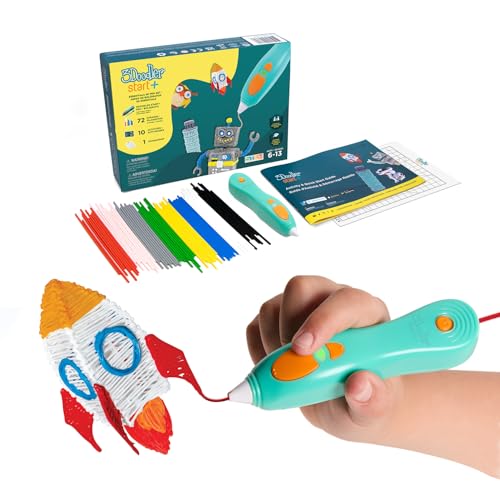
- 72 mixed-color filament strands included
- Stencils and activity guide included
Cons
- Uses only 3Doodler Start filament
- Skip if you need broad filament compatibility

Pros
- Combines marble play with logic challenges
- Includes nine towers and three marbles
- Supports solo or collaborative problem-solving
Cons
- Skip it if you want mainly freeform marble building

Pros
- 30 individually wrapped toys
- Useful for party favors and classroom prizes
- Small size suits gift bags
Cons
- Random assortment; skip if specific designs are needed
- Small pieces call for age-appropriate supervision

Pros
- More than 300 questions
- Stated age range of 7 to 13
- Paperback binding
Cons
- Question-focused format may not suit story-seeking readers
- Who should skip it: readers outside its stated age range

Pros
- Video calling adds visual interaction
- Four voice effects
- Rechargeable built-in battery
- Simple press-to-talk controls
Cons
- Who should skip it: families needing a specified battery runtime
Pros
- More than 250 jokes and wordplay activities
- Several joke and riddle formats
- Family-friendly content with illustrations
Cons
- Who should skip it: readers seeking activities beyond humor
Pros
- Kid-powered foot-pump launches
- Switchable rocket lights
- Adjustable launch angle
- Learning guide included
Cons
- Who should skip it: families seeking an indoor toy

Pros
- Over 1,111 answers
- Hardcover binding
- Dimensions provided
Cons
- Skip if you need a listed topic range or age guidance
The Best Kids’ Gifts by Use Case
Best for Glow-in-the-Dark Crafts: Rock Painting Kit- Glow in The Dark Rock Kit
The JOYIN Rock Painting Kit- Glow in The Dark Rock Kit gives children ages 6–12 a hands-on art activity with rocks as the canvases. Its listed contents include glow-in-the-dark paints, two brush types, and transfer stickers, so kids can make designs with both broad color areas and finer details. The paint needs exposure to a close light source for 15–30 seconds before a dark display, according to the listing.
Reasons to buy:
- Glow-in-the-dark paint adds a display element after the craft session.
- Two brush types support both larger painted areas and more precise lines.
- The listed age range and included stickers make the activity approachable for a range of young artists.
Reasons to avoid:
- Painting involves supplies that can make a mess, so set up a protected work area.
- The glow effect depends on light exposure, and the listing does not specify how long it lasts.
Who should skip it: Choose another gift if the child prefers building toys or activities that need little adult help with setup and cleanup.
Best for Screen-Free 3D Art: 3Doodler Start+ Essentials 3D Pen Set for Kids
The 3Doodler 3Doodler Start+ Essentials 3D Pen Set for Kids is designed for children ages 6 and up who want to draw objects that stand off the page. The set includes a pen, a DoodlePad or Doodlemat, 72 strands of mixed-color Start+ plastic, a USB-C cable, and an activity guide. Its maker describes the pen as having no hot parts and adds a safety stand-by mode; follow the supplied instructions and age guidance.
Reasons to buy:
- Three-dimensional drawing gives creative kids a different challenge from paper-based art.
- The activity guide and stencils offer a starting point for children learning how to use the pen.
- The included mixed-color material and mat provide supplies for getting started.
Reasons to avoid:
- The pen uses 3Doodler Start plastic, so check refill availability and compatibility before buying additional material.
- USB-C charging is listed, but the published data does not state battery runtime or charging time.
Who should skip it: Look elsewhere if the child wants an open-ended toy without a learning curve, or if you want a gift with no consumable drawing material.
Best for Logic Challenges: ThinkFun Gravity Maze – Falling Marble Logic Game
The ThinkFun ThinkFun Gravity Maze – Falling Marble Logic Game suits children who like solving a defined puzzle by arranging pieces and predicting where a marble will travel. The listing recommends it for ages 8–12 and specifies nine towers, three marbles, a game grid, and a target piece. Unlike a craft kit, its main appeal is repeated rounds of planning and problem-solving, with the option to build and solve alongside someone else.
Reasons to buy:
- Puzzle challenges give children a clear goal and a reason to think through each build.
- The tower pieces and grid support hands-on construction as well as logic practice.
- The age guidance makes it a useful option for school-age puzzle fans.
Reasons to avoid:
- The listing does not describe the number or difficulty range of the included challenges.
- Children looking for free-form construction may prefer a toy without a puzzle-solving focus.
Who should skip it: Pick a craft or outdoor toy instead for a child who is not drawn to logic puzzles and structured goals.
Best for Backyard Communication Games: Stocking Stuffers for Kids Toys Gifts
The vilicert Stocking Stuffers for Kids Toys Gifts is a pair of rechargeable video walkie-talkies for children ages 3 and up, according to the listing. The product adds a built-in screen to two-way radio play, along with four voice effects and video filters. The stated range is up to 100 meters in indoor or neighborhood conditions and up to 400 meters outdoors in open conditions; actual range can vary with surroundings, so treat these as listing claims rather than guaranteed coverage.
Reasons to buy:
- Two-way communication can make hide-and-seek, room-to-room play, and outdoor adventures more interactive.
- Rechargeable batteries mean families do not need to buy separate AAA batteries for this product.
- Simple buttons and push-to-talk controls are described as easy for young children to use.
Reasons to avoid:
- The published details do not state battery runtime, charging time, or how the video feature performs in different lighting.
- The listed range varies by setting, so do not rely on it as a safety or supervision device.
Who should skip it: Choose a simpler toy if the child does not need a screen or if you want a communication device for dependable contact rather than play.
Best for Outdoor STEM Play: National Geographic LED Air Rocket Launcher Toy
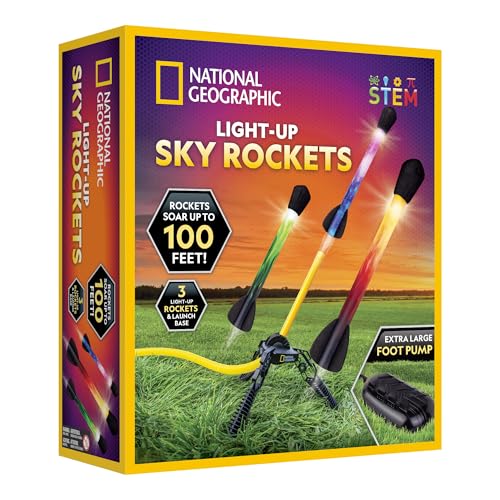
The Blue Marble National Geographic LED Air Rocket Launcher Toy pairs a foot-pump launcher with foam-tipped rockets that have LED lights. The listing says the rockets can launch up to 100 feet and includes a learning guide with flight experiments and information about motion and aerodynamics. That makes it a fit for children who enjoy active outdoor play and want a simple way to explore how launch angle and force affect a flight.
Reasons to buy:
- A foot pump makes launching a physical activity rather than a battery-powered one.
- LED lights let the rockets stand out during play in lower light, according to the product description.
- The learning guide connects play to flight experiments and basic physics concepts.
Reasons to avoid:
- It needs open outdoor space, and the stated maximum flight distance is not a promise of typical results.
- The published information does not specify the number of rockets included, so verify box contents on the listing.
Who should skip it: Consider an indoor game or book if the child has no suitable open play area or would rather do a quiet activity.
Best for a Large Drawing Surface: Geokay 16" Rechargeable LED Drawing Board
The Geokay Geokay 16" Rechargeable LED Drawing Board combines a 16-inch drawing area with nine light modes, seven markers, 10 double-sided tracing papers, a built-in stand, and cleaning supplies. It is suited to kids who like drawing but may enjoy seeing their work glow or displaying messages and artwork. The listing describes the board as rechargeable and includes a USB-C cable, though it does not specify runtime or charging time.
Reasons to buy:
- The larger stated drawing area gives children room for more elaborate pictures than a small doodle pad.
- Nine lighting modes and a stand support drawing, display, and message-board use.
- Markers, tracing sheets, and cleaning items are included for varied activities.
Reasons to avoid:
- The listing does not state how long a charge lasts, which matters if the board will be used away from a charging point.
- Check the stated 16-inch size against the space available for storage and travel.
Who should skip it: Choose a compact paper-based art kit if portability and minimal storage space matter more than a lit display surface.
Also Considered
The Mantyplay 30 Pack Squishy Toys, Kawaii Squishies Party may suit party bags or classroom reward boxes, but the small, random assortment is less focused as a single activity gift; supervise young children and check age suitability because each piece is about 1–2 inches.
The aspenbookco Would You Rather Book For Kids – 300+ Hilarious could work for children ages 7–13 who enjoy conversation prompts, though the published details do not describe its layout or other contents.
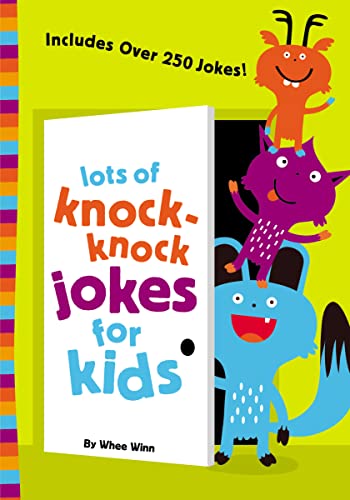
The HarperCollins Lots of Knock-Knock Jokes for Kids: A Funny is a low-fuss option for joke and riddle fans, with more than 250 listed jokes, riddles, tongue twisters, and puns, but it offers a quieter activity than the main picks.
The National Geographic Kids National Geographic Kids Why? may appeal to curious readers: its title promises more than 1,111 answers, but the published information does not provide an age range or more detail about topics.
How to Choose the Best Gifts for Kids
Match the activity to the child’s age and interests
Age guidance is a starting point, not a guarantee that every child will enjoy a toy. The rock-painting kit lists ages 6–12, the 3D pen starts at age 6, and Gravity Maze is aimed at ages 8–12. Compare those ranges with the child’s interest in art, building, puzzles, or active play. For younger children, check the full listing and packaging for age and supervision guidance before purchase.
Decide where the gift will be used
Space can determine whether a gift gets used often. The rocket launcher calls for open outdoor play, while the drawing board and logic game are more suited to a table or indoor activity. Walkie-talkies make sense when children can move between rooms or play areas, but their listed range is conditional on the environment. Check available play space and storage before choosing a larger or outdoor-focused item.
Check setup, supplies, and charging needs
Some gifts are ready for a first activity with included materials; others may need an adult to arrange a protected work area or explain the controls. The drawing board includes markers and tracing papers, and the 3D pen set includes Start+ plastic, a mat, and an activity guide. Both rechargeable products list USB-C cables, but battery runtime is not specified. Verify what comes in the box and whether replacement craft material or charging access will be convenient.
Choose structure or open-ended play
A puzzle with a defined goal can suit a child who likes solving problems, while a drawing surface or painting kit gives more room for personal choices. Gravity Maze centers on arranging towers to guide a marble; the art kits focus on making and displaying creations. Look for clues in the child’s favorite activities. If they prefer clear instructions, prioritize guided challenges; if they like making things their own way, consider a creative kit.
Review safety and adult supervision needs
For children’s products, check the manufacturer’s age guidance, instructions, and any warnings on the current listing or package. Craft supplies can require a protected work surface, and the small squishy toys deserve particular care around young children. Use the toys as intended, keep small pieces away from children who may put them in their mouths, and supervise when the product instructions call for it. The published product information does not list specific safety certifications, so do not assume one applies.
How We Compared
We compared the published product descriptions, listed age guidance, included items, stated design features, and the limited customer feedback provided. Recommendations reflect how those details fit different activities, settings, and likely gift recipients. Listings do not provide every detail a buyer may want, including battery runtime for rechargeable items or full contents for some products, so we flag those points for verification rather than infer an answer.
Frequently Asked Questions
Which gift works for a child who likes both art and technology?
The Geokay drawing board adds lighting modes to marker-based drawing, while the 3Doodler pen lets children create raised, three-dimensional drawings. Choose the board for a larger lit surface and display modes, or the pen for a more structured 3D activity using its included plastic and guide.
Are the two rechargeable toys ready to use without extra batteries?
The walkie-talkies are described as rechargeable with a built-in lithium-ion battery, and the drawing board is described as rechargeable with a USB-C cable included. The published details do not state runtime or charging time for either item. Check the current product listing for charging instructions and confirm what else is included before gifting.
Is the rocket launcher suitable for indoor play?
The product is described as an outdoor toy, with rockets that can travel up to a listed 100 feet. Choose a clear outdoor area and follow the manufacturer’s instructions. It is not the right pick when the child only has an indoor play space.
How do the rock-painting kit and LED drawing board differ?
The rock kit is a paint-based craft that produces physical decorated rocks, including designs intended to glow after exposure to light. The drawing board is a reusable surface for marker art, tracing, and illuminated display. Pick the rock kit for a project with a finished keepsake, or the board for repeated drawing and message-making.
Can the video walkie-talkies replace a phone?
The listing describes them as children’s two-way radios with a built-in screen, voice effects, and filters. It does not establish phone, internet, or cellular compatibility, and it does not describe them as an emergency communication device. Treat them as a play toy, not a replacement for a phone or an adult’s supervision.





Write Your Review
No reviews yet. Be the first to share your experience!