

Heavy, wet snow can cling to a small shovel-style machine, but a large gas blower may be more equipment than a short walkway needs. This guide to the Best Snow Blower for Heavy Wet Snow compares clearing widths, drive systems, power sources, and listed snow-handling features so you can match a machine to your property and winter routine.
Product listings describe different intended workloads, not a shared performance test. Check local snow conditions, surface type, storage, and power access before choosing; advertised throw distances and coverage depend on conditions.

Pros
- Two 4.0Ah batteries and charger included
- Steel auger and adjustable skid shoes
- No gas, fumes, or gas-engine maintenance
- Five-year tool warranty and three-year battery warranty
Cons
- Who should skip it: buyers set on gas-powered equipment

Pros
- Two batteries and dual charger included
- Wheeled design for paved surfaces
- Adjustable snow direction
Cons
- Skip it for long sessions; runtime maxes at 30 minutes

Pros
- 20-inch clearing width
- Adjustable 180-degree chute
- Dual LED lights
- 29.3-pound listed weight
Cons
- Corded design limits working range
- Who should skip it: users who need cordless mobility
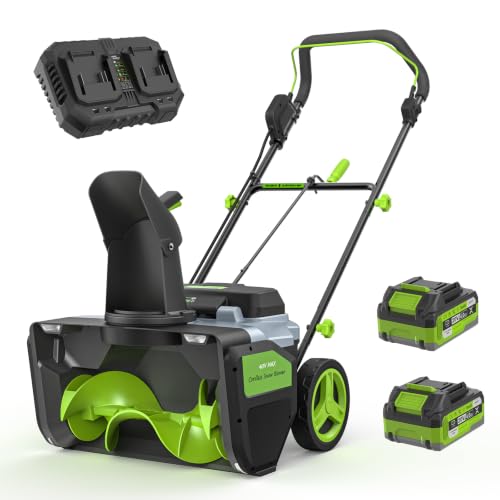
Pros
- 20-inch clearing width
- 180-degree adjustable chute
- Two included 4.0Ah batteries
- Foldable for storage
Cons
- Stated runtime is 15 to 35 minutes
- Skip it if you need longer clearing sessions

Pros
- Self-propelled drive with six forward speeds
- Push-button electric start
- LED headlight for low-light visibility
- 13-inch pneumatic tires
Cons
- Who should skip it: shoppers needing a narrower clearing width
- Use gas-powered equipment outdoors and follow operating instructions
The Best Snow Blowers by Use Case
Best for Heavy Accumulation: BILT HARD 2 Stage Gas Snow Blower 24-Inch
The BILT HARD 2 Stage Gas Snow Blower 24-Inch is the gas-powered, self-propelled choice here for larger areas and compacted accumulation. Its listing specifies a 212cc four-stroke engine, 24-inch clearing width, serrated steel augers, six forward speeds, and two reverse speeds. Electric start and an adjustable chute add convenience, though gas ownership means you should consider fuel, storage, and routine engine care. See the BILT HARD 2 Stage Gas Snow Blower 24-Inch.
Reasons to buy:
- Two-stage design and serrated steel augers are specified for compacted snow.
- Self-propelled drive offers six forward speeds and two reverse speeds.
- Electric start, LED headlight, and 13-inch pneumatic tires are listed features.
Reasons to avoid:
- Gas engine needs fuel and appropriate maintenance, unlike the electric options in this guide.
- The listing gives no clearing height or fuel-tank capacity, so verify those details if they affect your needs.
Skip it if you want a quiet, low-maintenance machine for occasional clearing of a small paved path.
Best Battery-Powered Driveway Option: EGO Power+ SNT2122 21″ Single-Stage Snow Blower
The EGO Power+ SNT2122 21″ Single-Stage Snow Blower pairs a 21-inch path with two included 4.0Ah batteries and a heavy-duty steel auger. EGO says its Peak Power system combines two 56V batteries and can clear a 10-car driveway with 8 inches of snow on one charge; that is a manufacturer claim, and actual coverage can vary with snow and operating conditions. Its listing also specifies adjustable skid shoes, which may matter on gravel or uneven ground. See the EGO Power+ SNT2122 21" Single-Stage Snow Blower.
Reasons to buy:
- Two included batteries and charger provide a cordless setup out of the box.
- Steel auger, 13-inch clearing height, and variable auger speed are listed for demanding clearing tasks.
- Adjustable skid shoes support use on gravel and irregular terrain.
Reasons to avoid:
- Coverage depends on snow conditions and battery charge, so a long route may call for additional compatible batteries.
- It is a single-stage blower, not the self-propelled two-stage gas design in this comparison.
Skip it if you need a gas-powered machine with a self-propelled drive for sustained clearing over a large area.
Best for Small Walkways: VOLTASK 48V 16-Inch Electric Snow Shovel
The VOLTASK 48V 16-Inch Electric Snow Shovel is a narrower cordless option for steps, patios, decks, and short paths. The listing specifies a 16-inch clearing width, 8-inch depth, two 24V 4.0Ah batteries, and a maximum runtime of 30 minutes. Its wheels and adjustable support plate help guide the handheld design on paved surfaces, but its narrower path and stated runtime make it a different tool from a wide driveway blower. See the VOLTASK 48V 16-Inch Electric Snow Shovel.
Reasons to buy:
- Handheld form and wheels suit compact paved areas where a larger blower may be cumbersome.
- Two batteries and a dual charger are listed as included.
- A rotating deflector directs discharge within its stated adjustment range.
Reasons to avoid:
- The 16-inch path is narrower than the other blowers in this roundup.
- The listing states a maximum runtime of 30 minutes, which may not suit extended clearing.
Skip it if you need to clear a broad driveway or move heavy snow over a long route.
Best for Corded Clearing: Westinghouse WSnow20 Corded Snow Blower 20 Inch
The Westinghouse WSnow20 Corded Snow Blower 20 Inch offers a 20-inch clearing path and a 120V, 15A corded motor. Its listing specifies a 10-inch clearing depth, a rubber-tipped steel auger, and a 25-foot throw claim. Continuous corded power avoids battery runtime limits, but the outlet and extension-cord reach constrain where you can work. Check the manual for suitable cord requirements and safe outdoor use before operating. See the Westinghouse WSnow20 Corded Snow Blower 20 Inch.
Reasons to buy:
- Plug-in operation avoids recharging batteries or maintaining a gas engine.
- Rubber-tipped steel auger is specified for clearing driveways, sidewalks, porches, and decks.
- Dual LED lights and a 180-degree adjustable chute are listed features.
Reasons to avoid:
- The power cord limits reach and can require careful routing around the clearing area.
- Its listing does not describe a self-propelled drive, so you guide the machine yourself.
Skip it if you have no suitable outdoor outlet or need to clear areas beyond practical cord reach.
Best for Compact Cordless Storage: ETOOLAB 40V Cordless Snow Blower 20″ Snow Thrower
The ETOOLAB 40V Cordless Snow Blower 20" Snow Thrower combines a 20-inch clearing width with a foldable frame for storage in a crowded garage or shed. The listing specifies a 12-inch clearing depth, a 180-degree chute, and two 20V 4.0Ah batteries that power the 40V machine. It gives an estimated runtime of 15 to 35 minutes, depending on conditions, so this is best considered for routine household clearing rather than uninterrupted long sessions. See the ETOOLAB 40V Cordless Snow Blower 20" Snow Thrower.
Reasons to buy:
- Foldable design helps reduce storage footprint.
- Two batteries are included, with a listed runtime estimate of 15 to 35 minutes.
- Adjustable chute directs snow, with a manufacturer-stated throw distance of up to 25 feet.
Reasons to avoid:
- Battery runtime varies by snow depth and conditions, which can limit work on larger driveways.
- The listing does not specify a self-propelled drive.
Skip it if you need long-duration clearing or prefer a gas-powered machine for demanding accumulation.
How to Choose the Best Snow Blower for Heavy Wet Snow
Match machine type to snow and property size
Heavy, wet snow can place more demand on a small machine than light, fresh snowfall. For deeper or compacted accumulation across a large area, the BILT HARD two-stage gas blower is the only self-propelled two-stage option in this group, and its listing specifically describes serrated augers for compacted snow. The EGO listing also describes a steel auger for packed snow and heavy accumulation, while the VOLTASK listing emphasizes fresh snow and smaller areas. Treat these descriptions as intended-use information, not a guarantee for every snow condition.
For a short paved walk, steps, or patio, a powered shovel may be easier to place and store than a wider machine. For a driveway, compare clearing width and depth with the area you must cover, then consider how often snow becomes dense or piles up. Follow the maker’s operating guidance, and do not assume any listed throw distance means the machine will handle every type of wet snow equally well.
Choose a power source you can support
Gas offers freedom from outlet placement and battery recharging, but brings fuel handling and engine upkeep. Corded electric operation avoids battery runtime limits, yet the Westinghouse needs practical access to an outlet and a properly routed cord. Battery-powered models remove the cord from the work area, but session length depends on charge, snow, and operating conditions.
Check exactly what comes with a cordless model and what battery platform it uses. EGO lists two 4.0Ah 56V batteries and a charger, while VOLTASK lists two 24V batteries and a dual charger, and ETOOLAB lists two 20V batteries for its 40V system. Do not assume batteries or chargers work across brands or models; verify compatibility with the manufacturer before buying extra packs.
Compare clearing width, height, and the route
Wider clearing paths can reduce the number of passes across an open driveway, but a broad machine may be less convenient on narrow steps or tight paths. The listings range from a 16-inch VOLTASK shovel to 24 inches for the BILT HARD blower. Clearing height also varies: the EGO listing specifies 13 inches, VOLTASK specifies 8 inches, and the Westinghouse specifies 10 inches. ETOOLAB lists a 12-inch depth. Compare these figures with the snow you typically need to move, and check the manual for operating limits.
Think about where the machine must travel as well as the area it clears. EGO lists adjustable skid shoes for gravel and uneven ground; the BILT HARD listing describes adjustable skid shoes for surface protection. Those features may help with surface contact, but the listings do not establish suitability for every driveway. Verify adjustment instructions and surface guidance before use.
Consider drive assistance, discharge, and visibility
A self-propelled drive can reduce the effort of guiding a larger gas machine, and the BILT HARD model lists six forward and two reverse speeds. The other product details do not specify self-propelled drive, so do not assume their wheels provide powered travel. On a long route or incline, confirm how the machine moves and check the manufacturer’s guidance for slopes and surfaces.
Chute adjustment helps direct snow away from doors, vehicles, and paths. EGO and ETOOLAB list 180-degree chutes, while VOLTASK lists a deflector that adjusts by plus or minus 30 degrees. Headlights appear on the EGO, BILT HARD, and Westinghouse listings. Compare discharge controls and visibility features with your clearing times and the layout of your property.
Check storage, setup, and safety information
Measure the place where you will store the machine and check listed folding features. EGO and ETOOLAB describe folding handles or a foldable design, while the other models may call for more storage space. For battery machines, confirm charging and storage instructions. For a corded blower, follow the manual’s directions for outdoor electrical use and cord routing. For a gas model, review fuel, starting, and maintenance instructions before purchase.
Read the specific manual for protective equipment, safe operating distances, clearing clogs, and cold-weather use. Never reach into an auger or chute while a machine can start; follow the manufacturer’s shutdown and clearing procedure. The published listings do not establish independent safety certifications, so check product documentation for applicable standards and instructions rather than assuming certification.
How We Compared
This comparison uses the published product descriptions and listed specifications, including clearing width and depth, power source, battery details, drive design, auger and chute features, storage details, and stated intended uses. Customer feedback information available for these products does not provide written review experiences to assess, so no recurring owner-reported pattern is claimed. Recommendations reflect how the listed features align with different property sizes and clearing needs; manufacturer performance statements are presented as listing claims, not independently verified results.
Frequently Asked Questions
Which type is more suitable for heavy, wet snow?
Look for a machine whose listing specifically describes handling packed or heavy accumulation, and compare its auger, clearing depth, and drive system with your workload. The BILT HARD listing describes a two-stage design and serrated augers for compacted snow; EGO lists a steel auger for packed snow and heavy accumulation. Neither description guarantees performance in every snow condition, so consult each manual and consider how deep the snow usually gets.
Is a single-stage blower enough for a large driveway?
It depends on driveway size, snowfall, and how long you can work between battery charges. EGO lists a 21-inch path and a manufacturer claim for clearing a 10-car driveway with 8 inches of snow on one charge using the included batteries, but real coverage can vary. If you regularly face deep accumulation or want powered drive assistance, compare that claim with the self-propelled BILT HARD two-stage model and your actual site conditions.
Can I use a cordless snow blower on gravel?
Check the model’s surface guidance and adjustment features. EGO lists adjustable skid shoes for gravel and irregular terrain, and BILT HARD lists adjustable skid shoes as well. This does not mean every setting or surface is appropriate; review the manual and adjust the machine as directed to reduce the chance of picking up stones.
What should I know before choosing a corded snow blower?
Confirm that an outdoor outlet and suitable cord can reach the entire clearing area without creating an unsafe route. A corded model avoids battery charging, but cord placement limits movement and needs attention around the machine. Follow the manufacturer’s instructions for cord type, electrical connections, and operation in winter conditions.
Are the batteries interchangeable between these models?
Do not assume they are. EGO specifies compatibility with EGO 56V ARC Lithium batteries; VOLTASK uses two 24V battery packs, and ETOOLAB describes two 20V batteries powering a 40V machine. Verify the exact model and battery system with the manufacturer before purchasing replacement or additional batteries.
How much runtime should I expect from a battery model?
Use the listing estimate as a planning guide, not a guaranteed result. VOLTASK gives a maximum runtime of 30 minutes, while ETOOLAB lists about 15 to 35 minutes depending on conditions. EGO provides a driveway coverage claim rather than a runtime figure. Snow depth, conditions, and operating choices can affect coverage, so consider the route and available recharge time.
For more options across the category, compare our snow blower buying guide. You can also browse the broader Snow Blowers category for related coverage.


Write Your Review
No reviews yet. Be the first to share your experience!