

Outdoor party speakers need to do more than play music: you may also want microphone inputs, portable power, lighting, or splash protection. This guide to choosing the best outdoor speaker for party use compares two portable models and explains which features matter for karaoke, gatherings near water, and longer events.
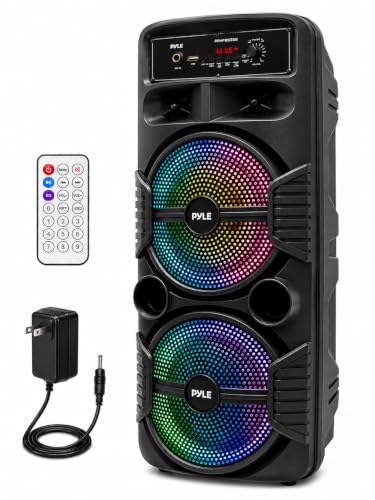
Pros
- Multiple audio input options
- Rechargeable battery and carry handle
- Built-in multicolor party lights
Cons
- Battery runtime and speaker weight are not specified
- Who should skip it: buyers needing documented runtime or weight

Pros
- Multiple inputs for music and live performance
- TWS pairing for two-speaker playback
- Built-in handle and IPX4 splash resistance
- Manufacturer-claimed 15-hour playback
Cons
- Large 11.22 x 15.94 x 9.76-inch size
- Who should skip it: anyone needing submersion protection
The Best Outdoor Speakers by Use Case
Best for Karaoke Inputs: Pyle Portable Bluetooth PA Speaker System
The Pyle Portable Bluetooth PA Speaker System suits hosts who want a portable PA-style speaker for music and voice input. Its listed connections include a 1/4-inch microphone or guitar input, a 3.5 mm AUX input, and a USB flash drive reader, while Bluetooth supports wireless streaming from compatible phones, tablets, and computers. The listing specifies dual 8-inch subwoofers, a 1-inch tweeter, and 600 watts of peak power; that peak figure is a manufacturer specification, not a measure of real-world loudness.
Reasons to buy:
- Microphone or guitar input supports karaoke or a wired instrument connection.
- USB playback, AUX input, FM radio, and Bluetooth provide several ways to play audio.
- A rechargeable battery, battery-level indicator lights, and an extending carry handle support portable use.
Reasons to avoid:
- The published details do not state battery runtime, charging time, or a water-resistance rating.
- Its listed peak-power figure does not establish how loud it will sound at your event or how long it will run on battery.
Skip it if you need a stated splash-resistance rating or a specified runtime for an all-day gathering.
Best for Poolside Splash Protection: FREEPEAR Party Bluetooth Speaker
The FREEPEAR Party Bluetooth Speaker is a portable party model for listeners who want a stated splash-resistance rating and a battery-runtime estimate. Its listing specifies IPX4 splash resistance, up to 15 hours of playtime, and Bluetooth 5.3. It also has AUX, microphone, and guitar jacks, plus USB and TF-card playback; the listing says it can act as a power bank, though it does not specify charging output or how much device charging affects speaker runtime.
Reasons to buy:
- The IPX4 rating is a useful stated feature for splash-prone settings, such as a poolside party. It does not mean the speaker is waterproof or suitable for submersion.
- The listing claims up to 15 hours of playtime and a 2.5-hour full charge with a 30-watt charger.
- TWS pairing is listed for connecting two compatible speakers, and the product also offers a light show and microphone and guitar inputs.
Reasons to avoid:
- The 15-hour figure is a listing claim; actual runtime may depend on listening volume, lights, and other use.
- The listing gives conflicting power figures: its feature text states 240 watts peak and says the manual’s 200-watt specification is incorrect. Confirm the current product documentation if this figure matters to your choice.
Skip it if you need a speaker that can be immersed in water or want verified output figures for a specific coverage area.
How to Choose the Best Outdoor Speaker for Party Use
Match inputs to the event
Bluetooth is convenient when you plan to stream from a phone or tablet, but input choices matter when the party includes singing, announcements, or instruments. Both picks list microphone and guitar inputs, which gives you a direct wired option rather than relying only on a music-streaming device. Pyle also lists a 3.5 mm AUX input, USB flash drive playback, and FM radio. FREEPEAR lists AUX, USB, and TF-card playback. Check the connector type on the product listing against your microphone or instrument cable before buying; the published details do not establish that any microphone or cable comes in the box.
Read power claims with care
Power figures can help distinguish product specifications, but a peak-watt rating alone does not tell you how loud a speaker will sound in an open yard or how evenly it will cover guests. Pyle lists 600 watts peak, while FREEPEAR lists 240 watts peak and notes that its manual incorrectly says 200 watts. These figures are not a direct comparison of measured loudness. If sound coverage is important, look for clearly stated continuous power, coverage guidance, or other details from the manufacturer, and consider the size and openness of your gathering area.
Plan battery use and charging
Battery operation can make placement easier where outlets are inconvenient, but runtime information is uneven here. FREEPEAR claims up to 15 hours and a 2.5-hour charge with a 30-watt charger. Pyle lists a rechargeable battery and level indicators but gives no runtime or charging time in the published details. Treat advertised runtime as a guide rather than a guarantee: high volume and lighting may affect playback time, and the listing does not quantify that effect. For a long event, check charging requirements and consider whether you will have access to power.
Check weather exposure and placement
Outdoor use does not automatically mean a speaker can handle rain, splashes, sand, or immersion. FREEPEAR lists an IPX4 rating, which indicates splash resistance as specified by the manufacturer, not protection against submersion. Pyle’s published product details do not state a water-resistance rating, so plan to keep it away from splashes and verify the current product documentation if weather exposure is likely. Neither listing establishes protection from every outdoor condition; use a sheltered placement when conditions are uncertain.
Decide whether lights or pairing add value
Party lights can add visual effects after dark, but they are not a substitute for sound coverage or battery planning. Both products list lighting features. FREEPEAR additionally lists TWS pairing, which is intended to connect two speakers; the listing claims a combined 480 watts peak, but does not supply independent performance measurements or explain placement limits. Choose this feature if you intend to buy or use a second compatible unit, and check pairing instructions and battery implications before relying on stereo or wider coverage.
How We Compared
This comparison uses the published product listings, including stated speaker components, input options, battery claims, portability details, lighting, and water-resistance information. Manufacturer claims are presented as claims, particularly peak power and playtime, rather than as independently verified results. The supplied material does not provide customer feedback, so this guide does not infer owner consensus or long-term reliability.
Frequently Asked Questions
Can I connect a microphone to either speaker?
Both listings specify a microphone input. Pyle lists a 1/4-inch microphone or guitar input, and FREEPEAR lists microphone and guitar jacks. Check your microphone’s connector and power needs against the product documentation. The published information does not confirm that a microphone is included.
Which speaker is more suitable near a pool?
FREEPEAR is the only one of these two with a stated IPX4 splash-resistance rating. That rating does not make it waterproof or safe to submerge. Keep either speaker clear of water, and follow the manufacturer’s instructions for placement and care.
Does a higher peak-watt number mean louder sound?
Not by itself. The listings provide peak-power claims, but no comparable loudness measurements or sound-coverage data. Use the figures as specifications, not as a guarantee that one speaker will be louder in your yard.
Can these speakers play music without Bluetooth?
Yes, each listing describes other playback options. Pyle lists USB flash drive playback, AUX, and FM radio, while FREEPEAR lists AUX, USB, and TF-card playback. Confirm supported file formats and storage details in the current product documentation, since those details are not supplied here.
Can I pair two speakers for wider sound?
FREEPEAR lists TWS pairing for two speakers. The published details do not describe a comparable pairing feature for Pyle, so do not assume its Bluetooth connection can link two units. If multi-speaker playback is important, verify the exact pairing process and whether both units must be the same model.
Which model suits a party with a long schedule?
FREEPEAR lists up to 15 hours of playtime, while Pyle’s published details confirm a rechargeable battery but do not state runtime. The advertised figure may vary with use, and the listing does not specify how lights or volume affect it. For either model, check charging instructions and plan for access to power if uninterrupted playback matters.





Write Your Review
No reviews yet. Be the first to share your experience!