

Growing herbs indoors can mean tending soil and grow lights, or letting a countertop system manage light and water. The best smart indoor garden for you depends on how many plants you want, whether you prefer soil or hydroponics, and how much control you want from a timer or phone app.
This guide compares compact soil planters, hydroponic gardens, and a vertical system. It highlights setup needs, included supplies, and features worth checking before you choose.

Pros
- Self-watering system
- Adjustable light timer and intensity
- Compact tabletop footprint
Cons
- Seeds and soil are not included
- Skip it if you want a ready-to-plant kit

Pros
- Large 52-pod capacity
- Adjustable grow-light height
- 4L water tank
- Timer and five light modes
Cons
- Who should skip it: growers seeking a smaller-capacity garden

Pros
- Three basil pods included
- Automatic grow light schedule
- No electric pump or noise
- No fertilizer mixing required
Cons
- Refill pods sold separately
- Who should skip it: shoppers who do not want ongoing pod purchases
Pros
- Includes nine starter pods across three plant types
- No added nutrients needed during the growth cycle
- Silent operation
- Germination replacement offered if seeds do not sprout within 21 days
Cons
- Requires water refills every two to three weeks
- Skip if you lack space for its 23.8-inch length
Pros
- Capacity for up to 16 plants
- Vertical design for indoor spaces
- Includes starter seed kit and sensors
- Camera and app-based care support
Cons
- Who should skip it: anyone without 54 inches of vertical clearance

Pros
- Four adjustable light levels
- Customizable timer with local time setting
- 12 growing pods
- Adjustable light height
Cons
- Seeds are not included
- Germination varies by seed and growing conditions
- Who should skip it: Shoppers who need seeds included

Pros
- 15 planting pods
- App-controlled lighting schedules
- Adjustable light height
- Water-level window
Cons
- Seeds are not included
- Skip it if you want seeds included
Pros
- 10 growing pods
- Transparent 3L water tank
- Adjustable light height
- Temperature and humidity display
Cons
- Seeds are not included; skip if you need ready-to-plant setup

Pros
- Cord-free operation
- Supports 10 to 15 potted plants
- App-based scheduling and notifications
Cons
- Skip it if your Wi-Fi network supports only 5 GHz
Pros
- Includes nine pre-seeded plant pods
- Integrated LED grow light
- Automated nutrient release
- No air or water pumps
Cons
- Requires dedicated space for its 23.82 x 7.29 x 15.75-inch footprint
- Who should skip it: shoppers without room for an indoor garden
The Best Indoor Garden Systems by Use Case
Best Soil-Based Budget Option: DRYADES Indoor Garden Growing Systems Self-Watering Plant
The DRYADES Indoor Garden Growing Systems Self-Watering Plant is a small soil planter with a 17-watt LED grow light and self-watering setup. Its listing describes three timer choices, 8, 12, or 16 hours, plus low, medium, and high light settings. At this guide’s lowest listed price, it suits shoppers who want a basic indoor setup and already have seeds and soil.
Reasons to buy:
- Soil-growing design suits people who prefer planting in soil rather than a hydroponic reservoir.
- Timer and brightness settings allow some control over daily light.
- Compact format is intended for tabletops and other small indoor spaces.
Reasons to avoid:
- Seeds and soil are not included, so you need to source them separately.
- The listing does not specify planter capacity or app control.
Skip it if you want a ready-to-plant seed kit, a stated multi-pod capacity, or phone-based controls. The listing does not clarify which soil types or seed sizes fit, so check the instructions before buying supplies.
Best for High Pod Capacity: PARAQUIP 52 Pods Smart Hydroponics Growing System Indoor
The PARAQUIP 52 Pods Smart Hydroponics Growing System Indoor is aimed at households, classrooms, or hobby growers who want many planting positions in one system. Its listing specifies a 24-watt full-spectrum LED, a 4-liter tank, an adjustable light, and five light modes. That capacity stands out in this comparison, though buyers should consider whether they have room and seeds for a large planting setup.
Reasons to buy:
- 52 pod positions support a wider planting selection than the smaller countertop systems here.
- The 4-liter tank and adjustable light are useful for managing a larger indoor garden.
- A digital display and timer offer scheduling controls, and the listing describes a quiet pump with sleep mode.
Reasons to avoid:
- The listing does not say that seeds are included, so confirm what you need to purchase.
- A 52-pod setup may be more capacity than a small household wants to maintain.
Skip it if you want a compact garden for a few herbs or prefer a system with clearly listed app controls. Check the product listing for the garden’s overall footprint, which is not provided in the published details.
Best for Simple Herb Growing: Click & Grow Indoor Herb Garden Kit with Grow
The Click & Grow Indoor Herb Garden Kit with Grow uses pre-seeded pods and a wick-based watering system rather than a pump. The listing says it includes three basil pods, runs its grow light on a 16-hour-on, 8-hour-off cycle, and has an extendable lamp. It is a straightforward choice for someone who mainly wants fresh kitchen herbs without mixing nutrients or managing hydroponic water circulation.
Reasons to buy:
- Three included basil pods let you begin with a named herb rather than sourcing seeds first.
- The wick system has no electric pump, which means no pump noise to manage.
- The automatic light schedule reduces the need to switch the grow light manually.
Reasons to avoid:
- It is a smaller garden than the nine-pod system in this lineup.
- Replacement pods are sold separately, and the published details do not describe app control.
Skip it if you want to grow many plant varieties at once or adjust lighting from your phone. The product listing describes a water tank that lasts about two to three weeks, but actual refill timing can depend on plant and room conditions.
Best for Larger Starter Harvests: Click & Grow Smart Garden 9 Indoor Herb Garden Kit
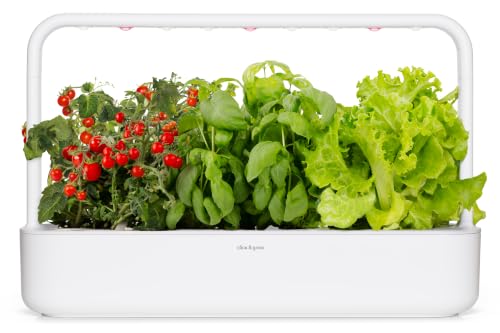
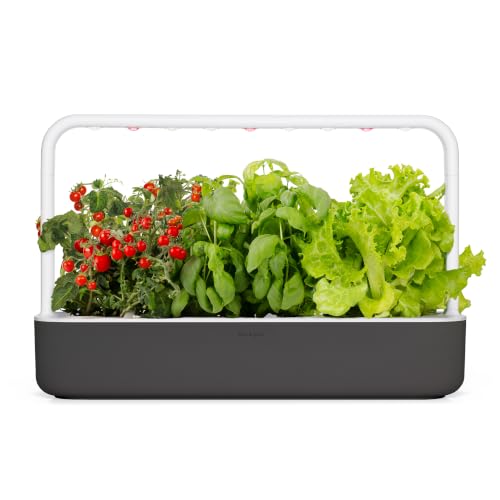
The Click & Grow Smart Garden 9 Indoor Herb Garden Kit provides nine pod positions and includes basil, mini tomato, and green lettuce pods. Its Smart Soil pods contain the nutrients for the growth cycle, while the system operates without an air or water pump. It fits people who want a larger selection of starter plants and a soil-based pod system with an automatic grow light.
Reasons to buy:
- Nine included pods offer more starting variety than the smaller Click & Grow kit.
- The supplied plants include basil, mini tomatoes, and green lettuce.
- The listing describes more than 75 pod choices and experimental pods for using your own seeds.
Reasons to avoid:
- It occupies more counter space than a compact three-pod system.
- Refill pods are a continuing supply consideration if you want to keep using the system’s pre-seeded format.
Skip it if you only need a few herbs or want a hydroponic system with remote app controls. Two published listings describe this nine-pod model in different colors and with slightly different details, so confirm color and included pods on the specific listing before ordering.
Best App-Controlled Vertical Garden: GARDYN Gardyn Studio 2 Hydroponics Growing System
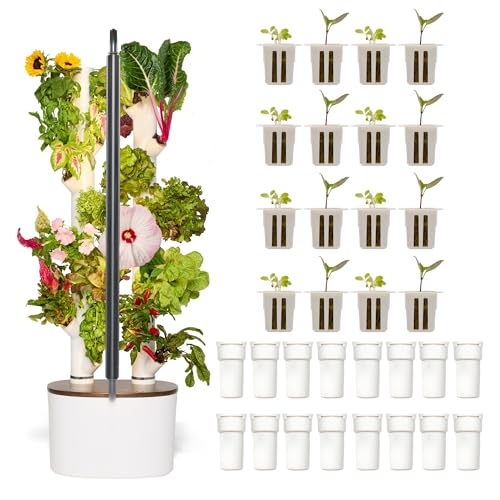
The GARDYN Gardyn Studio 2 Hydroponics Growing System grows up to 16 plants in a vertical format. The listed kit includes a starter seed kit, sensors, a monitoring camera, LED lights, and app integration; its camera and Kelby AI assistant are described as tools for viewing plant growth and getting care guidance. This is the most feature-rich choice here for someone who wants a vertical garden and remote monitoring, rather than a basic countertop planter.
Reasons to buy:
Reasons to buy:
- Vertical design offers up to 16 plant positions within a footprint the listing compares to a single potted plant.
- The included camera, sensors, and app integration add monitoring features not specified for the simpler planters.
- The kit includes a starter seed kit, so it is presented as a complete starting system.
Reasons to avoid:
- It is a larger commitment than a basic countertop unit, with more components and app features to set up.
- The listing does not specify app compatibility details or ongoing service requirements.
Skip it if you want a low-cost, minimal setup or prefer not to use an app. Confirm current app requirements, network compatibility, and the tower’s dimensions before choosing a location.
Also Considered
The litokam Hydroponics Growing System Kit may suit buyers who want 15 pods, a 5-liter tank, and Littlelf Smart app controls, but seeds are not included and the published details do not establish phone compatibility beyond the named app.
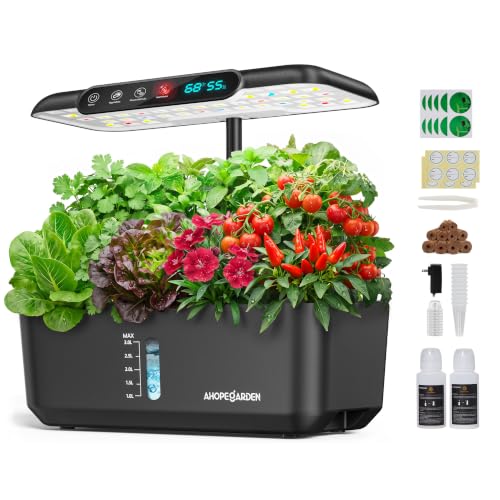
The Ahopegarden Hydroponics Growing System could suit a beginner who wants a 10-pod system, a temperature and humidity display, and a low-water alarm; seeds are not included.
The SUNCOZE Hydroponics Growing System Kit offers 12 pods, a 4-liter tank, adjustable brightness, and a timer with local time setting, but its listing does not describe app control.
The RAINPOINT WiFi Automatic Plant Waterer Indoor is for watering existing potted plants while away, not starting a garden; it supports 2.4 GHz Wi-Fi and a drip setup for 10 to 15 pots.
How to Choose the Best Smart Indoor Garden
Choose a growing method that matches your routine
Soil-based pod systems, such as the Click & Grow kits, use prepared pods and do not need a water pump. That can suit someone who wants a simpler countertop routine. Hydroponic systems circulate water and may offer more pod positions, but you should check whether the kit includes seeds, nutrients, or only growing accessories. Soil planters also need you to source suitable seeds and soil when those items are not included.
Match pod count to the plants you will use
Pod count describes planting positions, not how much you will harvest or how quickly plants will grow. A three-pod kit may be enough for a few kitchen herbs, while a nine-pod or 16-plant system leaves room for more varieties. The PARAQUIP listing specifies 52 pods, but a high count only helps if you have space, seeds, and a plan to care for that many plants. Check the listing’s footprint as well as its capacity.
Check included seeds and ongoing supplies
Included seeds or pods affect how soon you can start and which plants you can grow first. The smaller Click & Grow kit includes basil pods, while the nine-pod kit lists basil, mini tomatoes, and lettuce. Some hydroponic kits provide baskets, sponges, and nutrients but no seeds. Check whether the system uses brand-specific refill pods or can take seeds you choose, and account for replacement supplies before settling on a model.
Understand lighting controls and plant clearance
An automatic timer helps keep a repeatable lighting schedule, while adjustable brightness or multiple modes offer more control. Neither feature guarantees a particular growing result. Check the listed light schedule, brightness controls, and maximum light height against the plants you intend to grow. If you want taller plants, a light that adjusts upward may matter more than a larger number of timer options.
Decide whether app control is worth setup
App features can help you change schedules or monitor a garden remotely, but app support alone does not confirm compatibility with every phone or smart-home platform. The litokam listing names the Littlelf Smart app, and the Gardyn listing describes app integration, a camera, and an AI assistant. Check the product page for current phone, network, account, and subscription requirements. If you only need an automatic light timer, a system with built-in controls may be simpler.
How We Compared
This comparison uses the published product listings, including stated growing methods, pod counts, tank sizes, lighting controls, included supplies, and app features. We also considered listed customer ratings as supplied, but no review text was provided to establish recurring ownership experiences. Claims about growth speed and convenience remain manufacturer statements rather than independently established results.
Frequently Asked Questions
Are indoor hydroponic gardens easier than soil planters?
They suit different routines. Hydroponic systems use water circulation and often include a reservoir, while soil planters use soil and may depend on a self-watering feature. Some pod systems simplify feeding by including nutrients in the pod. Check what each kit includes and how it handles watering before deciding which process sounds easier for you.
Do these indoor gardens include seeds?
Not all of them. The smaller Click & Grow kit lists three basil pods, and the nine-pod Click & Grow kit lists basil, mini tomatoes, and lettuce. The DRYADES, litokam, Ahopegarden, and SUNCOZE listings say seeds are not included or describe supplies without seeds. Confirm the exact kit contents before ordering.
Can I grow plants from my own seeds?
Some systems describe support for user-selected seeds. The Click & Grow nine-pod listing mentions experimental pods for your own seeds, while soil planters can use seeds you source separately. For other systems, check pod and basket compatibility in the product listing. Do not assume that every seed fits every proprietary pod.
Do smart gardens need Wi-Fi?
Not every indoor garden in this comparison lists app control. Some use built-in timers and lights, so their described growing features do not depend on remote access. App-based controls do introduce compatibility and setup questions. Confirm the required app, phone operating system, and network band on the product page if remote control matters to you.
Can an automatic plant waterer grow herbs?
A drip waterer maintains watering for potted plants; it is not itself a grow-light garden or seed-starting system. The RAINPOINT unit is described for watering 10 to 15 pots and needs a separate water source. Choose a garden kit if you need planting positions, grow lights, or a seed-starting setup.




Write Your Review
No reviews yet. Be the first to share your experience!