

A backyard mosquito trap has to fit your space and power access, but advertised coverage alone does not tell you how convenient it will be to use. This guide compares five electric zappers by their listed power, placement options, maintenance features, and coverage claims, helping you find a suitable option for a patio, garden, or camping trip.

Pros
- Cordless, portable design
- Multiple light modes
- Automatic dusk-to-dawn operation
- Water-cleanable insect tray
Cons
- Performance is best in low light after sundown
- Who should skip it: shoppers seeking a daytime-focused insect trap

Pros
- Removable tray for cleanup
- Hanging ring included
- Replaceable UV bulb
Cons
- Requires a power outlet
- Who should skip it: shoppers needing cordless operation

Pros
- Removable debris tray
- Included cleaning brush
- Replaceable bulb
Cons
- Skip if 4.6-foot cord cannot reach outlet
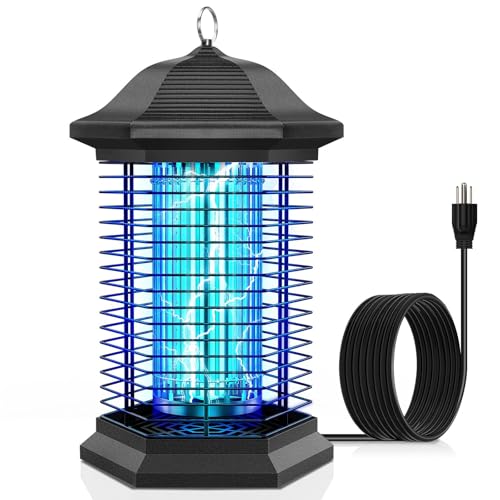
Pros
- 18W UVA bulb
- IPX4-rated design
- 5.5-foot power cord
Cons
- Weekly grid cleaning recommended
- 5.5-foot cord may limit placement
- Who should skip it: buyers needing a cordless or fully waterproof unit
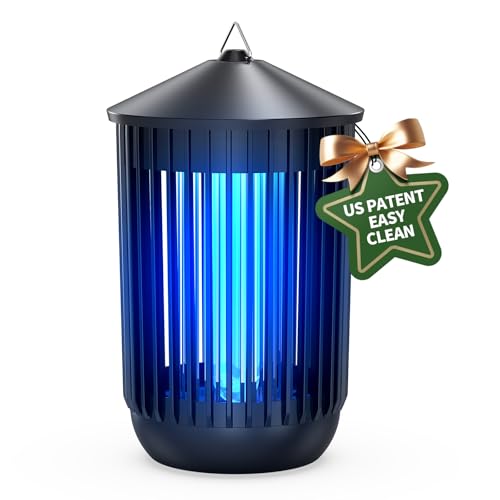
Pros
- 20W UV lamp
- Hanging hook and 6.5-foot cord
- Removable tray and cleaning brush
Cons
- IPX4 is not full waterproofing
- Who should skip it: anyone needing full waterproofing
The Best Mosquito Zappers by Use Case
Best for Cord-Free Placement: Cordless Bug Zapper Outdoor
The Xriba Cordless Bug Zapper Outdoor is the only rechargeable, portable model in this group. Its 4,800mAh battery, USB-C charging, and built-in dusk-to-dawn sensor make it a fit for camping or backyard corners where an outlet is inconvenient. The listing specifies a 4200V grid and runtime ranges that vary by light mode, so choose a mode with your expected use in mind.
Reasons to buy:
- Rechargeable design supports placement away from a wall outlet.
- Listed runtime is 12 to 14 hours for blue light and auto mode, 11 to 13 hours for white light, and 6 to 8 hours for dual light.
- USB-C port supports uninterrupted use with an external power supply.
Reasons to avoid:
- Runtime depends on selected light mode, and dual light has the shortest listed range.
- The listing does not state a coverage area, so it is harder to compare with the half-acre and 2,100-square-foot claims on other models.
Skip it if you need a stated coverage figure or prefer a plug-in unit that does not need charging.
Best for Larger Listed Coverage: Flyghost Bug Zapper Mosquito Zapper Electric Fly
The Flyghost Bug Zapper Mosquito Zapper Electric Fly suits buyers comparing plug-in zappers by published coverage: its listing claims up to 2,100 square feet. A 20W UV lamp and 4200V grid are specified, along with an IPX4 rating, 6.5-foot cord, hanging hook, and removable tray. Those features offer flexible placement on a porch or patio, though the coverage figure is a manufacturer claim rather than a guarantee for every yard.
Reasons to buy:
- Largest stated coverage area among these five listings.
- Longer 6.5-foot cord and hanging hook allow hanging or tabletop placement.
- Removable tray and included cleaning brush simplify routine debris removal.
Reasons to avoid:
- It needs a power outlet, unlike the rechargeable Xriba model.
- The listing does not specify a replaceable bulb, so verify replacement availability if that matters to you.
Skip it if your priority is cordless use or you need a clearly stated half-acre coverage claim.
Best for a Simple Plug-In Setup: Klahaite Bug Zapper Outdoor
The Klahaite Bug Zapper Outdoor is a straightforward choice for buyers who want a plug-in zapper with cleaning features and a replaceable bulb. The listing specifies a 4200V grid, blue-violet light, coverage up to half an acre, and a 4.6-foot cord. It also recommends turning the unit on two to three hours before bedtime and placing it in a dark location, practical details to consider when planning use.
Reasons to buy:
- Replaceable bulb gives buyers a stated option when the light needs replacement.
- Removable bottom tray and included brush support easier cleaning.
- Hanging ring and three-prong plug suit a fixed location near an outdoor outlet.
Reasons to avoid:
- The 4.6-foot cord may limit placement compared with the Flyghost’s 6.5-foot cord.
- Its half-acre coverage is a listing claim; actual results can depend on placement and surroundings.
Skip it if you need a rechargeable model or want a longer cord for hanging farther from an outlet.
Best for Stated High Voltage and Bulb Life: AMUFER Bug Zapper Outdoor & Indoor, 18W & 4400V
The AMUFER Bug Zapper Outdoor & Indoor, 18W & 4400V stands out for its listed 4400V grid and 18W bulb, plus a claimed half-acre coverage area. The manufacturer also states that its bulb passed a continuous-use test exceeding 13,000 hours; that is a listing claim, not a predicted lifespan in every setting. Its IPX4 rating and 5.5-foot cord make it a candidate for covered outdoor areas with a nearby compatible outlet.
Reasons to buy:
- Highest listed grid voltage in this comparison.
- Manufacturer states bulb continuous-use results exceeding 13,000 hours.
- IPX4 rating and 5.5-foot cord support outdoor placement where the outlet is within reach.
Reasons to avoid:
- The claimed half-acre coverage does not establish how it will perform in a specific yard.
- The listing recommends weekly grid cleaning with a dry, soft-bristled brush, adding a regular maintenance task.
Skip it if you need battery power or do not want to clean the high-voltage grid regularly.
Best for Compact Listed Coverage: Electric Bug Zapper Indoor/Outdoor
The Dickinda Electric Bug Zapper Indoor/Outdoor lists coverage up to 1,000 square feet, making its stated range more specific for buyers with a smaller patio, garage, or deck. It uses a listed 15W UV tube and 4200V grid, with a hanging ring, removable tray, cleaning brush, and replaceable UV light. The listing calls it rainproof, but does not provide an IP rating, so check placement guidance before leaving it exposed to weather.
Reasons to buy:
- Stated 1,000-square-foot coverage offers a defined comparison point for more compact spaces.
- Replaceable UV light, removable tray, and included brush address upkeep.
- Hanging ring provides a simple placement option near a suitable outlet.
Reasons to avoid:
- Its listed coverage is smaller than the half-acre claims and Flyghost’s 2,100-square-foot claim.
- No IPX rating or cord length appears in the published product details.
Skip it if you need cordless operation, a specified IP rating, or a larger stated coverage area.
How to Choose the Best Mosquito Trap for Backyard Use
Match power source to your placement
Plug-in models need a compatible outlet within cord reach. This can be convenient for a porch or garage, but limits where you can hang the unit. The Klahaite lists a 4.6-foot cord, the AMUFER 5.5 feet, and the Flyghost 6.5 feet. Compare cord length with your intended hanging point and outlet location, rather than assuming an extension cord is suitable.
A rechargeable model such as the Xriba can go where there is no convenient outlet, which can help at a campsite or in a distant garden area. In return, you need to charge it and consider the runtime for your selected mode. Check whether the listed operating time fits your usual evening, and note that the Xriba lists shorter runtime for dual light than for blue light or auto mode.
Read coverage claims in context
Coverage figures are useful for comparing listings, but do not promise identical results in every yard. The AMUFER and Klahaite list up to half an acre, the Flyghost lists up to 2,100 square feet, and the Dickinda lists up to 1,000 square feet. The Xriba listing gives no coverage figure. Compare the units and claims carefully, then consider where you can place the zapper and whether trees, walls, or nearby lighting may affect its location.
A larger claim may matter when you want to cover an open area, while a defined 1,000-square-foot claim may be easier to relate to a smaller patio. Do not treat a coverage number as a measurement of mosquito reduction. If a listing does not explain how its coverage was determined, use the figure as a product specification to compare, not as a guaranteed outcome.
Compare light and grid details without overreading them
Each plug-in model uses UV or blue-violet light with an electric grid. The listings specify 4400V for AMUFER and 4200V for the other named grid models; the Xriba also lists a 4200V grid. AMUFER and Flyghost list 18W and 20W lamps, while Dickinda lists a 15W tube. These details describe the products, but do not establish that one will control mosquitoes better in your yard.
Think about the insects and conditions named in the listing, as well as where the unit can operate. Klahaite recommends a dark location and turning its unit on two to three hours before bedtime. The Xriba likewise says it is best used in low-light conditions after sundown. If your yard stays brightly lit, placement and timing may matter more than choosing a model based only on voltage or lamp wattage.
Check weather rating, cleaning, and replacement parts
Outdoor use calls for attention to weather exposure and the power connection. AMUFER and Flyghost specify IPX4 ratings, while Dickinda describes its unit as rainproof without providing an IP rating. Do not assume those descriptions mean the products can be left in every weather condition. Read the manufacturer’s placement and care instructions, and use a suitable outlet in line with the product guidance.
All five options need some form of cleaning, and several specify a removable tray or brush. AMUFER calls for weekly grid cleaning with a dry brush; Klahaite and Dickinda list removable trays and brushes. Klahaite and Dickinda also specify replaceable bulbs or UV lights. Check which cleaning steps and replacement parts are stated for your chosen model before buying, especially if you expect frequent use.
How We Compared
This comparison uses the published product descriptions and listed specifications, including power source, lamp and grid details, coverage claims, weather ratings, cord or battery information, and maintenance features. The published rating figures are also product data, but no customer-review text was provided to establish recurring owner experiences. We distinguish manufacturer claims, such as coverage and bulb-life statements, from independently verified outcomes.
Frequently Asked Questions
Do these mosquito zappers need an outlet?
Four listed models are plug-in units. The Xriba Cordless Bug Zapper Outdoor has a built-in rechargeable battery and USB-C charging, so it can operate without a nearby outlet while charged. Its listing also says the USB-C port supports uninterrupted power from an external supply.
Which models have a stated coverage area?
AMUFER and Klahaite list coverage up to half an acre. Flyghost lists up to 2,100 square feet, and Dickinda lists up to 1,000 square feet. The Xriba listing does not provide a coverage figure. Treat all stated areas as manufacturer claims, not guaranteed coverage in your yard.
Can these zappers stay outside in the rain?
AMUFER and Flyghost list IPX4 ratings, while Dickinda describes its zapper as rainproof without stating an IP rating. The published details do not establish that any model is suitable for every exposure or storm. Follow the product’s instructions for outdoor placement, power connections, and care.
How often do I need to clean an electric bug zapper?
Cleaning needs depend on insect buildup and the manufacturer’s directions. AMUFER recommends gently brushing the grid weekly with a dry, soft-bristled brush. Klahaite and Dickinda list removable trays and cleaning brushes. Disconnect power and follow each model’s instructions before cleaning.
Which model has a replaceable bulb?
Klahaite specifies a replaceable bulb, and Dickinda specifies a replaceable UV light. The published details do not confirm bulb replacement for the other three models. Check compatible replacement-part availability and instructions if that feature matters to your purchase.
Where should I place a backyard bug zapper?
Choose a location that matches the product’s power source, cord reach, and care instructions. Klahaite recommends a dark location and says to turn its zapper on two to three hours before bedtime. Keep the unit positioned according to its instructions, away from places where people could contact the grid, and use the recommended power connection.




Write Your Review
No reviews yet. Be the first to share your experience!