

Instant cameras make physical prints on the spot, but film formats, included supplies, and shooting features differ. This Best Instant Camera Under $100 guide compares Fujifilm instax mini cameras and Polaroid Go, helping you choose for selfies, close-ups, travel, or a ready-to-use bundle.

Pros
- Built-in selfie mirror
- Automatic exposure and flash control
- Two self-timer settings
- Two AA batteries included
Cons
- Who should skip it: anyone wanting film included
- Photos take about 90 seconds to develop

Pros
- Built-in selfie mirror
- Automatic exposure and flash control
- Two self-timer settings
- Two AA batteries included
Cons
- Instax mini film sold separately
- Prints take about 90 seconds to develop
- Who should skip it: shoppers who want digital-only photos
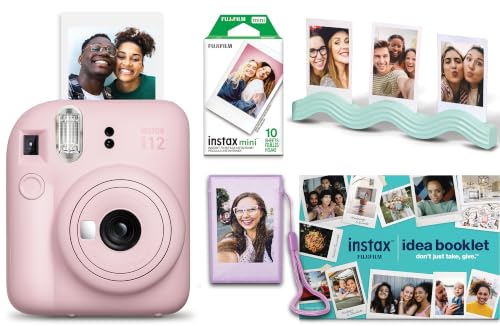
Pros
- Selfie mirror helps with framing
- Automatic exposure and flash control
- Includes photo stand and storage box
- Two AA batteries included
Cons
- Only 10 film sheets included
- Who should skip it: buyers who do not want physical prints

Pros
- Compact, portable design
- Built-in selfie mirror
- Self-timer and double-exposure modes
Cons
- Only compatible with Polaroid Go film
- Skip it if you want other instant film formats

Pros
- Built-in selfie mirror
- Close-up mode with parallax correction
- Two self-timer options
- Two AA batteries included
Cons
- instax mini film sold separately
- Who should skip it: Buyers who want film included
The Best Instant Cameras by Use Case
Best Ready-to-Use Bundle: FUJIFILM Instax Mini 12 Instant Camera Holiday
Instant cameras are easier to start using when film comes in the box. The FUJIFILM Instax Mini 12 Instant Camera Holiday bundle includes a 10-sheet pack of instax mini film, a photo stand, a storage box, and an idea booklet, alongside the Blossom Pink camera. Its selfie mirror and close-up mode with parallax correction support casual portraits and nearby subjects.
Reasons to buy:
- Includes 10 sheets of instax mini film, so you can begin printing without buying a separate pack first.
- Photo stand and storage box provide simple ways to display or keep prints.
- Automatic exposure and flash control help simplify everyday shooting.
Reasons to avoid:
- The included film pack has 10 sheets, so frequent photography will mean buying more film.
- The listing specifies a 90-day limited film warranty and a one-year limited camera warranty; check those terms if coverage matters to you.
Skip it if you want a camera without bundled accessories, or if you prefer Polaroid Go film rather than instax mini film.
Best for Tiny Prints and Travel: Polaroid Go Generation 2
The Polaroid Go Generation 2 is described as Polaroid’s smallest instant camera, suited to buyers who prioritize a compact carry option. It uses Polaroid Go film only, a different format from instax mini film, so check film availability and ongoing cost before choosing. A built-in selfie mirror, double-exposure mode, and self-timer add options for portraits and creative shots.
Reasons to buy:
- Compact design is intended to fit in many bags, totes, and pockets.
- Double-exposure mode supports layered images, while the self-timer helps with self-portraits.
- The listing says one charge supports 15 film packs.
Reasons to avoid:
- It works only with Polaroid Go film, not instax mini film.
- The product information does not specify print dimensions, so confirm the format if print size is a deciding factor.
Skip it if you want the 2-by-3-inch instax mini prints specified for the Fujifilm options, or need broader film compatibility.
Best for Timed Selfies: FUJIFILM instax mini 13 Instant Film Camera
The FUJIFILM instax mini 13 Instant Film Camera suits group photos and self-portraits thanks to its built-in selfie mirror and selectable 2- or 10-second self-timer. It prints 2-by-3-inch instax mini photos, with printing specified at approximately five seconds and development taking about 90 seconds afterward. Automatic exposure and flash control aim to simplify lighting adjustments, while the camera uses two AA batteries included in the box.
Reasons to buy:
- Two timer choices let you set up a quick self-portrait or allow more time to join a group shot.
- Close-up mode includes parallax correction to help position nearby subjects.
- Comes with two AA batteries, a hand strap, and a camera angle adjustment accessory.
Reasons to avoid:
- Instax mini film is sold separately, adding a separate supply to plan for.
- The listing gives approximate print and development times, not a guarantee for every shooting condition.
Skip it if you want film and display accessories included, or need an instant camera that uses Polaroid Go film.
Best Frost Blue Color Option: FUJIFILM instax mini 13 Instant Film Camera
The Frost Blue version of the FUJIFILM instax mini 13 Instant Film Camera has the same listed core features as the other mini 13 colors: a selfie mirror, close-up mode with parallax correction, automatic exposure and flash control, and 2- and 10-second timers. Choose this listing if its finish is the one you prefer; color does not change the stated film format or shooting features. Film remains a separate purchase.
Reasons to buy:
- Frost Blue provides a distinct finish within the same mini 13 feature set.
- Uses 2-by-3-inch instax mini film, with film type clearly identified in the listing.
- Includes two AA batteries and a one-year limited camera warranty.
Reasons to avoid:
- Instax mini film is not included, unlike the Mini 12 holiday bundle.
- The listed feature set does not distinguish this color from other mini 13 variants, so color is the main reason to select it over them.
Skip it if you are choosing solely for included film or accessories rather than the Frost Blue finish.
Also Considered
The FUJIFILM instax mini 13 Instant Film Camera in Dreamy Purple has the same listed mini 13 features and may suit buyers who prefer that color; it missed the main list because its features duplicate the other mini 13 options.
How to Choose the Best Instant Camera Under $100
Check film format before comparing camera features
Film compatibility shapes both the prints you get and the supplies you need to buy later. The three Fujifilm options here use instax mini film and specify 2-by-3-inch photos. Polaroid Go Generation 2 accepts only Polaroid Go film, so the two systems are not interchangeable. Check the exact film name on camera and film listings before you order; a camera body alone does not tell you whether you already own compatible packs.
Compare what comes in the box
Included supplies can make a camera more convenient to start using, but bundle contents vary. The Mini 12 holiday bundle lists 10 film sheets, a stand, a storage box, and an idea booklet. The mini 13 listings include two AA batteries and a hand strap, but state that film is sold separately. Read the specific variant’s package list rather than assuming that one camera’s bundle applies to another color or model.
Match portrait features to how you shoot
If selfies are a priority, look for both a selfie mirror and a timer. Mini 13 models provide a mirror and 2- and 10-second timer options; Polaroid Go Generation 2 has a mirror and self-timer. For close-up framing, the Fujifilm listings specify a close-up mode with parallax correction. These features assist composition, but the published details do not establish that one camera produces better portraits in every setting.
Consider carrying size and creative modes
For a camera you plan to carry often, Polaroid describes Go Generation 2 as its smallest instant camera and says it fits in many bags and pockets. Its double-exposure mode also appeals to buyers who want an in-camera creative option. The Fujifilm mini 13 models instead specify a hand strap and angle adjustment accessory. Compare the listed size claims and accessories with how you expect to carry and use the camera, rather than assuming every instant camera feels equally portable.
Account for print timing and power details
The Fujifilm listings specify printing in approximately five seconds, followed by about 90 seconds of development. That distinction matters if you expect a finished image immediately: a print can emerge quickly while still needing time to develop. Mini 13 listings include two AA batteries. Polaroid Go’s listing describes rechargeable operation and says one charge supports 15 film packs, but does not provide a charge time in the published details. Check the exact listing for the power information that matters to your routine.
How We Compared
This comparison uses the published product listings, including their stated film formats, print details, camera modes, package contents, and power information. We considered how those features fit practical needs such as carrying a camera, taking selfies, framing close-ups, and starting with included film. The provided rating data shows no review totals, so ratings do not establish broad customer experience or a dependable performance difference between color variants.
Frequently Asked Questions
Can instax mini film work in Polaroid Go Generation 2?
No. The Polaroid Go listing says the camera is only compatible with Polaroid Go film. Fujifilm mini cameras use instax mini film. Check the format printed on the film pack before buying replacements.
Which camera includes film?
The FUJIFILM Instax Mini 12 Instant Camera Holiday bundle includes one pack of instax mini film with 10 sheets. The mini 13 listings say film is sold separately, and the supplied Polaroid Go listing does not specify included film. Confirm bundle contents on the exact listing before purchase.
Do instant photos develop as soon as they print?
The mini 13 listing separates printing from development: it specifies approximately five seconds to print and approximately 90 seconds for development afterward. The supplied Polaroid Go details do not give a development time. Do not treat print ejection time as the time needed for a developed image.
Which option has features for selfies?
All listed Fujifilm choices specify a built-in selfie mirror. Mini 13 models also offer 2- and 10-second timers; the Mini 12 listing specifies a selfie mirror but does not list timer settings. Polaroid Go Generation 2 includes a selfie mirror and self-timer. Choose based on whether timed framing or bundled supplies matter more to you.
Can I scan instant photos with my phone?
The Mini 12 bundle listing says the free INSTAX UP! App can scan physical instax photos with a smartphone to create digital versions. That feature is specifically stated for the supplied Mini 12 listing. Check app and phone compatibility in the app listing before relying on it.




Write Your Review
No reviews yet. Be the first to share your experience!