

Preparing soil can mean loosening a raised bed, cultivating a small vegetable patch, or breaking ground across a wider area. The best garden tiller for your yard depends on how much soil you need to work, whether you can use a power cord, and how deep you need to cultivate.
This guide compares electric, battery-powered, manual, and gas options by their listed working widths, depths, power sources, and intended uses. Those details help narrow the field, but soil conditions matter: some listings specifically caution against using their tools in very hard or rocky ground.

Pros
- Two batteries and charger included
- Detachable tines simplify cleanup
- Compact 9-inch tilling width
Cons
- Six-inch listed depth limits deeper cultivation
- Who should skip it: gardeners needing wider coverage or deeper tilling

Pros
- 16-inch tilling width
- Three-position wheel adjustment
- Folding handle
- No gas or oil
Cons
- Corded design limits mobility
- Skip it if you need cordless operation

Pros
- Adjustable four-section handle
- Three interchangeable blade wheels
- Lightweight at 2.6 pounds
Cons
- Avoid hard or rocky soil; connection may loosen
- Who should skip it: gardeners working hard or rocky soil
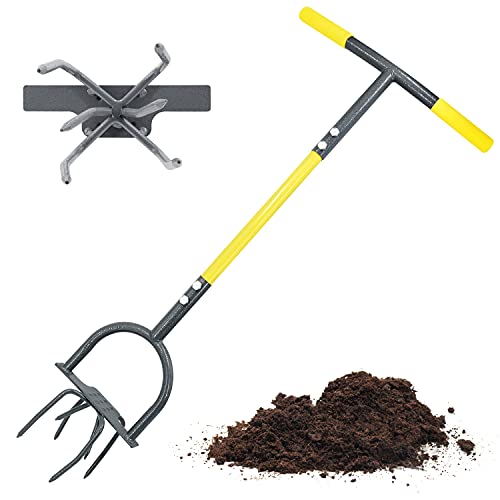
Pros
- Foot plate aids soil penetration
- Useful for small garden areas
- Can mix soil amendments
Cons
- Skip it for dry clay or rocky soil you cannot pre-water

Pros
- 16-inch maximum cutting width
- 9-inch cutting depth
- Adjustable three-position transit wheel
Cons
- Who should skip it: buyers needing documented weight or runtime

Pros
- Three-pronged head handles several soil-preparation tasks
- Compact handheld design
- Lifetime defect guarantee
Cons
- Who should skip it: gardeners needing powered tilling

Pros
- Cordless operation
- Includes two rechargeable batteries
Cons
- Who should skip it: gardeners needing deeper cultivation
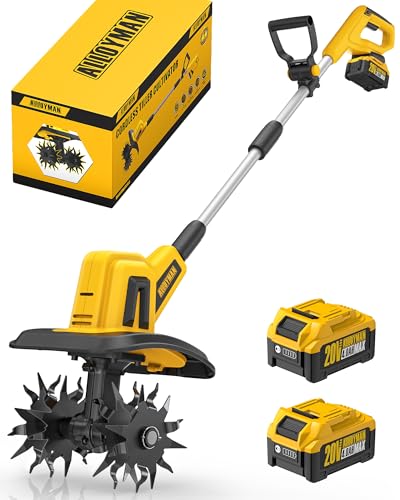
Pros
- Cordless operation
- Two interchangeable 4.0Ah batteries
- Adjustable auxiliary handle
- Detachable gears for cleaning
Cons
- 9-inch working width limits coverage per pass
- Who should skip it: gardeners needing wider coverage

Pros
- Battery and charger included
- Adjustable tilling width
- No gas or oil required
- Three-year tool and battery warranties
Cons
- 120-minute stated battery charging time
- Who should skip it: gardeners needing longer sessions between charges

Pros
- Adjustable 11- to 21-inch tilling width
- Tilling depth up to 11 inches
- Onboard transportation wheels
Cons
- 78 pounds may make moving it harder
- Who should skip it: buyers seeking a lightweight tiller
The Best Garden Tillers by Use Case
Best for Wider Corded Coverage: Sun Joe Corded Electric Garden Tiller & Cultivator
The Sun Joe Corded Electric Garden Tiller & Cultivator is a corded model for gardeners who want a broad working path without a gas engine. Its 12-amp motor and listed maximum tilling width of 16 inches suit ground preparation across garden rows or lawn areas near a power source. The listing specifies a tilling depth of up to 8 inches, six steel tines, and three-position wheel adjustment.
Reasons to buy:
- The 16-inch maximum width can cover more ground per pass than the compact cordless models in this guide.
- Three-position wheel adjustment gives you a way to manage depth and control.
- The folding handle supports easier storage and transport.
Reasons to avoid:
- A corded design ties your working area to a suitable power outlet and cord reach.
- The listed maximum depth is 8 inches, less than the gas pick’s stated maximum depth.
Skip it if you need to work far from an outlet or want cordless freedom.
Best for Cord-Free Bed Preparation: GARDTECH 20V Cordless Tiller Cultivator,330 RPM
The GARDTECH 20V Cordless Tiller Cultivator,330 RPM is aimed at smaller gardens and raised beds where a power cord would get in the way. Its listing specifies a 9-inch tilling width and 6-inch depth, with four steel blades and two 20V 4.0Ah batteries. The manufacturer claims up to 40 minutes of continuous runtime using both batteries together, so treat that figure as a stated claim rather than a guaranteed result in every soil type.
Reasons to buy:
- Two included batteries and a charger provide a cordless setup, with a spare battery available for rotation.
- The 9-inch width is suited to narrower beds and confined planting areas.
- Detachable tines are designed to make cleanup easier after use.
Reasons to avoid:
- A 9-inch working width means more passes than a wider corded or gas tiller may need.
- The stated runtime is a manufacturer claim; actual runtime can depend on conditions and use.
Skip it if you need to cover a large plot quickly or need deeper cultivation than the listed 6 inches.
Best for Raised Beds Without a Motor: Jardineer Hand Tiller for Gardening
The Jardineer Hand Tiller for Gardening uses a manual twist-and-press design rather than a motor, making it a simple choice for small patches, flower beds, and raised beds. Its listing describes a foot plate for applying downward force and a curved, long handle intended to reduce twisting effort and back strain. The maker recommends watering very dry clay or rocky soil beforehand to soften it.
Reasons to buy:
- Manual operation avoids batteries, charging, a power cord, and fuel.
- The foot plate lets you add body weight while driving the tines into soil.
- The listing identifies soil loosening, aeration, weeding, and mixing amendments as intended tasks.
Reasons to avoid:
- It relies on your own force, so it is not a motorized option for covering a large garden.
- The maker advises softening very dry clay or rocky soil before use.
Skip it if you want powered cultivation or have a large area to turn.
Best Budget Hand Tool: Garden Weasel Double-Sided Garden
The Garden Weasel Double-Sided Garden is a compact hand cultivator for gardeners who need to rake, aerate, loosen, or cultivate small areas without buying a powered machine. Its listed design has three prongs, and the manufacturer describes it as a handheld tool for preparing soil for planting. The listing also states that it includes a lifetime guarantee against defects in materials and workmanship; check the supplied guarantee terms for coverage details.
Reasons to buy:
- The straightforward hand-tool format needs no battery, outlet, or engine.
- Three prongs support small-scale cultivating, raking, and aeration tasks.
- The stated lifetime defect guarantee is a useful point to review when comparing manual tools.
Reasons to avoid:
- Its hand-powered design is better suited to localized work than broad ground preparation.
- The listing does not provide a working width or tilling depth, so compare the tool’s dimensions before buying if reach is important.
Skip it if you need a machine to turn a large or deeply compacted plot.
Best for Wider Gas-Powered Cultivation: Earthquake 20015 Versa 2-in-1 Tiller Cultivator
The Earthquake 20015 Versa 2-in-1 Tiller Cultivator is the gas-powered choice for buyers who want a wider, deeper machine than the electric and compact cordless models listed here. Its 99cc four-cycle Viper engine powers a front-tine design, and the listing specifies adjustable working width from 11 to 21 inches and tilling depth up to 11 inches. Removable outer tines and side shields let you change the working width, while onboard wheels help with transport.
Reasons to buy:
- The adjustable 11-to-21-inch width supports both narrower and wider working paths.
- The listed maximum depth of 11 inches exceeds the stated depth of the other powered picks here.
- Tool-less removal of outer tines and side shields allows width adjustment.
Reasons to avoid:
- A gas engine is a more involved choice than a manual tool or corded electric model.
- The published information does not specify fuel capacity or runtime, so check the product listing if those details matter to your work plan.
Skip it if you only need to loosen a few small beds or prefer not to use a gas-powered tool.
Also Considered
The LawnMaster TE1216M Electric Tiller 12-Amp, 16-Inch could suit gardeners who want a corded 16-inch model with a listed 9-inch depth, but the published details provide less information about storage and handling than the Sun Joe option. The BARAYSTUS Rotary Cultivator Garden Rotary Tiller may fit light manual aeration and reseeding, though its listing cautions against extremely hard or rocky soil. The Muylux 20V Cordless Tiller Cultivator is a compact cordless alternative with two 2.0Ah batteries, but its listed working depth is 4 inches. The Alloyman 20V Cordless Tiller Cultivator offers a 9-inch width, a stated 6-inch depth, and two 4.0Ah batteries, but its stated runtime claims should be checked against your expected workload.
How to Choose the Best Garden Tiller
Match the power source to your work area
A corded tiller can make sense when your garden sits within practical reach of an outlet. It avoids battery charging, but the cord limits where you can move and calls for careful routing as you work. The Sun Joe is the corded pick here, while the GARDTECH model is cordless and comes with two batteries for work away from an outlet.
Manual tools avoid a motor and charging altogether, but you supply the effort. A gas tiller does not depend on a power cord or battery, yet it brings an engine into the job. Compare the stated power source with your yard layout, storage plans, and willingness to manage an engine before choosing.
Compare width and depth with the plot
Working width affects how many passes you may need: a wider model can cover more ground per pass, while a narrower machine is easier to match to small beds and tight rows. The powered options in this guide range from the GARDTECH’s listed 9-inch width to the Earthquake’s adjustable 11-to-21-inch width. A wider tool is not automatically a better fit if you need to maneuver between established plants.
Depth matters when you are preparing soil below the surface rather than lightly loosening it. The listed depths differ across these models, and manual tools do not have published depth figures in the published data. Check the product listing for a stated working depth and consider whether your task calls for shallow cultivation or deeper soil preparation.
Check battery details and stated runtime
For cordless models, look at battery voltage, included battery count, capacity, charger inclusion, and any stated runtime. The GARDTECH listing includes two 20V 4.0Ah batteries and claims up to 40 minutes of continuous runtime when both are used together. The Greenworks listing states up to 45 minutes on its included 40V 4.0Ah battery, while also listing a 120-minute charge time.
These are manufacturer-listed figures, not a promise of the same runtime in every garden. Soil conditions and the way you use the tool can affect how long work takes. If you already own batteries from a particular system, verify exact model compatibility in the listing instead of assuming that voltage alone guarantees a match.
Think about soil condition and task size
Compact manual cultivators are intended for localized work such as loosening beds, mixing amendments, and aerating. The Jardineer listing specifically says to water very dry clay or rocky soil in advance, while BARAYSTUS cautions against extremely hard or rocky ground. Those warnings matter if your soil is dense, dry, or full of stones.
For larger areas, compare motor type, working width, and depth rather than relying on a broad claim that a tool handles all soil. The Earthquake offers the widest stated width range and greatest stated depth among these picks, but that does not establish how it will perform in your particular ground. Check the manufacturer’s guidance for your soil conditions and the work you plan to do.
Account for storage, handling, and upkeep
Storage and transport can influence whether a tool is convenient enough for regular use. The Sun Joe has a folding handle, and the Earthquake listing specifies onboard wheels and an adjustable handlebar height. BARAYSTUS describes a disassemblable handle, but its listing also advises checking and tightening screws periodically.
Electric and battery models avoid gas and oil, according to the published descriptions, while a gas model uses an engine. Manual tools require no motor, but they depend on your strength and technique. Compare those practical differences with your storage space and expected maintenance before deciding.
How We Compared
We compared the published product specifications and design details, including power source, listed working width and depth, batteries and runtime claims, tine design, adjustment features, and stated intended uses. We also considered customer feedback information where provided; the published data shows ratings but no review text, so it does not support claims about recurring owner experiences. Recommendations reflect how each listed feature fits a particular garden task, not a guarantee of results in every soil condition.
Frequently Asked Questions
What is the difference between a tiller and a cultivator?
The terms overlap in these listings. Some products are described as both tillers and cultivators, with tasks such as loosening soil, mixing amendments, aerating, and preparing ground for planting. Compare the stated width, depth, and intended tasks rather than relying on the product name alone.
Is a cordless tiller suitable for a large garden?
It depends on the garden’s size, the model’s working width, and how much area you can cover during its stated battery runtime. Compact cordless models here list working widths around 9 inches, so a wider garden can call for many passes. Treat runtime as a manufacturer claim and check battery and charging details before planning a long session.
Should I choose a corded electric or gas tiller?
A corded electric model suits work within reach of an outlet and avoids gas and oil. A gas model can be a better fit when you want a wider working range and do not want a power cord, but it uses an engine. Compare the area, listed width and depth, and your preferences for power and upkeep.
Can a hand tiller break up hard or rocky soil?
Some hand tiller listings describe use in compacted or clay soils, but they do not establish that every manual tool will handle every hard or rocky patch. Jardineer advises watering very dry clay or rocky soil beforehand, and BARAYSTUS warns against extremely hard or rocky ground. Read the individual model’s guidance and soften difficult soil when the manufacturer recommends it.
What should I check before buying a battery-powered tiller?
Check the exact battery voltage and capacity, how many batteries and chargers are included, stated runtime, and recharge time. Confirm compatibility with any batteries you already own rather than assuming products share a system. Also compare the tool’s listed width and depth with the beds or rows you need to cultivate.




Write Your Review
No reviews yet. Be the first to share your experience!