

Automatic litter boxes can reduce daily scooping, but they differ in ways that affect whether a cat will use them. Some need crystal litter, some support clumping litter, and some add app controls that simpler plug-in models skip.
This guide to the best automatic litter box options compares entry styles, safety features, waste handling, and connectivity. Use those details to narrow the choices to your cat’s habits, your home, and the level of maintenance you want to manage.

Pros
- Large 95 L roller capacity
- 15 L waste bin
- App-based cleaning and waste controls
- Includes two rolls of garbage bags
Cons
- App requires 2.4 GHz WiFi
- Who should skip it: households without 2.4 GHz WiFi

Pros
- No app or Wi-Fi setup
- Open-top design
- 10L waste container
Cons
- Skip if you want app or Wi-Fi controls
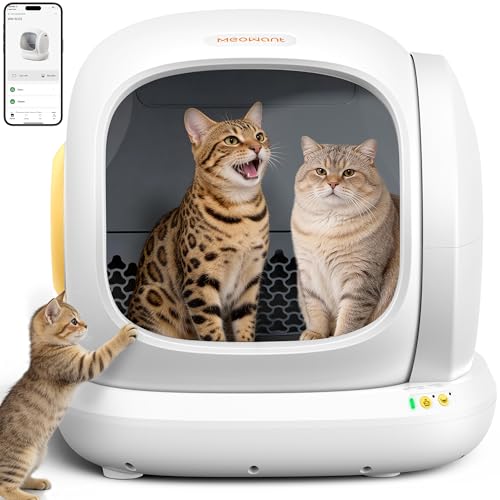
Pros
- Spacious 75L open-top design
- Low 6.8-inch entrance
- Includes litter mat and liner
- Supports several clumping litter types
Cons
- Requires 2.4GHz Wi-Fi for app features
- Similar-weight cats may be misidentified
- Who should skip it: households using non-clumping litter

Pros
- Visit-frequency tracking
- Sealed waste compartment
- Lidded disposable tray
- Covered front-entry design
Cons
- Multi-cat homes need more frequent tray changes
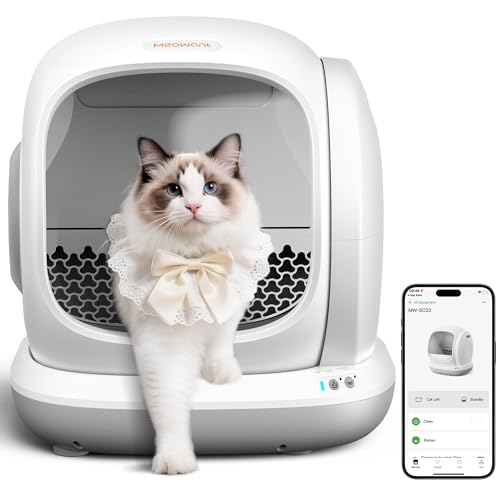
Pros
- Roomy 75L interior
- Low, open entry
- App-based activity and weight tracking
- Supports multiple clumping litter types
Cons
- Requires 2.4GHz Wi-Fi for app connection
- Not suitable for kittens under six months
- Skip if litter granules exceed 15mm

Pros
- Cat detection uses two sensor types
- App includes alerts and habit tracking
- Detachable parts for cleaning
Cons
- Requires 2.4 GHz Wi-Fi for app control
- Regular sensor and roller cleaning advised
- Skip if app connectivity or routine sensor care is impractical

Pros
- Extra-large open-top entry
- Six infrared sensors
- App-based cycle controls and usage data
- 12-liter waste bin
Cons
- Not suitable for cats under 5.91 inches tall or 3 pounds
- App does not identify cats or detect their weight
- Skip it if your cat falls below the stated minimum size
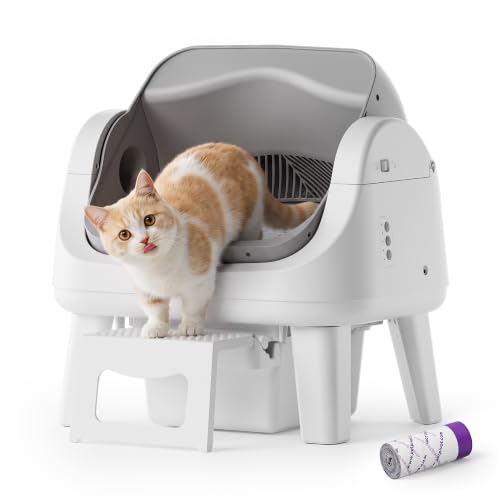
Pros
- No app or Wi-Fi required
- Open top offers visibility
- Collection bin organizes waste
Cons
- Open-top design may not suit enclosed-box preferences
- Who should skip it: owners seeking an enclosed litter box

Pros
- Open-top, low-entry design
- Ten contact sensors
- Sealed 10 L waste drawer
- No app or WiFi required
Cons
- Requires clumping litter granules under 15 mm
- Who should skip it: households with cats outside stated age or weight range

Pros
- Sealed waste compartment
- Motion-sensor visit counter
- Open-top access
- Disposable tray includes lid
Cons
- Multi-cat homes need more frequent tray changes
- Who should skip it: households avoiding non-clumping crystal litter
The Best Automatic Litter Boxes by Use Case
Best for Low-Entry Access: Meowant Self-Cleaning Cat Litter Box
The best automatic litter box for cats that benefit from an easier step-in is the Meowant Self-Cleaning Cat Litter Box. Its 75-liter interior and 6.8-inch entrance are listed for cats weighing 3.3 to 22 pounds, including senior, short-legged, and overweight cats. The AIRPET app connects over 2.4 GHz Wi-Fi and can track activity and weight, though cats with similar weights may be confused in the app.
Reasons to buy:
- Low entrance may be easier for cats that struggle with a taller step.
- Nine sensors support weight detection, motion stopping, and abnormality alerts.
- Listing specifies compatibility with clumping litter granules under 15 mm.
Reasons to avoid:
- App needs 2.4 GHz Wi-Fi, and supports up to six cats.
- Do not put a mat under the unit, as the listing says it can affect weight readings.
Skip it if your home network lacks 2.4 GHz Wi-Fi or your cat is under 3.3 pounds.
Best App-Free Setup: WARCAT Automatic Self-Cleaning Cat Litter Box
The WARCAT Automatic Self-Cleaning Cat Litter Box suits owners who want automatic cycling without an app, account, or Wi-Fi connection. Its open, low-entry design is listed for cats at least six months old and weighing 3.5 to 22 pounds. The 10-liter sealed drawer is sized for regular use in multi-cat homes, though the listing does not give a specific number of days between emptying.
Reasons to buy:
- Ten sensors pause cleaning when a paw, tail, or body crosses the entry.
- Child lock helps prevent small hands from changing the cycle.
- Works with bentonite and mixed clumping litter under 15 mm.
Reasons to avoid:
- No app-based remote controls or habit tracking.
- Not listed for kittens under six months or cats outside its weight range.
Skip it if you want app alerts or need a unit for a kitten younger than six months.
Best for Crystal Litter: PetSafe ScoopFree Crystal Pro Legacy Self-Cleaning
The PetSafe ScoopFree Crystal Pro Legacy Self-Cleaning uses a removable rake and a disposable tray, rather than the rotating drum and clumping litter used by most other picks here. The covered version includes a motion-sensor health counter and is listed for up to 30 days between tray changes in a single-cat home. That interval is a manufacturer claim, and multi-cat households need to change the tray more often.
Reasons to buy:
- Crystal litter absorbs urine and dehydrates solid waste, according to the listing.
- Disposable tray includes a plastic liner and lid for disposal.
- Covered design helps keep the litter area out of view.
Reasons to avoid:
- Uses non-clumping crystal litter, so it is not a fit if you want to keep using ordinary clumping litter.
- Replacement trays are part of the ongoing setup; confirm their availability and fit before buying.
Skip it if your cat will not use crystal litter or you prefer a reusable waste drawer.
Best for Large Waste Capacity: Cumrige Automatic Litter Box,Safety Sensor,App
The Cumrige Automatic Litter Box,Safety Sensor,App is aimed at households that want a large drum and app controls. The listing specifies a 95-liter roller for cats weighing 2.2 to 33 pounds and a 15-liter waste bin that can last up to 15 days, depending on use. Tuya Smart app features include remote cleaning, waste disposal, litter changes, and health tracking; connectivity is limited to 2.4 GHz Wi-Fi.
Reasons to buy:
- Wide listed cat-weight range accommodates cats up to 33 pounds.
- Large waste bin may reduce how often you empty it.
- Sensors pause cleaning when they detect a cat.
Reasons to avoid:
- App functions depend on 2.4 GHz Wi-Fi.
- Listing says it works with clumping litter, so verify your preferred litter type before purchase.
Skip it if you want a fully offline unit or your cat weighs more than 33 pounds.
Best for App-Based Habit Tracking: Coziley Self Cleaning Litter Box for Multiple
The Coziley Self Cleaning Litter Box for Multiple combines app controls with an open entry and sensor-based stopping. Its 2.4 GHz Wi-Fi app provides remote operation, alerts, and habit tracking, while a Kitten Mode is listed for gentler care. The product is listed for cats weighing 2.5 to 18 pounds, a narrower range than several large-capacity alternatives.
Reasons to buy:
- Four infrared sensors and four weight sensors detect cats and halt operation.
- Detachable parts support access for cleaning.
- Includes two rolls of trash bags and a litter mat, according to the listing.
Reasons to avoid:
- App requires 2.4 GHz Wi-Fi.
- Weight limit tops out at 18 pounds, so it may not suit larger cats.
Skip it if your cat is outside the listed weight range or you do not want app-connected equipment.
Also Considered
The Self Cleaning Litter Box could suit buyers seeking an open-top, app-free design, but its listed 6-kilogram litter capacity and 10-liter waste bin offer less detail about cat-size fit.
The Meowant 75L Extra Large Automatic Litter Box Self offers a low entry, app monitoring, and a 35 dB noise claim, but overlaps with the selected low-entry Meowant model.
The Meowant Extra Large Automatic Litter Box Infrared may suit homes wanting a top-entry unit, but its entry style is less convenient for cats that need low access.
The Automatic Litter Box, Self Cleaning Litter Box is an app-free open-top option, though its published details give fewer specifics about cat-size limits and waste capacity.
How to Choose the Best Automatic Litter Box
Match the litter system to your current routine
Start by checking whether the box uses ordinary clumping litter or a dedicated crystal system. Drum-style models in this comparison list compatibility with clumping litter, sometimes with a maximum granule size; PetSafe ScoopFree uses non-clumping crystal litter and disposable trays. Switching litter can be a barrier for cats that strongly prefer a familiar texture, and the crystal system also means checking replacement tray fit and supply.
Read the compatibility details closely instead of relying on a broad label such as “automatic.” Meowant lists clumping granules under 15 mm, while WARCAT specifies bentonite and mixed clumping litter under 15 mm. If your usual litter is not named, confirm suitability with the manufacturer before changing your cat’s setup.
Choose an entry style your cat can use
Open-top boxes let cats see their surroundings and make it easy for owners to inspect the litter area. Covered models provide more visual separation, but an enclosed space may not suit a cat that dislikes confined areas. Low-entry designs, such as the selected Meowant, can be worth considering for senior or short-legged cats; check the stated entrance height and weight range rather than assuming every cat can enter comfortably.
Top-entry designs need extra care when assessing access. The Meowant Extra Large model lists a top opening and says it is suitable for cats over 5.91 inches tall and weighing more than 3 pounds. Compare those requirements with your cat’s size and mobility before choosing a top-entry unit.
Compare sensors and cleaning-cycle controls
Automatic cleaning brings moving parts into the litter area, so check how the listing describes detection and stopping. Options here specify infrared sensors, weight sensors, motion stopping, or a combination. These are manufacturer feature claims, not a guarantee that every setup will respond perfectly. Follow the instructions for placement and sensor care, and supervise your cat’s introduction to a new unit.
App-free models use physical controls or automatic cycles without wireless pairing. That can make setup more straightforward, but it also means no remote controls or app-based usage logs. If you want remote alerts, check whether the app requires 2.4 GHz Wi-Fi and whether its tracking features match your needs. Do not assume that app access means compatibility with a particular smart-home ecosystem; none of the published listings establishes that integration.
Estimate maintenance from bin size and household use
A larger waste bin can mean fewer emptying trips, but stated intervals depend on the number of cats and how much they use the box. Cumrige lists a 15-liter bin and up to 15 days, while the top-entry Meowant listing says its 12-liter waste bin can hold up to 10 days of waste. Treat those intervals as listing claims, not fixed schedules, and plan to check the drawer regularly.
Also consider how much cleaning you are willing to do beyond emptying the bin. Coziley lists detachable parts, while other models may need regular sensor or roller cleaning. Before buying, look for instructions on disassembly, cleaning, waste bags, tray replacement, and the litter fill line. A system with a large bin still needs routine care.
Check dimensions, noise claims, and home placement
Compare the product’s footprint and entry clearance with the space where you plan to put it. Several listings give interior capacity or entry dimensions but do not provide complete exterior measurements in the published information. Check the full listing for those measurements before ordering, especially if the box must fit in a closet or narrow laundry area.
Some listings state noise figures, including 35 dB for the selected Meowant and 32 dB for the app-free open-top option. Those are stated product specifications, not a promise of how loud the box will seem in your room. Consider where the motor will run, whether nighttime cycles could disturb household members, and whether your cat reacts to mechanical sounds.
How We Compared
This comparison uses the published product listings, including their stated litter compatibility, entry designs, capacity figures, sensor and app features, and included accessories. Where listings describe a duration, noise level, safety feature, or odor-control result, we present it as a manufacturer specification rather than an independently verified outcome. Customer feedback was not supplied for these products, so this guide does not draw conclusions from buyer experiences.
Frequently Asked Questions
Can I use my regular clumping litter?
Many drum-style options in this guide list compatibility with clumping litter, but some specify limits on granule size or litter type. PetSafe ScoopFree models instead use non-clumping crystal litter. Check the exact product’s compatibility instructions before using your current litter.
Do app-connected litter boxes work without Wi-Fi?
App features need a compatible network connection. The listed app models specify 2.4 GHz Wi-Fi, so check your router settings before buying. The WARCAT and the two app-free open-top options in this guide do not require app or Wi-Fi setup.
Are automatic litter boxes suitable for kittens?
Suitability depends on the individual product’s age and weight limits. WARCAT is listed for cats six months and older, and the Meowant 75L model also says kittens under six months should wait. Check the manufacturer’s instructions and use a litter setup your kitten can enter safely.
Which is easier to maintain, a rake or a rotating drum?
A rake system such as PetSafe ScoopFree gathers waste into a tray, but it uses crystal litter and disposable trays. Drum-style systems separate clumps into a waste drawer and typically work with specified clumping litter. Your choice depends on whether you prefer tray replacement or a reusable drawer, along with the litter your cat accepts.
Can one automatic litter box serve multiple cats?
Several listings describe their products as suitable for multiple cats, but waste capacity and app tracking limits still matter. Meowant’s AIRPET app supports up to six cats, and similar cat weights may cause identification errors. Check each model’s cat-size range and plan to empty the bin more often as household use increases.





Write Your Review
No reviews yet. Be the first to share your experience!