

Wet leaves and large yards can call for more airflow than a compact cleanup, but a bigger gas engine also adds carrying and maintenance considerations. This guide to the best backpack leaf blower options compares rated airflow, engine size, harness features, fuel capacity, and controls so you can find a model suited to your property and routine.
These are manufacturer figures, so compare them carefully: CFM describes air volume, while MPH describes airspeed. Neither number alone tells the whole story, and there is no common, independent measurement method behind them.

Pros
- Variable speed and cruise control
- Padded backpack harness
- 1.7 L fuel tank
- Tool-free air-filter replacement
Cons
- 22 lb weight may feel cumbersome
- Skip it if you want a lightweight or cordless blower

Pros
- Two nozzle styles included in the design
- Cruise control and variable-speed throttle
- Backpack harness with shock-absorbing straps
Cons
- Listed weight is 21 pounds
- Who should skip it: buyers seeking a lighter blower

Pros
- Large 3L fuel tank
- Cruise control for steady airflow
- Adjustable padded shoulder straps
- Multiple included tools and accessories
Cons
- 29.75 lb weight may not suit buyers seeking lighter equipment
- Who should skip it: buyers seeking a lighter blower

Pros
- Up to 230 MPH airspeed
- 920 CFM listed airflow
- 65 oz fuel tank
- Padded shoulder straps and back support
Cons
- Skip it if you prefer an electric blower

Pros
- High stated airflow and airspeed
- Cruise control for sustained operation
- Ventilated padded backpack harness
- Three-liter fuel tank
Cons
- Requires a 25:1 fuel mixture
- Who should skip it: buyers seeking battery-powered operation

Pros
- Ventilated, load-reducing harness
- Adjustable offset handle
- Cruise control
- Air purge starting system
Cons
- Weighs 23.2 lb
- Who should skip it: buyers unwilling to carry a heavy blower
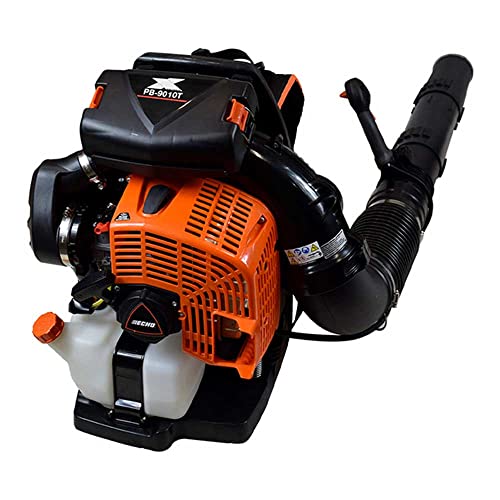
Pros
- Tube-mounted throttle
- 79.9 cc engine
- Advertised air speed and airflow figures
Cons
- Listed weight is 32 lb
- Skip it if you need more product or safety details
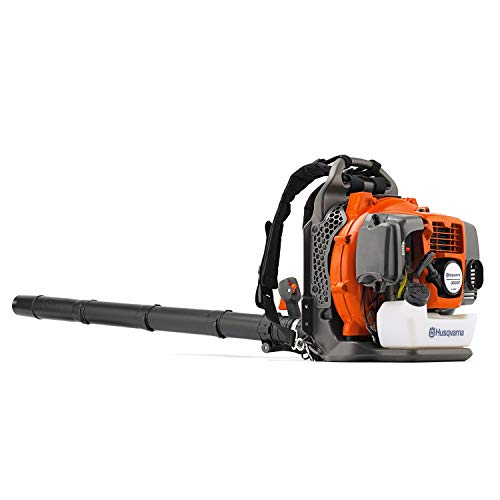
Pros
- Backpack harness system
- Adjustable offset handle
- Cruise control
- Air purge system
Cons
- 22-pound weight may not suit buyers seeking lighter equipment
- Who should skip it: buyers seeking an electric blower

Pros
- High stated airflow and blowing force
- Wide-strap backpack harness
- Cruise control and air purge
Cons
- Weighs 24.5 lb
- Who should skip it: buyers seeking a handheld blower

Pros
- High listed airflow and air speed
- Backpack design with padded straps
- Designed for lawns, driveways, and decks
Cons
- Weighs 32.8 pounds
- Who should skip it: shoppers prioritizing lighter equipment
The Best Backpack Leaf Blowers by Use Case
Best Value: Thalorus 63CC Backpack Leaf Blower, 665 CFM
The Thalorus 63CC Backpack Leaf Blower, 665 CFM stands out for buyers who want cruise control, variable speed, and a padded harness without moving to a larger engine class. Thalorus rates it at 665 CFM and 205 MPH, with a 1.7 L tank. It also claims the engine starts in three to five pulls, a detail worth checking against the seller’s current product information.
Reasons to buy:
- Variable speed supports gentler work near garden beds.
- Cruise control can hold a steady setting across open areas.
- A 1.7 L tank and a tool-free, two-stage air-filter replacement.
Reasons to avoid:
- Its 665 CFM is the lowest airflow among the main picks.
- No weight or noise rating is given, which makes longer sessions harder to plan for.
Who should skip it: Skip it if you need the most airflow for large, debris-heavy areas.
Best for High Airspeed: PROYAMA 72CC Gas Backpack Leaf Blower
The PROYAMA 72CC Gas Backpack Leaf Blower suits buyers who prioritize airspeed and want two nozzle shapes for different cleanup areas. PROYAMA rates it at up to 880 CFM and 275 MPH, with flat and round nozzles. Cruise control and a self-throttle lock maintain a chosen engine speed, while the padded, shock-absorbing harness addresses carrying comfort.
Reasons to buy:
- Its 275 MPH is the highest rated airspeed among these picks.
- Flat and round nozzle options are intended for broad areas and tighter spaces.
- Cruise control and a self-throttle lock reduce the need to keep adjusting the throttle.
Reasons to avoid:
- The 72CC two-cycle engine means you should confirm fuel-mixing instructions and upkeep needs before buying.
- No weight or tank capacity is stated, so carrying load and runtime are hard to judge.
Who should skip it: Skip it if you prefer a smaller engine or need clearly stated weight and runtime details.
Best for Long Cleanup Sessions: VEVOR 79cc Backpack Blower 2 Cycle Gas Powered
The VEVOR 79cc Backpack Blower 2 Cycle Gas Powered is a fit for buyers who value a large tank and high air volume. VEVOR rates it at 930 CFM and 184 MPH, with a 3 L tank and up to 95 minutes of continuous operation. That runtime is a manufacturer claim, not a guarantee for every workload or operating condition.
Reasons to buy:
- The 3 L tank is larger than any other tank capacity given for these picks.
- Adjustable hose angles and a throttle allow airflow direction and output control.
- The kit includes earmuffs, a mixing bottle, wrenches, a manual, and blower pipes.
Reasons to avoid:
- Its 184 MPH is the lowest airspeed among the main picks.
- A 79cc engine plus a full 3 L tank is a lot to carry, and no weight is given, so check carrying details before choosing it for extended work.
Who should skip it: Skip it if high airspeed matters more to you than tank capacity.
Best Lightweight Listed Option: Schröder Backpack Leaf Blower – Backpack Blower
The Schröder Backpack Leaf Blower – Backpack Blower is the clearest choice here for shoppers comparing blower weight. It weighs a stated 19.5 lb and pairs that with a 63.3 cc engine, 920 CFM, and 230 MPH. A 65 oz (1.9 L) fuel tank rounds out the specs.
Reasons to buy:
- The stated 19.5 lb weight gives buyers a concrete figure for comparing carrying load.
- Its 920 CFM and 230 MPH suit buyers seeking substantial output.
- Padded shoulder straps and back support are part of the design.
Reasons to avoid:
Reasons to avoid:
- Cruise control is not mentioned, while the Thalorus, PROYAMA, and Husqvarna 570BTS all have it; verify the control setup if that feature is important.
- At 19.5 lb, it is still a backpack engine, not a lightweight handheld tool.
Who should skip it: Skip it if you want a cordless blower or need detailed runtime and noise information.
Best for Heavy-Duty Air Volume: Husqvarna 570BTS Backpack Leaf Blower
The Husqvarna 570BTS Backpack Leaf Blower targets demanding cleanup where high airflow and a commercial-use design are priorities. Its 66 cc, 4 HP engine is rated at 972 CFM and 236 MPH, with an air purge system, cruise control, and a load-reducing harness. Husqvarna also cites LowVib technology and a pro-grade air filter, but gives no weight or tank capacity.
Reasons to buy:
- Its 972 CFM is the highest rated airflow among the main picks.
- Cruise control and a multi-speed throttle offer more control over operating speed.
- An air purge system and a harness with wide shoulder straps.
Reasons to avoid:
- Its 236 MPH trails the PROYAMA’s 275 MPH if airspeed is your priority.
- A 66 cc two-cycle engine may be more blower than a small property needs; account for fuel handling and upkeep.
Who should skip it: Skip it if you mainly clear a small patio or want a smaller-engine option.
Also Considered
Husqvarna 360BT Gas Backpack Leaf Blower could suit buyers seeking a ventilated harness, cruise control, and a rated 890 CFM, but Husqvarna gives no blower weight or tank capacity.
Echo 220 MPH 1110 CFM 79.9 cc Gas 2-Stroke X may interest shoppers prioritizing its rated 1,110 CFM, but there is too little detail to judge comfort, fuel capacity, or controls.
Husqvarna 350BT Gas Leaf Blower offers a rated 692 CFM, cruise control, and an ergonomic harness, but its 50.2 cc engine and 180 MPH output are lower than several picks here.
PRORUN 75.6cc 1020 CFM 240 MPH Gas-Powered 2-Cycle could fit buyers looking for a rated 1,020 CFM and 240 MPH, but its fuel capacity, weight, and control features are not given.
How to Choose the Best Backpack Leaf Blower
Compare CFM and MPH together
CFM describes the volume of air a blower moves, while MPH describes its airspeed. A higher figure in one category does not automatically make a blower better for every task: airflow volume can help move broad piles, while airspeed can matter when dislodging stubborn debris. Compare both numbers, and note that there is no shared measurement method behind these figures.
For example, the rated 972 CFM of the Husqvarna 570BTS Backpack Leaf Blower emphasizes air volume, while the PROYAMA 72CC Gas Backpack Leaf Blower is rated at 275 MPH. Consider your usual material, yard size, and where you need to direct debris rather than choosing by one headline number.
Match engine size to workload and upkeep
These models use two-cycle gas engines, with sizes from 50.2 cc to 79.4 cc among products described in detail. A larger engine can accompany higher rated output, but it also makes fuel handling and maintenance worth considering. Check the manual for the required fuel mixture, starting instructions, air-filter service, and maintenance schedule before purchase.
Smaller properties may not benefit from a large engine’s extra capacity. If you expect long sessions or heavy wet debris, compare the engine and airflow figures with the carrying weight, tank, and controls rather than assuming engine size alone predicts suitability.
Check weight, harness, and controls
A backpack format puts the engine on your back, but it does not make weight irrelevant. The Schröder is rated at 19.5 lb; several others give no weight, so verify the complete operating weight where possible. Harness padding, ventilation, load distribution, vibration features, and handle adjustment can affect comfort during repeated passes.
Throttle placement and cruise control matter when you switch between delicate areas and open lawn. Variable speed can help reduce output near planting beds, while a lock or cruise control can hold a chosen setting. Confirm the controls shown for the exact model, since features vary between blowers even within a brand.
Use tank size and runtime claims carefully
A larger fuel tank can reduce refueling stops, but it does not prove a particular runtime. VEVOR specifies 3 L and claims 95 minutes of continuous operation; actual duration depends on conditions and settings. Other models give tank capacity without an operating-time estimate.
Check fuel capacity, fuel-mix directions, and whether a runtime figure is clearly attributed to the manufacturer. If you need to complete a large property in one session, do not rely on tank size alone to predict how long the blower will run.
Consider noise, accessories, and the job surface
None of these models comes with comparable noise ratings. Gas blowers can be loud, so check the manual for hearing-protection guidance and local rules on blower use and operating hours. VEVOR includes earmuffs, but that does not establish a noise level or replace checking suitable protective equipment.
Nozzle shapes and included parts can affect day-to-day convenience. The PROYAMA comes with flat and round nozzles, while VEVOR includes several pipes and tools in its accessory kit. For gravel or delicate surfaces, verify the manufacturer’s instructions for safe operation and airflow adjustment rather than assuming every nozzle is suitable.
How We Compared
This comparison draws on manufacturer specifications, design details, and customer-feedback information. We focused on rated airflow and airspeed, engine size, fuel capacity, controls, harness details, weight, and included accessories. No customer review text was available, and several models omit weight, runtime, or noise figures, so those gaps are noted instead of filled with assumptions.
Frequently Asked Questions
Should I choose a higher CFM or a higher MPH?
Compare both. CFM is the rated air volume, while MPH is the rated airspeed; each describes a different part of airflow. Match them to the debris and area you clear, and remember that these figures do not share a common measurement standard.
Do these backpack blowers need a battery or charger?
The models in this comparison are gas-powered, two-cycle blowers, not battery models. They do not depend on a battery charge, but gas engines need fuel and routine maintenance. Check the specific manual for fuel-mixing and starting directions.
Can a backpack blower clear wet leaves?
Several makers say their blowers handle wet leaves, but that is a manufacturer claim, not a guarantee for every leaf type or yard condition. The models with higher rated airflow may be worth comparing for heavy cleanup, but also consider airspeed, harness fit, and the time required for the job.
Does a larger fuel tank guarantee longer runtime?
No. A larger tank holds more fuel, but runtime also depends on engine use and operating conditions. Treat VEVOR’s 95-minute figure as a manufacturer claim and check the manual for operating details.
What should I verify before ordering a gas backpack blower?
Confirm the exact model, fuel mixture, starting procedure, maintenance instructions, operating weight, and included nozzles or accessories. Check noise guidance and local restrictions as well. Not every model states all of these details, so consult the seller’s current specifications and product manual.


Write Your Review
No reviews yet. Be the first to share your experience!