

Nut butter puts different demands on a blender than smoothies do: a small personal cup, a large pitcher, and a tamper each suit different tasks. This guide compares the listed motor claims, capacities, controls, and accessories to help you choose a blender for your batch size and kitchen routine.

Pros
- Two high-capacity portable cups
- Blender and grinder combo
- Pulse mode for chunkier textures
- Top-rack dishwasher-safe parts
Cons
- Food-to-liquid ratio should not exceed 1:1
- Who should skip it: shoppers seeking a smaller single-serving cup

Pros
- Large 70-ounce pitcher
- Six recipe presets
- Variable speed and timer controls
- Dishwasher-safe pitcher, lids, and tamper
Cons
- 19.7 inches tall may challenge low-clearance storage
- Who should skip it: shoppers needing a compact blender
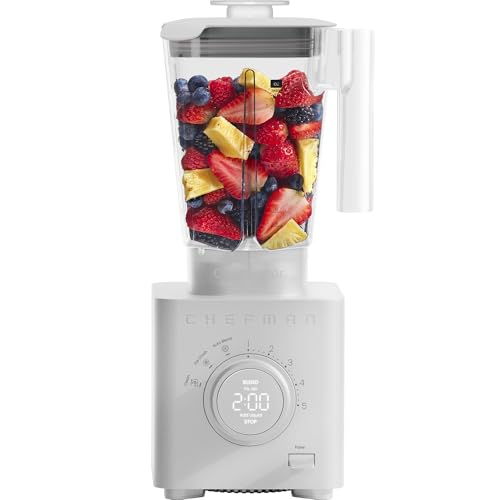
Pros
- Large 48 oz blending capacity
- Auto Blend function
- Five speeds and pulse control
- Tamper and scraper included
Cons
- Countertop design takes dedicated space
- Skip it if you need a compact blender
The Best Blenders by Use Case
Best for Adjustable Batch Blending: 1800W Countertop Blenders for Kitchen
The 1800W Countertop Blenders for Kitchen is the most configurable choice here for shoppers who want a large pitcher and direct control over blending. Its listing specifies a 70-ounce, BPA-free pitcher, six presets, multiple speeds, pulse, and a timer adjustable from 15 to 90 seconds. Those controls may help you start with a grinder preset, then adjust blending time or pulse as ingredients change texture. The listing says it can make silky nut butters, but that is a manufacturer claim, not a guarantee that every nut or batch will blend the same way.
Reasons to buy:
- Large pitcher suits family-sized batches and other kitchen tasks.
- Grinder preset, adjustable speeds, timer, and pulse offer several control options.
- Listing specifies a tamper and dishwasher-safe pitcher, lid, and tamper.
Reasons to avoid:
- A 70-ounce pitcher may be more capacity than you need for small batches.
- The listing does not specify a minimum batch size or give a nut-butter recipe.
Skip it if you want a compact personal blender or need a confirmed minimum quantity for processing nuts.
Best for Small-Batch Grinding: Ganiza Smoothie Blender Max 1300W
The Ganiza Smoothie Blender Max 1300W combines personal drink cups with a separate 23-ounce grinding cup. That arrangement may suit someone who makes small amounts of nut butter, grinds coffee beans or spices, and also prepares individual smoothies. Its listing describes a six-leaf stainless steel blade, pulse control, and a locking cup for hands-free operation. The stated food-to-liquid ratio is at most 1:1, and the listing says not to exceed the MAX mark, so check those instructions before using it for a thick mixture.
Reasons to buy:
- Separate grinding cup gives you an option sized differently from its drink cups.
- Pulse control allows more deliberate chopping than a preset-only approach.
- Two 37-ounce portable cups and a 23-ounce grinding cup support different kitchen tasks.
Reasons to avoid:
- The listing’s liquid-ratio guidance may not suit a thick, low-liquid nut-butter recipe.
- It does not specify a timer or a dedicated nut-butter program.
Skip it if you mainly make large batches or want a countertop pitcher with a tamper.
Best for Tamper-Assisted Blending: Chefman Obliterator 48 oz Countertop Blender
The Chefman Obliterator 48 oz Countertop Blender includes a 2-in-1 tamper and scraper, useful tools to consider when a mixture needs help moving toward the blades or scraping from the sides. Its listing specifies a 48-ounce shatter-resistant Tritan jar, five speeds, pulse, and an Auto Blend function. The jar is smaller than the H-Duka model’s listed 70-ounce pitcher, which may be a more manageable fit for households that do not need family-sized batches. The product information does not describe a dedicated nut-butter setting, so check the manual for guidance on thick mixtures.
Reasons to buy:
- Included tamper and scraper address stirring and scraping during blending.
- Five speeds and pulse provide options for adjusting texture.
- Auto Blend, a countdown timer, and LED alerts add different control cues.
Reasons to avoid:
- The 48-ounce jar holds less than the 70-ounce H-Duka pitcher.
- The listing does not specify a nut-butter preset or minimum batch size.
Skip it if you need the largest listed pitcher or want a clearly specified grinder program.
Best for Preset-Led Family Batches: 1800W Countertop Blenders for Kitchen
The 1800W Countertop Blenders for Kitchen also suits shoppers who prefer to begin with a preset rather than set every control themselves. Its six listed programs include Grinder, Sauce, and Smoothies, while the 70-ounce pitcher is described as suitable for six to eight servings. For households that make a larger batch of spread alongside drinks or sauces, the capacity and program selection may be more useful than a personal blender. However, the listing does not establish how much nut butter the pitcher can process at one time; serving claims for drinks do not answer that question.
Reasons to buy:
- Grinder preset provides a named starting point for grinding tasks.
- Large pitcher is listed for family meals and batches of six to eight servings.
- Timer, pulse, and speed adjustments offer alternatives to preset operation.
Reasons to avoid:
- Its large pitcher may take up more counter or storage space than a personal set.
- The product information does not specify the blender’s dimensions or nut-butter batch yield.
Skip it if you have limited storage space or typically blend only single servings.
How to Choose the Best Blender for Nut Butter
Match jar and cup size to your usual batch
Capacity describes how much a container can hold, not necessarily how little it can process effectively. A large jar may be convenient for family meals, but its blade placement and shape can make a small quantity harder to move through the blending area. The H-Duka listing gives a 70-ounce pitcher, the Chefman listing gives a 48-ounce jar, and the Ganiza set includes a 23-ounce grinding cup plus drink cups. Those figures help compare container options, but they do not establish a minimum nut-butter batch.
Before buying, check the product manual or ask the seller about minimum fill quantities and recommended nut-butter batch sizes. If you regularly make small amounts, favor a model with a smaller included container, such as Ganiza’s grinding cup, while verifying that the manufacturer permits the intended use. For larger household batches, a countertop pitcher may be more convenient, provided the recipe and instructions suit that volume.
Read motor claims as specifications, not a guarantee
Nut butter is thick, so motor power, blade design, container shape, and the recipe all affect the task. The product listings specify 1,800 watts for H-Duka, 1,380 watts for Chefman, and 1,300 watts peak power for Ganiza. These figures are not directly interchangeable performance results: Ganiza labels its number as peak power, and none of the published data gives a standardized nut-butter comparison.
Look for instructions that specifically allow grinding nuts or making nut butter, and check any limits on continuous operation, ingredient volume, or added liquid. H-Duka’s listing describes nut butter as a supported use, while Ganiza lists nuts among its ingredients and gives a food-to-liquid ratio limit. Chefman’s listing highlights nuts and includes a tamper, but does not name a nut-butter program. Confirm the manual’s instructions rather than assuming that a higher wattage alone settles the choice.
Choose controls that fit the way you blend
Presets reduce the number of adjustments you make, while manual speeds and pulse allow more direct control. H-Duka lists six programs, including Grinder, plus adjustable speeds, pulse, and a 15-to-90-second timer. Chefman lists five speeds, pulse, Auto Blend, a countdown timer, and LED alerts. Ganiza offers pulse and a locking cup for hands-free operation. A preset or automated feature may make routine use easier, but it does not prove that one model produces a preferred texture.
Check what each control actually does and whether the included instructions explain when to use it. For nut butter, a way to stop and scrape or adjust blending can be useful, but a tamper should only be used according to the manufacturer’s instructions. If you prefer to choose speed and duration yourself, prioritize adjustable controls and pulse. If you want a button-led routine, look for a named grinder program and read the program guidance.
Consider accessories, cleanup, and storage together
Accessories can change how practical a blender is for thick mixtures. Chefman includes a tamper and scraper, while H-Duka lists a tamper and a self-cleaning pulse routine. Ganiza’s set includes a grinding cup, portable cups, lids, and a cleaning brush. Compare the accessories with your tasks, then verify whether components are dishwasher-safe and whether the maker gives specific cleaning instructions for the blade assembly.
Think about where the blender will live between uses, too. The published information describes Ganiza as compact and gives its cord length, but does not provide dimensions for any model. If cabinet height, counter depth, or storage space matters, check the complete product listing before ordering. Also confirm which parts are removable and how to handle sticky nut residue without reaching near the blades.
For more options in this appliance category, browse our blender buying guides. You can also explore the broader Kitchen Tech category for other countertop appliances.
How We Compared
This comparison uses the published product listings, including stated motor figures, container capacities, controls, included accessories, and care details. We also considered the available customer-feedback information, but each published rating is paired with zero reviews, so it provides no reported customer experiences to assess. Manufacturer descriptions such as nut-butter performance are presented as listing claims, not independently verified outcomes. The available information does not establish minimum batch size, measured blending results, or long-term durability for these models.
Frequently Asked Questions
Can a personal blender make nut butter?
It depends on the model’s instructions, container, recipe, and batch size. Ganiza lists nuts and includes a 23-ounce grinding cup, but its supplied guidance also sets a food-to-liquid ratio limit. Check the manual to confirm whether nut butter is allowed, whether liquid must be added, and what quantity is suitable.
Is a higher wattage always better for nut butter?
No. The listed wattage figures use different descriptions, and the published information does not provide a standardized comparison of results. Jar shape, blade design, batch size, recipe, and manufacturer instructions also matter. Treat wattage as one specification to compare, not proof of a particular texture or speed.
Do I need a tamper for making nut butter?
A tamper can help move ingredients toward the blades when used as directed, and both H-Duka and Chefman list one as included. Its presence does not establish that every mixture will process successfully. Follow the model’s manual, including any instructions about when to use the tamper and whether the blender must be running or stopped.
Which blender suits a large household batch?
H-Duka lists the largest container here, a 70-ounce pitcher, and describes it as suitable for six to eight servings. That serving figure does not specify nut-butter yield, so check the manual for a recommended batch size. Chefman’s 48-ounce jar is a smaller pitcher option, while Ganiza includes several personal and grinding cups.
What should I check before blending hot ingredients?
Check the specific blender’s manual for hot-liquid limits, lid instructions, and safe operating steps. Chefman’s listing says hot liquids can be blended with the lid cover removed and advises covering the opening with a towel to limit splatter. Do not assume the same directions apply to H-Duka or Ganiza, whose published product information does not give equivalent hot-liquid instructions.
Are these blenders compatible with every nut-butter recipe?
No universal recipe compatibility is established by the published details. Ingredients, oil content, batch size, and added liquid can affect how a thick mixture moves in a jar. Follow the blender maker’s recipe and operating guidance, and verify any limits before processing a recipe that differs from the listed examples.




Write Your Review
No reviews yet. Be the first to share your experience!