

Hand stiffness or discomfort can make a conventional mouse difficult to use, but a vertical design is not automatically comfortable for every hand. This guide to the best ergonomic mouse for arthritis compares grip shape, hand-size guidance, wireless connections, power, and controls so you can narrow down options for your setup and routine.

Pros
- Quiet-click buttons
- Bluetooth and 2.4G connections
- Switches between up to three devices
- Four adjustable DPI settings
Cons
- Who should skip it: people with small hands

Pros
- Switches among three devices
- Six adjustable DPI levels
- Quiet left and right clicks
- Low-battery warning
Cons
- Requires two AAA batteries, not included
- Designed for right-handed use only
- Who should skip it: left-handed users; Mac side-button users

Pros
- Three selectable DPI settings
- Dedicated next and previous buttons
- USB receiver stores in mouse
Cons
- Requires two AAA batteries, not included
- Uses 2.4 GHz USB receiver, not Bluetooth
- Who should skip it: left-handed users or Bluetooth-only setups
Pros
- Bluetooth and Logi Bolt connectivity
- Quiet clicks
- Four of six buttons customizable
- Compatible with several operating systems
Cons
- Designed for small to medium right hands
- Who should skip it: left-handed users and people with larger hands

Pros
- Rechargeable 600mAh battery
- Quiet-click design
- Three DPI settings
- Plug-and-play USB receiver
Cons
- Buttons are not programmable
- Recommended for medium or large hands
- Who should skip it: users needing programmable buttons

Pros
- Bluetooth and Logi Bolt connectivity
- Quiet clicks
- Four customizable buttons
- Compatible with five listed operating systems
Cons
- Designed for small-to-medium right hands
- Who should skip it: left-handed users and people with larger hands

Pros
- Three adjustable DPI settings
- Compact wireless USB receiver
- Textured thumb grip
Cons
- Requires two user-supplied AAA batteries
- Who should skip it: left-handed users

Pros
- Three selectable DPI settings
- Thumb buttons
- Removable palm rest
- Wired USB connection
Cons
- Skip if you need confirmed compatibility; host support is unspecified

Pros
- Rechargeable 600mAh battery
- Quiet left and right clicks
- Three adjustable DPI settings
- Back and forward buttons
Cons
- Large 5-inch body may not suit small hands
- USB-C-only MacBooks need an adapter, sold separately
- Who should skip it: users needing Bluetooth or a compact mouse
The Best Ergonomic Mice by Use Case
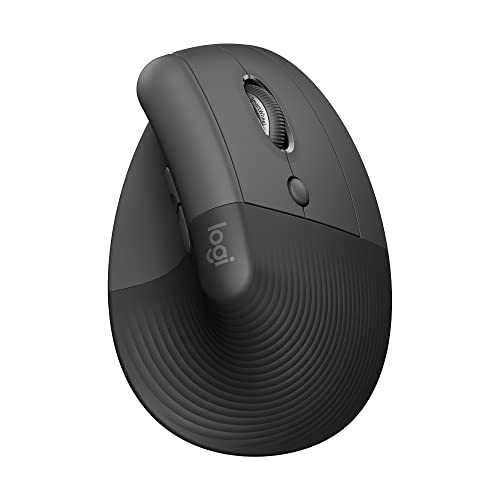
Best for Small to Medium Right Hands: Logitech Lift Vertical Ergonomic Wireless Mouse
The Logitech Lift Vertical Ergonomic Wireless Mouse is the clearest fit here if you have a small or medium right hand and want a more upright grip. Logitech specifies a 57-degree angle, a textured grip, and a thumb rest, plus Bluetooth Low Energy or the included Logi Bolt USB receiver. Its quiet clicks and SmartWheel suit shared workspaces and long stretches of scrolling, while four of its six buttons can be customized. The listing also identifies Lift as designed and approved according to criteria set by leading ergonomists, but that does not establish a medical benefit for every user. See the home office accessory guide if you are also building a desk setup.
Reasons to buy:
- Size guidance targets small to medium right hands.
- Bluetooth and Logi Bolt offer two connection choices.
- Quiet clicks, a thumb rest, and customizable buttons support focused daily work.
Reasons to avoid:
- It is designed for right-handed use, so left-handed buyers should look elsewhere.
- Confirm that your computer supports Bluetooth or has a suitable USB-A port for the receiver.
Skip it if you need a left-handed model or prefer a conventional flat mouse.
Product link: Logitech Lift Vertical Ergonomic Wireless Mouse
Best for Switching Between Devices: UGREEN Ergonomic Wireless Mouse
The UGREEN Ergonomic Wireless Mouse suits medium to large hands and people who move between several computers or tablets. It supports Bluetooth and 2.4 GHz wireless, with switching among up to three devices, and the listing names Windows, macOS, Linux, ChromeOS, and Android compatibility. Four DPI settings from 1000 to 4000 let you change cursor speed for different tasks; that range is useful for tailoring movement, but does not by itself establish greater precision. The USB receiver connection may be useful for a computer without Bluetooth, while its AA battery means you do not have to recharge the mouse.
Reasons to buy:
- Two connection methods and switching across up to three devices.
- Four DPI settings give you cursor-speed options for document work and faster navigation.
- Quiet-click buttons and PTFE glide feet are specified for quieter operation and movement.
Reasons to avoid:
- The manufacturer says the shape is for medium to large hands and may not suit small hands.
- It uses one AA battery, which you will need to supply.
Skip it if you have small hands or want a rechargeable mouse.
Product link: UGREEN Ergonomic Wireless Mouse
Best Rechargeable Option for Medium or Large Hands: Lekvey Ergonomic Mouse, Rechargeable Vertical
The Lekvey Ergonomic Mouse, Rechargeable Vertical is a straightforward choice if you want to avoid disposable batteries and have enough room for a larger vertical mouse. Its listing gives a built-in 600mAh battery, USB-C charging, and an estimated three to four weeks of use per charge at eight to ten hours daily; treat that as a manufacturer estimate, since use affects battery life. It connects through a 2.4 GHz USB receiver rather than Bluetooth and offers three DPI settings. The product information recommends it for medium or large hands, and says its side buttons work with Mac OS, unlike some competing models here.
Reasons to buy:
- Rechargeable battery and included USB-C charging cable reduce battery replacement.
- Three DPI settings and page back/forward buttons support common desktop tasks.
- The listing states that side buttons work with Mac OS.
Reasons to avoid:
- The 2.4 GHz receiver occupies a USB-A port; a USB-C adapter may be needed for some computers.
- The stated 5.0 x 3.0 x 2.5-inch size may feel too large for small hands.
Skip it if you need Bluetooth, have small hands, or prefer a mouse that works without a USB receiver.
Product link: Lekvey Ergonomic Mouse, Rechargeable Vertical
Best for Multiple Wireless Modes: TECKNET Ergonomic Mouse, 4800 DPI
The TECKNET Ergonomic Mouse, 4800 DPI gives you Bluetooth 5.0 or 3.0 and 2.4 GHz USB-A connectivity, with Bluetooth connections for two devices and a third connection through the receiver. It is a right-handed vertical mouse with six DPI levels, from 800 to 4800, and quiet left and right clicks. Those settings offer flexibility if you switch between slower pointer movement and faster navigation. The side buttons are not compatible with macOS, and the product needs two AAA batteries, so check both details before choosing it for a Mac or a setup where replaceable batteries are inconvenient.
Reasons to buy:
- Bluetooth and 2.4 GHz modes support flexible connection choices.
- Six DPI settings provide more cursor-speed steps than the three-setting models in this guide.
- The listing specifies quiet left and right clicks for shared or quiet spaces.
Reasons to avoid:
- Side buttons do not work with macOS.
- It requires two AAA batteries, which are not included.
Skip it if you need Mac-compatible side buttons or a rechargeable power source.
Product link: TECKNET Ergonomic Mouse, 4800 DPI
Also Considered
The Logitech Lift Vertical Ergonomic Wireless Mouse in Rose has the same listed shape and connection features as the Graphite version, but the published data provides no use-case advantage that distinguishes it: Logitech Lift Vertical Ergonomic Wireless Mouse.
The Anker 2.4G Wireless Ergonomic Mouse could suit buyers seeking a basic right-handed vertical mouse with 800, 1200, and 1600 DPI, but it lacks Bluetooth and its clicks are not quiet: Anker 2.4G Wireless Ergonomic Mouse.
The memzuoix Ergonomic Mouse Wireless,2.4G Optical is a low-cost, large right-hand option with three DPI settings, but it needs two AAA batteries and its forward/back buttons do not work with Mac OS: memzuoix Ergonomic Mouse Wireless,2.4G Optical.
The J-Tech Digital Wired Ergonomic Vertical USB Mouse may appeal if you specifically want a wired connection, but the published product details do not provide enough feature information for a fuller comparison: J-Tech Digital Wired Ergonomic Vertical USB Mouse.
The green and purple Lekvey Ergonomic Mouse, Rechargeable Vertical lists USB-C charging and a large-hand fit, but the published data does not identify an advantage over the other rechargeable Lekvey listing: Lekvey Ergonomic Mouse, Rechargeable Vertical.
How to Choose an Ergonomic Mouse for Arthritis
Start with hand size, grip, and handedness
A vertical shape changes the angle of your hand, but the mouse still needs to fit your palm and fingers. A model that is too large may make reaching buttons awkward; one that is too small may not support your hand the way you prefer. The published listings identify Logitech Lift for small to medium right hands, while UGREEN and Lekvey specify medium to large hands. Check the manufacturer’s hand-size guidance and dimensions where available, and confirm whether the mouse is right-handed. The listed options here are predominantly right-handed.
Try to consider the motions you repeat most: gripping, clicking, scrolling, or reaching for side buttons. A thumb rest and reachable controls may matter more than a long feature list if finger movement is uncomfortable. A vertical mouse can feel unfamiliar at first, so avoid assuming that a particular angle will suit you based only on its description. If symptoms affect daily tasks, product descriptions cannot determine the cause or provide individual medical guidance.
Match connection type to your computer
Bluetooth avoids using a USB port, while a receiver-based 2.4 GHz connection needs an available compatible port. UGREEN and TECKNET offer both Bluetooth and a USB receiver. The rechargeable Lekvey, Anker, and memzuoix models listed here use a 2.4 GHz receiver, while J-Tech is wired. Logitech Lift supports Bluetooth Low Energy and Logi Bolt; the published description identifies Logi Bolt as a USB receiver. If your laptop has only USB-C ports, check whether the receiver can connect directly or whether you need an adapter. Do not assume every USB-C port or adapter serves the same purpose.
Multi-device switching can help if you regularly work across a computer and tablet. UGREEN specifies switching among up to three devices, and TECKNET describes Bluetooth connections to two devices plus a receiver connection. If you use only one computer, those features may add little value. Check the operating-system notes too: TECKNET’s side buttons are not compatible with macOS, while the supplied Lekvey listing says its side buttons work with Mac OS.
Decide how you want to power the mouse
Rechargeable models reduce the need to keep replacement batteries nearby, but they need periodic charging. The Lekvey listing gives a built-in 600mAh battery and an estimated charge interval based on stated daily use. Logitech lists up to two years of battery life for Lift, but the published data does not specify battery type, so check the full listing if that detail matters. UGREEN uses one AA battery, while Anker and TECKNET require two AAA batteries. The memzuoix model also needs two AAA batteries. Compare the power source with your routine rather than treating a stated battery estimate as guaranteed.
Choose controls and cursor speed for your tasks
DPI controls change how far the cursor moves in response to mouse movement. More settings offer more adjustment choices, not proof of better tracking or a better fit. UGREEN lists four levels from 1000 to 4000; TECKNET lists six from 800 to 4800. Logitech, Lekvey, Anker, and memzuoix specify three settings. If you edit documents or navigate slowly, a lower setting may feel easier to manage; for larger displays or faster navigation, you may prefer a higher setting. The best choice is personal, so check which levels the listing provides.
Side buttons can reduce the need to use keyboard shortcuts for browser navigation, but their operating-system support varies. Customizable controls can be useful when you want to assign actions, though Logitech is the only pick here whose published description specifies customizable buttons. Also check which buttons are quiet: TECKNET identifies only its left and right clicks as quiet, while the Logitech and Lekvey descriptions specify quiet clicks. Do not assume every control is silent because a listing uses that term.
Consider wired use, desk space, and adjustment
A wired model avoids wireless pairing and battery management, but its cable connects the mouse to your computer. The J-Tech Digital Wired Ergonomic Vertical USB Mouse is the wired option in this group; its published information does not include enough detail to compare its shape or controls closely. Wireless models offer more freedom to position the mouse, but receiver-based versions use a port and Bluetooth versions need compatible wireless support. Before buying, confirm the connection method, available ports, and desk setup you plan to use.
For more help assembling a workstation, browse our guides to external monitors for MacBook Air and USB-C docks for two laptops. A monitor or dock does not change mouse compatibility by itself, but checking your complete port setup can help you avoid a receiver connection surprise.
How We Compared
This comparison uses the published product descriptions, listed specifications, design details, compatibility notes, and customer feedback where provided. We focused on differences that can affect everyday selection: hand-size guidance, handedness, connection type, power source, DPI choices, button behavior, and stated operating-system support. Some product entries provide limited detail, so those models receive narrower descriptions rather than assumptions about missing features. Manufacturer battery estimates and ergonomic claims are presented as listing information, not as a promise of an individual result.
Frequently Asked Questions
Can an ergonomic mouse help if I have arthritis?
A vertical mouse is designed to place the hand at a more upright angle than a conventional mouse, and some listings describe a neutral handshake position. Comfort varies by hand size, symptoms, grip, and task, so no product description can promise pain relief. Choose based on fit and controls, and seek advice from a qualified health professional if you need guidance for your condition.
Is a vertical mouse better than a regular mouse?
Neither shape is best for everyone. A vertical mouse may suit someone who prefers a more upright grip, while a conventional mouse may feel more familiar or fit a different hand position. Consider hand size, handedness, button reach, and whether you can return or exchange the product if the shape does not suit you.
Will these wireless mice work with a Mac?
Several listings name macOS or Mac OS compatibility, but connection and button support differ. Logitech Lift supports Bluetooth Low Energy or its Logi Bolt USB receiver, while UGREEN lists macOS and both Bluetooth and 2.4 GHz connections. TECKNET says its side buttons are not compatible with macOS. For any receiver-based option, check whether your Mac has a suitable USB-A port or whether you need an adapter.
Do I need Bluetooth, or is a USB receiver enough?
Bluetooth can connect without occupying a USB port, provided your device supports it. A USB receiver can be a convenient alternative, but it needs a compatible port and may be less convenient on a laptop with only USB-C ports. Dual-mode models such as UGREEN and TECKNET let you choose between connection methods. Check whether the listing supports your operating system and the number of devices you want to connect.
What DPI setting should I use?
DPI changes pointer speed, not the physical size or shape of the mouse. Start with a lower setting if you want slower cursor movement, then adjust if you need to cover more screen space with less hand movement. The listed models offer different ranges and numbers of settings, so compare those controls rather than assuming the highest DPI is automatically preferable.
Are vertical mice suitable for left-handed users?
Check the product’s handedness before buying. The published descriptions identify the Logitech Lift as a right-hand model, and TECKNET explicitly says its mouse is for right-handed use. The other listed vertical options also describe right-hand shapes or do not provide left-handed guidance. Do not assume that a right-handed model will work comfortably in the left hand.





Write Your Review
No reviews yet. Be the first to share your experience!