

Florida storm outages can make the choice between powering a few essentials and backing up several home circuits consequential. The best generator for Florida home use depends on your starting-watt needs, fuel access, connection plan, and whether you need battery power for small devices or an engine-driven generator for larger loads.
This guide compares portable generators and power stations for different outage plans. Use the specifications to narrow your choices, then confirm your appliance loads, local placement rules, and electrical connection requirements before buying.
Pros
- Gasoline and propane operation
- RV-ready and transfer-switch-ready 30A outlets
- Wheel kit included
- Three-year limited service, labor, and parts coverage
Cons
- 135.6 lb makes lifting and moving difficult
- Who should skip it: buyers needing a lightweight generator

Pros
- 3,200 running watts
- Less than 3% THD
- Multiple AC, USB, and DC outputs
Cons
- Parallel kit sold separately
- Who should skip it: buyers needing included parallel hardware

Pros
- Runs on three fuel types
- Remote and push-button start
- CO sensor shutdown
- Three-year limited residential warranty
Cons
- 230 lb makes relocation difficult
- Transfer switch sold separately
- Who should skip it: buyers needing an included transfer switch

Pros
- Six output ports
- Three recharging methods
- Built-in flashlight and light panel
- USB-C output up to 18W
Cons
- Solar panel not included
- Skip it if you need over 120W AC output


Pros
- Gas and propane fuel options
- Electric start
- 50-amp transfer-switch-ready outlet
- No-flat tires
Cons
- 234 pounds, less convenient to move
- Skip it if you need a lightweight generator

Pros
- Dual-fuel operation
- Remote electric start
- Low-oil and CO shutdown features
- Three-year limited residential warranty
Cons
- Weighs 230 pounds
- Automatic transfer switch sold separately
- Skip it if you need a lightweight generator

Pros
- Runs on gasoline or propane
- Three starting methods
- Transfer-switch-ready and RV-ready outlets
- Included battery charger, oil, and tool kit
Cons
- Propane running output is lower than gasoline output
- Skip it if you need equal output on propane

Pros
- Gasoline and propane fuel options
- Remote, electric, and recoil starting
- Low-oil shutdown and CO sensor
Cons
- Weighs 230 pounds
- WATS200 automatic transfer switch sold separately
- Who should skip it: buyers needing easy one-person portability
The Best Generators by Use Case
Best for High-Demand Backup: DuroMax XP13000EH 13,000-Watt Dual Fuel
The DuroMax XP13000EH 13,000-Watt Dual Fuel is the high-output option here, with a listing claim of 13,000 watts and gasoline or propane operation. Its 50-amp outlet is transfer-switch ready, which can suit a homeowner planning to connect selected circuits through compatible equipment. The listing also specifies push-button starting and a metal frame, but the available data does not give running watts or runtime.
Reasons to buy:
- Dual-fuel operation gives you gasoline and propane choices.
- A 50-amp transfer-switch-ready outlet supports a suitable home connection plan.
- Push-button start and no-flat tires are listed features.
Reasons to avoid:
- The published details do not state running watts, noise level, or runtime, so verify these against your needs.
- High output does not mean every appliance can run at once; calculate load and starting surge.
Skip it if you need a compact, low-output option for phones and lights, or if you do not need its larger outlet and output class.
Best Fuel Flexibility: Westinghouse 14500 Peak Watt Tri-Fuel Home Backup
The Westinghouse 14500 Peak Watt Tri-Fuel Home Backup runs on gasoline, propane, or natural gas, making it a fit for households that want more than one refueling option. Its listed gasoline output is 11,500 running watts and 14,500 peak watts; the listing claims up to 19 hours at 25% load on its 9.5-gallon tank. It also specifies less than 5% THD and push-button or remote starting.
Reasons to buy:
- Three listed fuel types can provide flexibility when one supply is inconvenient.
- 50-amp and 30-amp outlets support compatible home backup arrangements.
- Remote start and a stated low-THD rating are useful features for household use.
Reasons to avoid:
- The WATS200 automatic transfer switch is sold separately; other connection equipment is also separate.
- Natural-gas connection requirements and output on propane or natural gas are not detailed in the published information. Confirm them before purchase.
Skip it if your backup plan uses only gasoline or propane and you do not need the extra fuel option.
Best Remote-Start Pick: Westinghouse 12500 Watt Dual Fuel Home Backup
The Westinghouse 12500 Watt Dual Fuel Home Backup combines gasoline and propane operation with remote, electric, and recoil starting. The listing specifies 9,500 running watts on gasoline and 8,500 on propane, plus a 50-amp RV-ready outlet and a 30-amp transfer-switch-ready outlet. Its stated runtime reaches 12 hours on gasoline, though the listing does not give the load condition for that figure.
Reasons to buy:
- Three starting methods offer options if one method is unavailable.
- Gasoline and propane outputs are separately specified.
- The digital display reports voltage, frequency, and lifetime hours.
Reasons to avoid:
- The listed runtime lacks a stated load percentage, so do not compare it directly with runtime figures measured at a defined load.
- A transfer-switch-ready outlet does not include a transfer switch or make direct household connection safe.
Skip it if you need natural-gas operation or a quieter inverter-style generator.
Best for Sensitive Electronics: PowerSmart 4000 Watt Portable Inverter Generator
The PowerSmart 4000 Watt Portable Inverter Generator is a smaller gasoline-powered choice for essential devices, with 3,200 running watts and listed THD below 3%. That lower stated distortion makes it a relevant option for devices such as laptops and phones, while its 120-volt outlets do not provide the 120/240-volt connection shown on several larger home-backup models. The listing claims 59 dBA at 23 feet, but actual sound depends on operating conditions.
Reasons to buy:
- Inverter output is specified at under 3% THD.
- Includes a 120-volt 30-amp twist-lock outlet, household duplex outlet, USB ports, and 12-volt DC output.
- Parallel connection is supported with a separate kit.
Reasons to avoid:
- Its 3,200 running watts limit how many larger appliances it can support.
- The parallel kit is sold separately, and the published data does not list fuel type alternatives.
Skip it if you need a 50-amp home connection or enough output for multiple high-draw appliances.
Best for Small Electronics: ENOFLO Portable Power Station
The ENOFLO Portable Power Station is a battery unit for phones, lights, and other low-power devices, not a substitute for an engine generator that can run home circuits. Its capacity is 97.68Wh, and its AC socket is rated at 120W peak. It can recharge from a wall adapter, compatible optional solar panel, or car USB-C charging, according to the listing.
Reasons to buy:
- Lightweight, compact design is convenient for keeping small electronics available.
- Six output ports include AC, USB-C, USB-A, and DC connections.
- Built-in flashlight and light panel can help during a short outage.
Reasons to avoid:
- Its 120W peak AC output and 97.68Wh capacity are unsuitable for refrigerators, air conditioners, or other major appliances.
- The solar panel is optional and not included; confirm panel voltage compatibility before buying one.
Skip it if you need to power household circuits or want sustained high-wattage output.
Also Considered
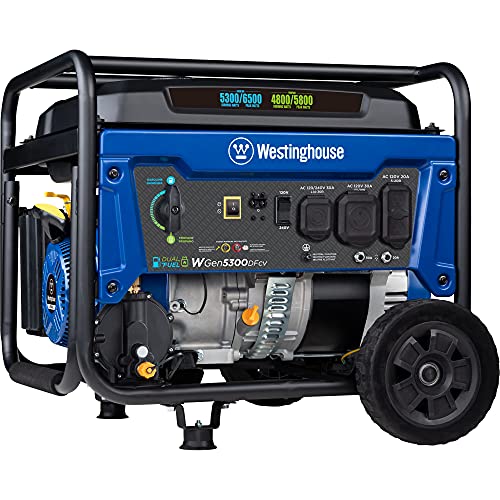
The Westinghouse 6500 Watt Dual Fuel Home Backup may suit essential circuits, but its gasoline running output is 5,300 watts and propane output is 4,800 watts, below larger backup choices here.
The Oxseryn Power Equipment 4400 Watts Inverter is a portable 3,400-running-watt inverter option with a stated 14-hour runtime at 25% load, but its listing gives less detail on home connection arrangements.
The Westinghouse 14500 Peak Watt Dual Fuel Home Backup offers the same listed gasoline running and peak output as the tri-fuel variant, with gasoline and propane rather than natural gas.
The Westinghouse 13500 Peak Watt Dual Fuel Home Backup specifies 10,500 running watts on gasoline and up to 19 hours at 25% load, but its published rating is lower than the other large Westinghouse models in this comparison.
How to Choose the Best Generator for Florida Home Backup
Calculate running watts and startup demand
List what you want to run during an outage, then check each appliance’s running watts and starting surge. Motors in refrigerators, pumps, and air conditioners can draw more power while starting than while running. Add the simultaneous loads and compare that total with generator running watts, not peak watts alone. If the appliance label or manual does not show startup demand, ask an electrician or appliance maker rather than guessing.
Match fuel choice to supply and connection
Gasoline and propane are available on many picks, while the Westinghouse tri-fuel model also lists natural gas. Multiple fuels can provide options, but each fuel may have different output and connection needs. The published listing details do not provide every fuel-specific output, so check the manual and product documentation. A natural-gas connection must be installed appropriately, not improvised during an outage.
Choose a safe home connection method
A transfer-switch-ready outlet is not permission to plug a generator into a household wall outlet. A transfer switch or a properly installed interlock and inlet can isolate home wiring from utility lines. The large Westinghouse models list compatible connection options, and the tri-fuel model can pair with the WATS200 automatic transfer switch, sold separately. Ask a licensed electrician to confirm the equipment, installation, and local requirements.
Consider power quality, noise, and runtime
For phones, computers, and other electronics, compare the listed THD: PowerSmart specifies under 3%, while the Westinghouse tri-fuel and dual-fuel 14,500-watt variants specify less than 5%. Runtime claims need context. For example, some listings state runtime at 25% load, while the 12,500-watt model does not state a load condition. Compare like with like, and plan for refueling and required maintenance.
Plan for outdoor operation and carbon monoxide
Portable fuel generators produce carbon monoxide. Operate them outdoors, well away from doors, windows, and vents, and follow the manual and local fire guidance. Never run one inside a home, garage, or enclosed porch. Some listed Westinghouse models specify CO shutdown sensors, but that feature does not replace safe placement or working carbon monoxide alarms in the home.
How We Compared
This comparison uses the published product specifications, listed design details, fuel options, outlet types, runtime claims, and customer-rating information. Product descriptions are manufacturer or seller claims rather than independently verified results. Where a listing omits a detail, such as an output rating on a particular fuel or runtime load condition, the guide identifies that information as something to confirm.
Frequently Asked Questions
Can a portable generator power my whole Florida home?
That depends on the home’s simultaneous load, appliance startup demand, generator running output, and electrical connection. A high-output unit may support more circuits, but no model should be assumed to run every appliance at once. Have an electrician help size the generator and connection around the loads you intend to use.
Can I connect a generator directly to a wall outlet?
No. Do not use a male-to-male cord or feed power through a household outlet. Use a properly installed transfer switch or other approved connection that prevents electricity from flowing back onto utility lines. Have a qualified electrician select and install the equipment.
Is a power station enough for hurricane outages?
A small power station can keep low-wattage electronics and lights available, depending on capacity and device draw. The ENOFLO model has 97.68Wh capacity and a 120W peak AC output, so it is not intended for large appliances. For refrigeration, pumps, or multiple home circuits, compare fuel generators and verify their output against your load plan.
What is the difference between dual-fuel and tri-fuel generators?
Dual-fuel models in this guide list gasoline and propane. The Westinghouse tri-fuel model adds natural gas. More fuel choices may help you adapt to supply availability, but output can differ by fuel and the connection for each fuel must be suitable. Confirm fuel-specific ratings and setup instructions in the product documentation.
Should I choose an inverter generator for home backup?
An inverter model can be attractive when lower listed THD, portability, or modest loads matter more than high output. The PowerSmart is rated for 3,200 running watts, far below the large home-backup units in this guide. Choose based on appliance loads and connection needs, not the inverter label alone.
Can a generator run indoors during a storm?
No. Run fuel-powered generators outdoors and away from openings where exhaust could enter the home. Follow the manufacturer’s distance and operating instructions, and keep working carbon monoxide alarms installed. A CO sensor on a generator is an added safeguard, not a reason to operate it near an occupied building.

Write Your Review
No reviews yet. Be the first to share your experience!