

A hidden leak under a sink or behind an appliance can spread before anyone notices. Choosing the Best Water Leak Detector means deciding whether you need a loud local alarm, phone alerts while away, long-range coverage, or a slim sensor for tight spaces.
This guide compares products by alert method, hub and Wi-Fi requirements, sensor placement, and listed battery and water-resistance details. Check product compatibility before buying, especially when adding sensors to an existing smart-home system.

Pros
- Six sensors included
- SMS, email, app, and sound alerts
- Top and bottom water-sensing probes
- Claimed battery life over five years
Cons
- Gateway requires 2.4 GHz Wi-Fi
- Who should skip it: homes without 2.4 GHz Wi-Fi

Pros
- Three sensors included
- Smartphone moisture notifications
- Remote sensing extends up to 48 inches
- Can operate as a standalone device
Cons
- Skip if you need Flo shutoff features without buying its separate monitor
Pros
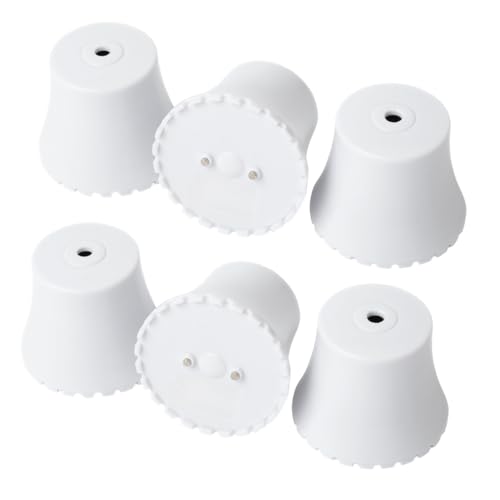
- Six alarms per pack
- No setup required
- Compact housing for tight spaces
- Reusable after prongs are dried
Cons
- Factory-sealed battery is not user-replaceable
- Who should skip it: buyers wanting replaceable batteries

Pros
- Five detectors in one pack
- Separate front and rear sensing probes
- Loud alarm with mute mode
- Low-battery alert
Cons
- Skip if you need specified remote alerts or app notifications

Pros
- Five sensors per pack
- Dual-probe detection
- Four adjustable alarm volume settings
- IP67-rated design
Cons
- H5044 gateway required for phone monitoring
- Not compatible with H5040 or H5043 gateways
- Skip it if you need phone alerts without a gateway

Pros
- Five alarms in one pack
- Adjustable volume, including mute
- No wiring or tools required
- Low-battery light reminder
Cons
- Water mist may trigger false alarms
- Who should skip it: homes with persistently humid sensor locations
Pros
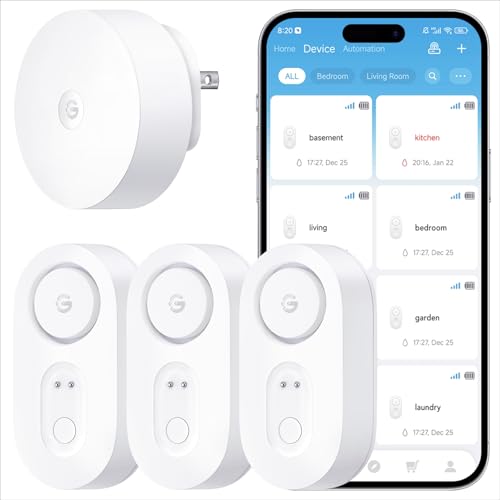
- Three sensors included
- App, SMS, and email alerts
- Adjustable alarm volume
- IP67-rated sensors
Cons
- Gateway requires 2.4 GHz Wi-Fi
- Pairs only with GoveeLife H5059 or H5830 sensors
- Skip if your Wi-Fi is 5 GHz-only or you need other sensor compatibility

Pros
- Four sensors included
- Top and bottom water probes
- Slim 0.67-inch profile
- App alerts and alarm controls
Cons
- 1,700-foot range claim applies to open areas
- Skip if you need confirmed range through walls

Pros
- Four sensors included
- Built-in 105 dB alarms
- App, email, and text alerts
- Up to five-year typical battery life
Cons
- Who should skip it: people seeking Wi-Fi-only sensors
- Stated 2,034-foot range applies to open air

Pros
- Four sensors included
- Multiple remote alert methods
- Adjustable alarm volume
- IP67 water resistance
Cons
- Gateway requires 2.4 GHz Wi-Fi
- Skip if you need sensors outside H5059 or H5830 compatibility
The Best Water Leak Detectors by Use Case
Best for Long-Range Smart Coverage: GoveeLife Smart Water Leak Detector 2 with 1968ft
The Home Safety category includes products with very different alert setups. GoveeLife Smart Water Leak Detector 2 with 1968ft suits homes where sensor-to-gateway distance matters: the listing specifies LoRa communication with a claimed range up to 1,968 feet and support for up to 100 sensors. A Wi-Fi-connected gateway enables SMS, app, and email alerts, while sensors also sound an alarm up to 100 dB.
Reasons to buy:
- App, SMS, and email notifications can reach you away from home.
- LoRa range claim and multi-sensor support suit larger properties.
- IP66 rating and claimed five-year battery life suit damp leak-prone areas.
Reasons to avoid:
- Gateway supports 2.4 GHz Wi-Fi only, so check router compatibility.
- Remote alerts depend on gateway Wi-Fi and app setup.
Skip it if you want an alarm that works without a gateway or phone connection.
Best for Moen System Integration: Moen Flo Detector, WiFi Enabled Water & Moisture
Moen Flo Detector, WiFi Enabled Water & Moisture is a three-sensor pack for monitoring several risk areas, such as a basement, washing machine, or hot water tank. It connects to the Moen Smart Water Network app for moisture notifications and can operate as a standalone monitor. Buyers with a Flo Smart Water Monitor and Shutoff can connect the detector to that separately sold system for whole-home protection.
Reasons to buy:
- Three detectors help cover multiple leak-prone locations.
- Included remote sensing disc and extension cable reach up to 48 inches.
- Works standalone or can connect with the separate Flo monitor and shutoff.
Reasons to avoid:
- Remote alerts depend on the Moen app connection.
- Flo Smart Water Monitor and Shutoff is sold separately.
Skip it if you want a system that avoids brand-specific app setup or do not plan to use Moen’s network.
Best No-App Option: Flood Buzz Water Leak Alarms for Homes
Flood Buzz Water Leak Alarms for Homes suits buyers who want simple local warnings without Wi-Fi, an app, or battery installation. Each compact alarm sounds up to 95 dB when water contacts its metal prongs. The listing specifies a factory-sealed battery with up to three years of active life, but the battery is not user-replaceable.
Reasons to buy:
- No setup or battery installation: place each alarm near a likely leak.
- Small 1.75 by 1.5 by 1.5-inch housing fits tight spots.
- Prongs can be wiped dry after an alarm event for reuse until the replace-by date.
Reasons to avoid:
- No phone alerts or remote monitoring.
- Sealed battery cannot be replaced; check stamped replacement date.
Skip it if you need to know about leaks when nobody is close enough to hear the local alarm.
Best Smart Kit for Outbuildings: YoLink Water Leak Sensor 4 105 dB Alarm Kit
YoLink Water Leak Sensor 4 105 dB Alarm Kit includes a hub and four sensors, combining local alarms with app, email, and SMS alerts. Its LoRa range is listed up to 2,034 feet in open air, a useful feature to consider for distant rooms or outbuildings. The listing also describes YoLink Control-D2D, which can let sensors trigger compatible YoLink devices locally during internet outages.
Reasons to buy:
- Four sensors and one hub form a ready-to-start kit.
- Each sensor has a listed 105 dB alarm and up to five-year typical battery life.
- Control-D2D supports local triggers with compatible YoLink devices during internet outages.
Reasons to avoid:
- Remote phone alerts and app features use the YoLink hub and platform.
- Local outage actions depend on compatible devices and setup.
Skip it if you want standalone alarms without a hub or do not want to build around the YoLink ecosystem.
Best for Tight Gaps: X-Sense Ultra-Slim Wi-Fi Water Leak Detector
X-Sense Ultra-Slim Wi-Fi Water Leak Detector includes four sensors and a base station. Its listed 0.7-inch thickness can help when placing a sensor beneath an appliance or behind a toilet, while top and bottom probes detect drips and water as shallow as 0.4 mm according to the product specifications. The base station sounds up to 100 dB, and the app offers alerts, alarm controls, and history.
Reasons to buy:
- Thin sensor body is designed for narrow clearances.
- Top and bottom probes address drips from above and shallow pooling.
- App includes alarm muting, history, low-battery alerts, and sensor sharing.
Reasons to avoid:
- Phone alerts require the base station and app connection.
- Listed 1,700-foot range is for open areas; walls and layout may affect placement.
Skip it if your main priority is a no-hub local alarm or a system already built around another brand’s sensors.
Also Considered
5 Pack Water Leak Detectors for Home may suit buyers wanting five standalone alarms with a listed 100 dB sound level, but its published details do not list remote alerts.
GoveeLife Upgraded Water Leak Detector with 105dB suits buyers seeking five local alarms and adjustable volume; remote monitoring requires a separately obtained compatible H5044 gateway.
RUIKORING 5 Pack Water Leak Alarm Detector may suit buyers who want adjustable local sound including silent mode, though its listing warns that heavy humidity or mist can trigger the probes.
GoveeLife Upgraded Smart Water Leak Detector 1s offers four sensors with gateway-based phone alerts, but verify that its gateway supports the H5059 or H5830 sensors before purchase.
How to Choose the Best Water Leak Detector
Local alarm or remote notification?
A local alarm can alert someone inside the home, but it cannot notify you when you are away. Smart models can send app alerts, and some listings specify SMS and email too, but remote notices rely on the required hub, network, and app. For a vacation home or a leak-prone area you cannot hear, check exactly which components enable alerts before comparing sensor counts.
Does the sensor need a hub or gateway?
Some devices work as standalone alarms; others need a hub or gateway for phone notifications. Moen’s detector can work standalone or connect to the separately sold Flo monitor and shutoff. YoLink’s kit includes a hub, while GoveeLife’s smart sensor listing specifies a gateway and 2.4 GHz Wi-Fi. Check the exact model and gateway pairing rules: GoveeLife’s upgraded smart sensors identify specific supported models, and a similar brand name does not confirm compatibility.
Range claims and home layout
Long-range wireless systems can help connect sensors in basements, garages, or outbuildings, but advertised figures do not establish coverage in every home. YoLink’s listed figure is for open air; X-Sense also describes its range in open areas. Walls, building layout, and the placement of a gateway can affect the connection. Check the listing’s stated conditions and position the hub where it can communicate with both router and sensors.
Probe layout and physical clearance
Think about where water first appears. Top probes can detect drips from above, while bottom probes detect water on the floor; some models use both. The X-Sense listing specifies detection from water as shallow as 0.4 mm, and its slim body is designed for restricted gaps. For narrow appliance spaces, check sensor dimensions and access for battery changes or cleaning. For broad floor coverage, plan sensor locations near likely leak paths rather than relying on a single alarm.
Battery, water rating, and alarm controls
Battery life figures are manufacturer claims, not guaranteed results in every home. Also check whether batteries are replaceable: Flood Buzz lists a sealed battery that cannot be changed, while YoLink specifies two AAA batteries per sensor. IP ratings describe stated resistance conditions, not suitability for every kind of exposure. Compare the listed rating with placement needs, and consider adjustable volume or mute controls if an alarm will sit near bedrooms. Follow product instructions for keeping probes clean and dry between leak events.
For more home-related comparisons, browse Home Appliances or the site’s levoit air purifier vs coway airmega.
How We Compared
This comparison uses published product specifications and design details, including alert methods, stated connectivity, sensor arrangement, power information, water-resistance ratings, and listed compatibility. Recommendations reflect the specific needs each product’s listed features can address.
Frequently Asked Questions
Can a water leak detector alert me when I am away?
Some can. Look for explicit app, SMS, or email alerts and check whether the system needs a hub, gateway, Wi-Fi, or a brand-specific app. A standalone alarm such as Flood Buzz sounds locally and does not list remote notifications.
Will a Wi-Fi water sensor connect directly to my router?
Not necessarily. Several products use a separate hub or gateway to connect sensors to the network. Check the exact model’s requirements and Wi-Fi band. For example, the GoveeLife Smart Water Leak Detector 2 listing says its gateway supports 2.4 GHz Wi-Fi.
Are standalone alarms enough for a vacation home?
A local alarm can help someone who is nearby hear a leak, but it cannot notify a distant owner unless the product supports remote alerts. For an unoccupied property, consider a connected system and verify that its hub, internet connection, and notification setup will be available there.
What is the difference between a hub and a sensor?
The sensor detects water at its placement point. A hub or gateway links compatible sensors to an app or network and may enable remote notifications. Some kits include the hub, while other sensor packs need a separately purchased compatible unit. Read the included-items and compatibility details carefully.
Where should I place leak sensors?
Place them near likely leak sources and along the floor where water would collect, such as under sinks, near washing machines, or by a water heater. Use top-probe models where drips from above matter. Keep sensor placement consistent with the maker’s instructions, and make sure you can reach the unit to inspect or silence it.
Does an IP67 rating mean a detector can stay underwater?
No. A product rating does not mean every exposure or installation is suitable. The RUIKORING listing describes IP67 as allowing short-term immersion, while other listings describe their own ratings and use cases. Check the exact model’s instructions and place sensors to detect leaks, not as a substitute for water-damage prevention or repair.


Write Your Review
No reviews yet. Be the first to share your experience!