

Gas vs. Electric Lawn Mowers comes down to more than power source. Gas models in this selection have wider decks and engines, while cordless electric options are lighter and avoid engine oil changes and spark plugs.
Your lawn size, slopes, grass conditions, storage space, and tolerance for fuel and battery upkeep can change which type makes sense. The six examples below include push and self-propelled gas mowers and compact cordless electric mowers.

Pros
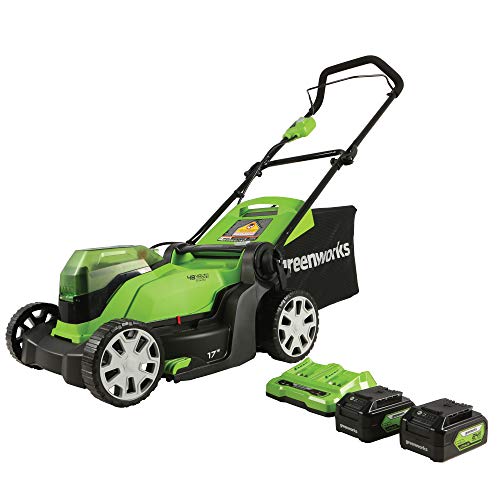
- Two batteries and fast charger included
- Six-position cutting height adjustment
- Lightweight 21-pound design
- Folding handle for compact storage
Cons
- Narrow 14-inch cutting deck
- Who should skip it: owners of larger lawns

Pros
- Three clipping-management options
- Steel cutting deck
- No fuel-and-oil mixing
Cons
- Push mower, not self-propelled

Pros
- 22-inch cutting width
- Self-propelled rear-wheel drive
- Three clipping-management options
- Six single-lever height settings
Cons
- 79-pound weight may make lifting less convenient
- Skip if you need a lighter mower than 79 lb


Pros
- Battery and charger included
- Folding handle for compact storage
- Five-position cutting height adjustment
- Clipping bag included
Cons
- 14-inch deck means narrower cutting swath
- Cutting height tops out at 2.5 inches
- Who should skip it: owners of larger lawns or those needing taller cuts
Quick Verdict
Choose a cordless electric mower if you have a smaller lawn, want a lighter machine, and can work within battery runtime. The Litheli 14 Inch Cordless Lawn Mower is listed for lawns up to 2,800 square feet and up to 30 minutes of runtime.
Choose gas if you prefer a wider cutting deck or need self-propelled drive for slopes and uneven ground. The SENIX 201cc 22" 3-in-1 Variable Speed Self has a 22-inch deck, self-propelled drive, and bagging, mulching, and side-discharge modes.
Gas vs. Electric Lawn Mowers: Key Differences
Power source and upkeep
Gas models use four-cycle engines. The BILT HARD 21 Inch Lawn Mower Gas Powered has a 144cc engine and does not require mixing oil and gas, according to its listing. The SENIX and BILT HARD 21" Self Propelled Gas Lawn Mower use 201cc engines.
Battery models avoid gasoline, oil changes, and spark plugs. They still depend on charged batteries, and their listings do not give a universal runtime for every mowing condition. Gas suits buyers comfortable with fuel and engine upkeep; electric suits those who want less engine maintenance and can plan around charging.
Deck width and yard coverage
The gas examples have 21- or 22-inch cutting decks. The electric models have 14-inch decks. A wider deck can cover more ground per pass, while a narrower deck can be easier to guide through tight spaces and around garden beds.
For larger lawns, the wider gas decks may reduce the number of passes, though actual mowing time also depends on terrain and grass. For small yards with narrow paths, a 14-inch electric mower may be easier to maneuver.
Battery runtime and refueling
The Litheli 14 Inch Cordless Lawn Mower listing claims up to 30 minutes of runtime and coverage up to 2,800 square feet. The Litheli Cordless Lawn Mower 14 Inch listing claims up to 30 minutes and up to 3,000 square feet. These are manufacturer claims, not guarantees for every lawn or grass condition.
The EWORK 40V 14-Inch Cordless Lawn Mower with 2×4.0Ah includes two 20V 4.0Ah batteries and a fast charger, but its listing does not state a specific runtime or coverage area. Gas models use fuel rather than battery charge; check the manual for fuel and operating requirements before purchase.
Pushing, slopes, and terrain
Two gas models offer self-propelled drive: the SENIX has variable speed, while the BILT HARD 21" Self Propelled Gas Lawn Mower has a fixed walking speed. These systems help move the mower forward, which can reduce pushing effort on slopes or uneven ground.
The supplied electric models are push mowers. Their lighter listed weights or compact 14-inch decks may help with maneuvering, but they do not provide self-propelled assistance. If your lawn has steep slopes, compare the mower’s operating guidance with your terrain.
Cutting options and height adjustment
All three gas models offer bagging, mulching, and side discharge. The electric listings specify a grass bag, but do not list mulching or side-discharge modes, so verify those options if they matter to your routine.
Height ranges differ by model. The SENIX lists six positions from 1.25 to 4 inches; the self-propelled BILT HARD lists eight positions from 1.2 to 3.75 inches. Electric options list five or six positions, with ranges varying by model. Match the stated range to your preferred grass height.
Which Should You Buy?
For a small lawn and compact storage: The EWORK 40V 14-Inch Cordless Lawn Mower with 2×4.0Ah weighs 21 pounds according to its listing and has a collapsible handle. Its two included batteries are a plus; skip it if you need a wide deck or self-propelled drive.
For a small to mid-sized lawn with stated coverage: The Litheli 14 Inch Cordless Lawn Mower lists coverage up to 2,800 square feet, while the Litheli Cordless Lawn Mower 14 Inch lists up to 3,000 square feet. Both list up to 30 minutes of runtime and a 9-gallon bag. Their 14-inch decks and push-only design may not suit larger or sloped lawns.
For a wider gas mower without self-propelled drive: The BILT HARD 21 Inch Lawn Mower Gas Powered has a 21-inch deck and three clipping modes. Its push design may be less appealing on slopes or across a large yard.
For self-propelled mowing: Consider the SENIX for variable-speed drive and a 22-inch deck, or the BILT HARD 21" Self Propelled Gas Lawn Mower for fixed-speed drive and eight cutting-height positions. Skip either if you want battery power or do not want gas-engine upkeep.
How We Compared
We compared the published product listings, focusing on power source, deck width, drive type, stated battery runtime and coverage, cutting modes, height adjustment, and listed weight. Product details and runtime or coverage figures are manufacturer-provided claims; the listing information does not establish performance across different lawns.
For more options, browse our Lawn Mowers category or the broader Lawn & Garden category.
Frequently Asked Questions
Are gas mowers better for large lawns?
Not automatically, but the gas models here have wider 21- or 22-inch decks than the electric models’ 14-inch decks. Wider decks can mean fewer passes. Compare lawn size, terrain, drive type, and maintenance needs before choosing.
How long do these cordless mowers run?
The two Litheli listings claim up to 30 minutes per charge. The EWORK listing does not specify runtime. Actual runtime can vary with mowing conditions, so confirm whether the stated coverage fits your lawn and routine.
Which models are self-propelled?
The SENIX 201cc 22" 3-in-1 Variable Speed Self and BILT HARD 21" Self Propelled Gas Lawn Mower are self-propelled. The other listed models are described as push mowers.
Can these mowers mulch grass clippings?
The three gas models list mulching, bagging, and side discharge. The electric model listings specify grass bags but do not establish mulching or side-discharge capability. Check the individual listing or manual before buying if you need those modes.
What should I check before buying a battery mower?
Compare claimed runtime and coverage with your lawn area, and check which batteries and charger come in the box. Also confirm cutting-height range, storage fit, and whether the mower supports your preferred clipping method.



Write Your Review
No reviews yet. Be the first to share your experience!