

Taking care of a yard requires substantial time every week, especially during peak growing seasons. Robotic lawn care promises to remove that chore entirely, but high upfront equipment costs leave many homeowners asking: is a robot lawn mower worth it? Early models required hours of burying perimeter wire that broke easily, yet modern wire-free designs rely on satellite signals and optical sensors instead.
The robot lawn mowers category now includes all-wheel-drive systems and laser mapping designed to tackle hills and complex layouts. Looking closely at the [All-Terrain Wire-Free] DREAME LiDAR Robot Lawn helps clarify what modern systems can handle, where they run into trouble, and whether investing in one makes financial sense for your property.
The Short Answer
A robot lawn mower is worth the investment if you have a steep, hilly yard or a complex layout and want to eliminate weekly push mowing without burying boundary wires. With an all-wheel-drive system handling slopes up to 80 percent, rapid 45-minute charging, and LiDAR mapping that navigates around trees, the DREAME A3 AWD solves the traction and signal loss problems that troubled older generations. However, if your yard is small, flat, or budget is your primary concern, spending a significant sum on a heavy-duty all-terrain model is unnecessary.
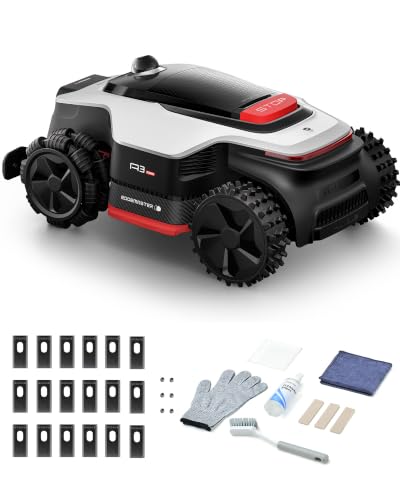
Pros
- Wire-free mapping
- All-wheel drive for steep slopes
- Replacement blades and cleaning kit included
- App-based scheduling and monitoring
Cons
- Listed lawn coverage varies between 0.25 and 0.5 acre
- Who should skip it: buyers needing a clearly specified coverage limit
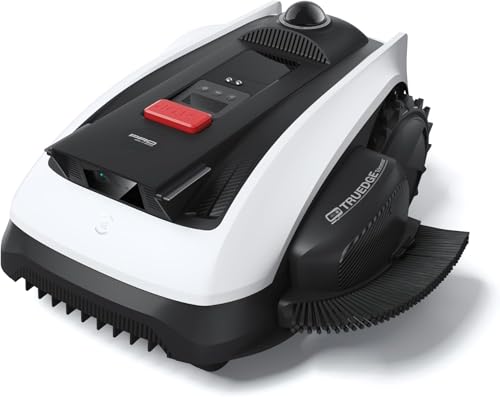
Pros
- No perimeter wire or RTK antenna required
- Built-in edge trimmer
- Fits 0.8 m lawn corridors
Cons
- Complex corners may need manual trimming
- Setup may need adjustments for unique layouts
- Who should skip it: owners wanting fully hands-off edge trimming

Pros
- No perimeter wire required
- Supports up to 12 mowing zones
- Three-year warranty included
Cons
- 4G anti-theft tracking requires optional module
- Who should skip it: owners of lawns over 1/8 acre
What You Get
All-Wheel-Drive Slope Handling
Traction remains a common stumbling block for robotic yard equipment. The [All-Terrain Wire-Free] DREAME LiDAR Robot Lawn addresses this through dedicated all-wheel-drive hub motors designed to climb inclines up to 80 percent (38.7 degrees). It also handles obstacles up to 2.17 inches tall, allowing it to navigate uneven ground, rolling hills, and multi-zone layouts without getting stuck in ruts.
Wire-Free LiDAR and AI Vision Mapping
Traditional robotic mowers required running physical wires along property boundaries, which degraded over time and complicated garden adjustments. This model uses 360-degree 3D LiDAR combined with binocular AI vision to map properties without ground wires or separate RTK base stations. The sensor system operates effectively under dense tree canopy and near tall fences, recognizing more than 300 common yard objects such as hoses, toys, and pets to prevent collisions.
Fast Turnaround and Night Operation
Coverage capacity covers properties up to 0.25 to 0.5 acres. A supplied 5A power adapter recharges the internal battery in approximately 45 minutes, reducing idle waiting periods between mowing cycles. Because the electric drive operates quietly, schedules can run during evening or nighttime hours without disturbing household members or adjacent neighbors.
Connected App Controls and Monitoring
Through the Dreamehome mobile application, users can build custom cutting schedules, map zones, and establish no-mow boundaries. The device incorporates a 4G module and an HDR camera, providing real-time property monitoring and theft tracking directly from your smartphone.
Where It Falls Short
Perimeter Trimming Gaps
While EdgeMaster technology cuts borders down to a 1.97-inch margin, it does not fully replace manual trimming along vertical walls and fences on its own. Reaching a tighter 1.18-inch cut requires buying a separate trimmer attachment module, meaning occasional string trimming remains part of your overall lawn and garden routine.
Substantial Financial Commitment
The upfront acquisition expense sits at the premium end of the consumer yard tool market. For homeowners with simple rectangular lawns that take only twenty minutes to push mow, recouping the cost in saved labor takes considerably longer than it would on large, challenging properties.
Who Should Buy It and Who Should Skip It
This automated system is an excellent match for property owners with steep grades, complex multi-zone yards, and heavy tree cover that interferes with standard satellite positioning. If your yard has inclines that make manual mowing exhausting or dangerous, the all-wheel-drive traction and reliable laser navigation justify the equipment cost.
You should skip this model if your yard is completely flat, modest in scale, or simple in shape. Buyers seeking a basic automated solution on a limited budget can save money by selecting lighter two-wheel-drive options designed for compact spaces.
Alternatives Worth Considering
If you want close boundary cutting without buying extra add-on accessories, the ECOVACS Goat O1000 LiDAR PRO Robot Lawn Mower is a strong candidate. It features a built-in TruEdge trimmer for sidewalks and flower beds, HoloScope 360-degree dual LiDAR navigation, and a narrow body capable of passing through corridors as tight as 0.8 meters.
For smaller properties up to one-eighth of an acre, the Segway Navimow i105N Robot Lawn Mower Perimeter offers wire-free operation at a lower entry price. It pairs RTK positioning with camera assistance, quiet 58-decibel operation, and management for up to 12 distinct mowing zones.
How We Evaluated
Our assessment analyzed verified manufacturer technical documentation, mechanical specifications, navigation sensor methods, and real-world buyer feedback across outdoor equipment platforms. We compared maximum slope tolerances, boundary guidance technologies, cutting coverage ratings, charging turnaround figures, and included accessories across multiple brands to determine long-term ownership value.
Frequently Asked Questions
Do wire-free robot mowers work under thick trees?
Wire-free models using 3D LiDAR or hybrid vision systems navigate reliably under dense tree canopies because they do not depend solely on clear lines of sight to overhead satellites. Standard RTK GPS units may struggle under heavy foliage, but optical and laser mapping keep orientation steady.
Can a robot lawn mower handle steep hills?
Performance on inclines depends directly on motor and wheel drive configuration. While standard two-wheel-drive units usually slip on slopes exceeding 30 to 40 percent, specialized all-wheel-drive models like the DREAME A3 AWD maintain traction on hills reaching up to 80 percent grades.
Do robot mowers eliminate weed eating entirely?
Most robotic mowers leave a narrow uncut strip along vertical walls, raised fences, and tight corners. While models with specialized edge trimming reduce manual touch-up work significantly, periodic spot trimming around hard obstacles is still necessary for a completely finished appearance.
What keeps robot lawn mowers from being stolen?
Modern connected units incorporate security features such as onboard GPS or 4G cellular tracking, integrated cameras, PIN lockouts, and instant alerts delivered to your smartphone app whenever the machine moves outside its mapped boundary zone.



Write Your Review
No reviews yet. Be the first to share your experience!