

A compact cross-line laser can handle shelves and picture frames, while tile layouts and ceiling work may call for 360-degree coverage. The best laser level for your project depends on how much of a room you need to mark, how visible the beam will be, and whether you need a tripod, receiver, or rechargeable battery.
This guide compares green and red beams, self-leveling and manual modes, stated accuracy, power options, and included mounts. It also explains which features matter for indoor DIY work, larger renovations, and outdoor alignment.

Pros
- Four 360° laser planes
- Tripod and magnetic mount included
- Two batteries included
- Remote control included
Cons
- Outdoor pulse mode requires receiver sold separately
- Outdoor users needing receiver included should skip it

Pros
- Self-leveling with out-of-level indicator
- Integrated magnetic mount
- Two AA batteries included
- Compact 0.77 lb design
Cons
- Optional 3.7V battery sold separately
- Skip it if you need a rechargeable battery included

Pros
- Four 360-degree laser planes
- Remote control included
- Multiple mounting options
- IP54 dust and water resistance
Cons
- Outdoor pulse mode requires compatible receiver
- Who should skip it: buyers needing a stated receiver in the package
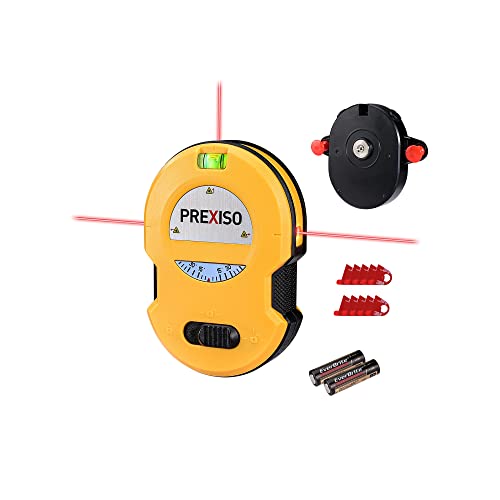
Pros
- Horizontal and vertical lines
- Three wall-mount attachment options
- LED-lit bubble vials
Cons
- Not a stud finder or magnetic nail finder
- Skip it if you need stud detection

Pros
- Green beam technology
- Three-way self-leveling design
- Detector-compatible pulse mode
- Battery, charger, and case included
Cons
- Compatible DW0892G detector not included
- Who should skip it: buyers who need a detector in the box

Pros
- Tripod and remote control included
- Auto-leveling and manual modes
- Two included batteries
Cons
- Auto-leveling limited to tilt below 4°
- Who should skip it: users needing auto-leveling beyond 4° tilt

Pros
- Three selectable 360-degree laser lines
- Adjustable tripod and 360-degree magnetic bracket included
- Rechargeable battery with USB-C port
- Hard carry case included
Cons
- Pulse mode requires separately purchased compatible receiver
- Skip if you need pulse mode without separate receiver

Pros
- Self-leveling cross-line projection
- Integrated magnetic bracket
- IP54 water and debris resistance
- Durable storage case included
Cons
- Detector sold separately for extended range
- Tripod sold separately
- Skip it if you need a detector-free 165-foot range

Pros
- Four 360-degree laser planes
- Included 60-inch adjustable tripod
- Self-leveling and manual modes
- Remote control included
Cons
- Receiver sold separately for extended pulse range
- Who should skip it: users needing extended outdoor range without a receiver

Pros
- Three 360-degree green laser lines
- Fine adjustment knob
- Magnetic pivoting base with two tripod thread sizes
- IP54-rated tool protection
Cons
- Tripod sold separately
- Skip it if you need a tripod included
The Best Laser Levels by Use Case
Best for Full-Room DIY Layouts: Alloyman Laser Level with Tripod
The Power Tools category includes tools for a range of home projects, and this Alloyman model suits jobs where lines need to run around a room. The listing specifies four 360-degree planes, green beams, self-leveling within 3 degrees, and a pulse mode that extends the stated working range to 150 feet with a separately purchased receiver. Its included 37.5-inch tripod, magnetic mount, remote, and two batteries make setup more flexible than a bare laser, although the listed range extension depends on an extra accessory.
Reasons to buy:
- Four 360-degree planes cover walls, floors, and ceilings.
- Includes a tripod, magnetic swivel stand, remote, and two lithium batteries.
- Manual mode supports projecting lines at an angle.
Reasons to avoid:
- Pulse-mode use needs a receiver, which is not included.
- The listed tripod height is 37.5 inches, shorter than some included tripods.
Skip it if you only need occasional straight lines for hanging pictures, or need an outdoor receiver included in the box.
Best Compact Jobsite Option: BOSCH GLL50-20G 50 Ft Green-Beam Self-Leveling
The BOSCH GLL50-20G 50 Ft Green-Beam Self-Leveling is a compact cross-line model for users who need a straightforward horizontal and vertical reference rather than full-room coverage. Bosch specifies accuracy within 5/16 inch at 30 feet, an IP55 rating, and a magnetic mount. Its Smart Pendulum System self-levels and blinks when the tool is out of level; the pendulum locks when switched off for transport.
Reasons to buy:
- IP55 rating provides stated resistance to dust and water exposure.
- Runs on two included AA batteries or a separately sold Bosch 3.7V lithium-ion battery.
- Integrated magnetic mount supports positioning on compatible metal surfaces.
Reasons to avoid:
- Cross-line coverage is less extensive than 360-degree models.
- Rechargeable battery is sold separately.
Skip it if your layout needs laser lines around all four walls or a tripod is essential and you do not already own one.
Best for Detailed Tile and Ceiling Layouts: Takamine 16 Line Green Laser Level Pro,4×360 4D
The Takamine 16 Line Green Laser Level Pro,4×360 4D targets projects that benefit from two horizontal and two vertical 360-degree planes. The listing specifies accuracy of plus or minus 1/9 inch at 33 feet and a stated working range of up to 130 feet under 100 lux conditions. A pulse mode can extend the stated range to 200 feet with Takamine’s separately purchased receiver, while the included rotating base and adjustable magnetic bracket offer several positioning options.
Reasons to buy:
- Four 360-degree planes provide coverage across floors, walls, and ceilings.
- Included remote control supports adjustments from a distance.
- IP54 rating and TPR protection are specified for dust, water, and impact resistance.
Reasons to avoid:
- The receiver needed for the extended pulse-mode range is not included.
- The package details do not list a tripod or battery, so verify power and mounting needs before purchase.
Skip it if you need a simple cross-line tool or want a complete tripod-and-battery setup specified in the listing.
Best Budget Pick for Wall Marking: PREXISO Multi Surface Laser Level LED Light Vial
The PREXISO Multi Surface Laser Level LED Light Vial is a practical choice for picture hanging, shelves, molding, and other small alignment jobs. It projects horizontal and vertical lines up to 30 feet and pairs them with bubble vials; the listing says the two laser lines meet at 90 degrees. Its angle dial adjusts from 15 to 75 degrees, but this surface laser is not a self-leveling 360-degree model.
Reasons to buy:
Reasons to buy:
- Includes a wall mount, two pins, adhesive strips, and two AA batteries.
- LED-lit bubble vials help with reading the level in dim workspaces.
- Angle dial supports reference angles from 15 to 75 degrees.
Reasons to avoid:
- Its stated line range is up to 30 feet, so it is aimed at smaller indoor jobs.
- The listing explicitly says it is not a stud finder or magnetic nail finder.
Skip it if you need automatic self-leveling, broad room coverage, or a tool for outdoor alignment.
Best for Tall, Flexible Room Setup: Huepar Laser Level Self Leveling with 60″ Tall
The Huepar Laser Level Self Leveling with 60″ Tall combines four 360-degree planes with an included 60-inch adjustable aluminum tripod. That pairing can help with ceiling installation, wall tiling, and floor layouts where a compact stand may not reach the desired height. Huepar specifies accuracy of plus or minus 1/16 inch at 16.5 feet, self-leveling within plus or minus 4 degrees, and pulse mode that reaches a stated 200 feet with a separately purchased Huepar receiver.
Reasons to buy:
- Four 360-degree planes provide full-room line coverage.
- Includes a 60-inch tripod, magnetic stand, wall plate, and fine-tuning base.
- Remote control can switch planes and settings from a distance.
Reasons to avoid:
- The receiver for the stated extended pulse range is not included.
- The listed accuracy is measured at 16.5 feet, so compare it at your expected working distance.
Skip it if you need a compact cross-line tool or already have a setup that does not need the included tall tripod.
Also Considered
The DEWALT Laser Level 360 Self Leveling may suit jobsite users who want a 12V battery platform, IP65 protection, and three-way green laser coverage, but its listing gives no included tripod.
The Huepar Laser Level 360 with Tall Tripod Self offers three selectable 360-degree lines, a 50-inch tripod, USB-C charging, and a stated eight-hour runtime; it has less plane coverage than the four-plane picks.
The DEWALT Line Laser, Self-Leveling, Cross Line may fit buyers who prefer a red-beam cross-line tool with a stated 165-foot detector range, but the detector and tripod are sold separately.
The DEWALT 20V/12V MAX Laser Level Kit, 3 x 360 suits users invested in compatible DEWALT batteries and seeking three-plane coverage; the listing specifies IP54 protection and a 10-hour runtime on a 20V MAX 2.0Ah battery.
How to Choose the Best Laser Level
Choose line coverage for the layout
A cross-line laser projects horizontal and vertical references across the surfaces in front of it. That is often enough for hanging frames, aligning shelves, or marking a short wall. A 360-degree model projects around a plane, reducing the need to reposition the tool when work spans several walls or a full floor.
Four-plane models, such as the Takamine and Huepar 60-inch picks, add two horizontal and two vertical planes. Check how the listing describes the planes and whether they reach the surfaces you need. More lines can help with room-wide layouts, but a smaller cross-line model may be easier to carry and less complex for occasional tasks.
Compare stated accuracy at the same distance
Accuracy figures only make sense alongside their measurement distance. Bosch specifies 5/16 inch at 30 feet; the Takamine listing gives plus or minus 1/9 inch at 33 feet; and Huepar specifies plus or minus 1/16 inch at 16.5 feet. These figures use different distances and formats, so do not compare the numbers alone as though they were measured identically.
Think about the longest line you will rely on and check the accuracy specification at a comparable distance. If a listing does not state accuracy or the measurement distance, do not assume it matches another model. For precision-sensitive layouts, confirm the manufacturer’s current documentation and calibration guidance.
Match beam visibility and range to the work area
Green beams are often selected for visibility, and several products here specify green lasers. A beam that is easy to see indoors may be harder to use in bright outdoor conditions. Pulse mode can make a compatible laser detectable by a receiver, but it does not mean the line will be easy to see with the naked eye at the advertised distance.
Check whether a stated range applies to normal operation or pulse mode, and whether a receiver is included. Alloyman, Takamine, and Huepar specify extended pulse-mode ranges that need a separately purchased receiver. Treat those figures as conditional manufacturer specifications, not a promise of visible lines in every setting.
Check self-leveling, manual mode, and mounting
Self-leveling helps set a horizontal or vertical reference quickly, but each tool has a limited leveling range. The listed models specify thresholds such as 3 degrees or 4 degrees; when the surface falls outside the stated range, the laser may flash or beep rather than provide a level line. Look for the warning behavior in the listing and place the tool on a stable surface.
Manual mode serves a different purpose: it lets you project a line at an angle for tasks such as stair rails. Check how to activate it and whether it disables automatic leveling. Mounting matters too. Compare the included tripod height, thread details, magnetic bracket, and wall mount with your work surface. An included mount can save a separate purchase, but it only helps if it reaches and attaches securely where you need it.
Plan for batteries, charging, and protection
Power options range from standard AA batteries to rechargeable lithium-ion packs. Bosch lists two AA batteries in the box and a separate compatible battery option; Huepar’s 360 model lists a built-in rechargeable battery, USB-C charging, and up to eight hours of operation. Runtime is a manufacturer claim and can vary with which laser lines are active, so check the listed conditions and whether spare power is available for your project.
For work around dust or splashes, compare the exact IP rating rather than relying on broad terms such as durable. Bosch lists IP55, while the DEWALT 360 model lists IP65 and several other models specify IP54. Ratings are not interchangeable, and they do not make a tool suitable for every exposure. Also confirm whether the rating applies to the laser alone or to other items in a kit.
How We Compared
We compared the published product listings by line coverage, stated accuracy and range, self-leveling behavior, beam color, power source, included mounting accessories, and stated protection ratings. We also considered how those features map to common tasks, from hanging pictures to tiling and ceiling layouts. Where a range depends on a separately purchased receiver, or a specification is absent, the guide identifies that limitation rather than treating the feature as included or confirmed.
Frequently Asked Questions
Do I need a 360-degree laser level for home projects?
Not for every project. A cross-line model can handle a picture, shelf, or short wall alignment. A 360-degree model is more useful when you need a continuous reference around a room, across a floor, or at ceiling height. Choose based on the surfaces you need to mark, not the number of lines alone.
Are green laser lines always easier to see than red lines?
Several listings describe green beams as brighter or more visible, but visibility still depends on ambient light, distance, and the surface. A receiver can help with compatible pulse-mode tools in bright conditions or at longer stated ranges. Confirm receiver compatibility and whether the receiver is included before relying on that setup.
Can I use a laser level outdoors?
Some models offer pulse mode for use with a compatible receiver, which can extend the stated working range. Outdoor sunlight can make a laser line difficult to see, so check the manufacturer’s instructions, receiver requirements, and specified range. A line’s advertised pulse-mode range does not establish that it will be visible without a receiver.
What does self-leveling range mean?
It is the tilt range within which the tool can automatically align its projected lines. The products in this guide specify limits such as 3 or 4 degrees. If the tool sits outside its supported range, its flashing or beeping warning indicates that you should reposition it before using the line as a level reference.
Is a tripod included with every laser level?
No. Some listings include a tripod, while others specify a magnetic bracket or a mounting thread without a tripod. Check the package contents, thread size, and tripod height before buying. A standard mount can help with compatibility, but verify that your existing tripod uses the matching thread and can hold the tool in the position your project needs.
What should I verify before using a laser level?
Read the model’s instructions for setup, mode selection, calibration, and laser safety. Confirm that the tool is stable and within its self-leveling range before marking. Never look directly into the beam or point it at another person’s eyes; follow the manufacturer’s precautions for the specific laser class and work environment.



Write Your Review
No reviews yet. Be the first to share your experience!