

Choosing between the Meta Quest 3 and the Quest 3S comes down to a clear balance between premium visual clarity and accessible mixed reality performance. Both standalone headsets run on the Qualcomm Snapdragon XR2 Gen 2 processor, which gives them identical access to modern mixed reality games, applications, and untethered experiences. However, their physical displays, lens designs, and internal storage capacities target different types of players.
Whether you want a daily device for immersive workouts or an expansive digital canvas for intense gaming sessions, evaluating the trade-off between optical fidelity and budget makes your decision straightforward. For a broader look at the category, you can also browse our guide to VR headsets and related VR and AR devices.
Quick Verdict
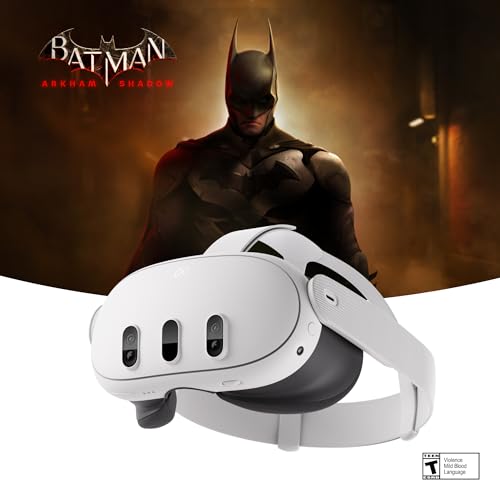
Choose the Meta Quest 3 512GB | Virtual Reality or the Meta Quest 3 512GB | VR Headset, Get Batman if optical clarity and generous storage matter most to you. The Quest 3 features pancake optics paired with a 4K+ Infinite Display that delivers a 30 percent jump in resolution over earlier models, making fine text easier to read during extended work or gaming sessions. Who should skip it: Buyers on a strict budget who primarily want casual standalone experiences without paying extra for premium lenses.
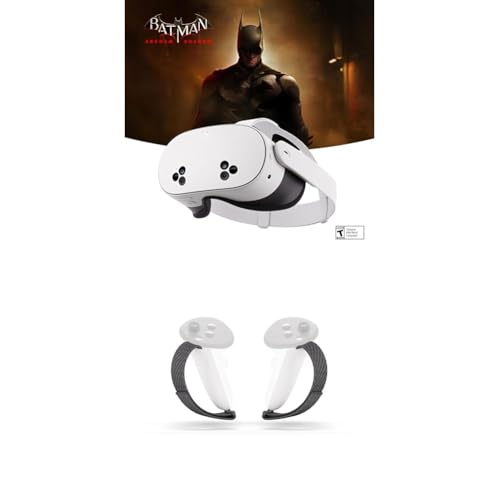
Choose the Meta Quest 3S 128GB | Virtual Reality or the bundle with the Meta Quest 3S 128GB + Active Strap if you want modern mixed reality performance at an approachable entry cost. The Quest 3S shares the exact same processing capability and 8GB of RAM as its higher tier sibling, handling current game releases smoothly while keeping costs down. Who should skip it: Power users who download dozens of high-capacity game titles simultaneously or want edge-to-edge optical clarity across the entire field of view.

Pros
- Wireless VR gaming
- Mixed reality support
- 8GB of RAM
- Three-month game catalog trial
Cons
- 128GB storage may limit room for games
- Who should skip it: buyers who need more than 128GB

Pros
- Wireless play
- Full-color passthrough
- 512GB storage
Cons
- Who should skip it: players needing all-day sessions
- Stated battery life is 2+ hours
Pros
- Wireless play
- Mixed reality support
- Full-color passthrough
- 512GB storage
- Batman: Arkham Shadow included
Cons
- Skip if you need sessions beyond its 2+ hours
Pros
- Supports mixed reality and VR
- Social gaming and TV casting
- Includes adjustable Active Strap
Cons
- Who should skip it: buyers needing more than 128GB storage

Pros
- Mixed-reality and VR experiences
- Multiple virtual screens
- Batman: Arkham Shadow included
- Parental controls and multiple-user support
Cons
- 3.5mm headphones require a separately sold USB-C adapter
- Who should skip it: users who need direct 3.5mm headphone connection

Pros
- Mixed-reality experiences
- Asgard's Wrath 2 included
- 128GB storage
- Updated graphics platform
Cons
- Who should skip it: buyers needing more than 128GB of storage
Meta Quest 3 vs Quest 3S: Key Differences
Display and Lens Technology
The primary difference between the two models lies in their optical assemblies. The Meta Quest 3 uses pancake lenses paired with a high-density 4K+ Infinite Display, which offers nearly 30 percent higher resolution than previous generations. This optical design minimizes distortion around the edges and allows for a slimmer overall visor profile. In contrast, the Quest 3S focuses on functional immersion with standard Fresnel optics, which deliver reliable visuals but feature a narrower sweet spot for center focus. If you read digital text or work in virtual desktop environments often, the Quest 3 delivers noticeably crisper results.
Storage Capacity Options
Storage determines how many large applications you can keep installed at one time. Available configurations for the Quest 3 feature up to 512GB of internal space, as seen in the Meta Quest 3 512GB | Virtual Reality. Meanwhile, standard Quest 3S packages, such as the Meta Quest 3S 128GB | VR Headset, Get Batman, typically provide 128GB of storage. Modern mixed reality titles frequently require tens of gigabytes each, meaning 128GB owners may need to cycle installations over time, while 512GB users can store extensive libraries with ease.
Processing Power and System Memory
Both models perform identically in terms of pure computing power. Each headset runs on the Qualcomm Snapdragon XR2 Gen 2 platform backed by 8GB of system RAM, providing twice the graphical processing capabilities of the Quest 2. Games load rapidly, textures remain detailed, and navigation feels fluid across both devices. You do not lose access to any current game releases or mixed reality features by choosing the less expensive model.
Passthrough and Mixed Reality Features
Full-color mixed reality is standard across both product lines. The Quest 3 uses dual RGB color cameras to project your physical surroundings directly into your view, letting digital objects blend realistically into your room. The Quest 3S includes dedicated physical controls like an action button to quickly cycle between virtual reality and passthrough mode. Both headsets allow you to interact with floating windows, watch videos on simulated giant screens, and keep aware of your real-world room layout.
Battery Life and Physical Ergonomics
Manufacturer specifications rate both devices for approximately two or more hours of continuous battery runtime, depending on the active application. Ergonomics differ slightly due to faceplate depth: the pancake lenses on the Quest 3 sit closer to the eyes, shifting the center of gravity closer to the face. The Quest 3S features a slightly deeper chassis. For high-energy movement, pairing the headset with accessories like the Meta Quest 3S 128GB + Active Strap helps secure the controllers and visor securely during workouts.
Which Should You Buy?
For Enthusiast Gamers: The Meta Quest 3 512GB | Virtual Reality is the recommended choice. The 4K+ Infinite Display ensures that expansive environments appear crisp, while the 512GB capacity eliminates the need to constantly uninstall titles to make room for new updates.
For Fitness and Active Play: The Meta Quest 3S 128GB + Active Strap offers ideal functionality. Its included hand straps prevent controllers from slipping during rapid movements, and the system delivers full graphical power for rhythm games without an excessive initial investment.
For First-Time VR Buyers: The Meta Quest 3S 128GB | Virtual Reality represents the most practical entry point. You gain access to the complete standalone library, seamless hand tracking, and full-color passthrough while keeping hardware costs sensible.
How We Compared
We evaluated both product lines by analyzing published manufacturer specifications, lens designs, storage options, and verified user feedback. Our comparison highlights direct differences in display resolution, weight distribution, and functional memory to help buyers select the configuration that meets their entertainment habits.
Frequently Asked Questions
Can the Quest 3S play all the same games as the Quest 3?
Yes. Because both headsets utilize the Snapdragon XR2 Gen 2 chipset and 8GB of RAM, software compatibility is identical across both devices. Every game developed for the current platform runs on both models.
Do both headsets connect to a gaming PC?
Yes. Both the Quest 3 and Quest 3S support wireless PC streaming over high-speed local networks and tethered connections using a compatible USB-C cable, allowing you to access SteamVR or desktop software libraries.
Is 128GB of storage sufficient for casual VR gaming?
A 128GB drive is generally sufficient for users who maintain a focused collection of five to ten titles at a time. Users who prefer keeping large graphical campaigns installed simultaneously will benefit from the 512GB version.
Are these headsets safe for younger family members?
Meta guidelines indicate that parent-managed accounts are intended for users aged 10 and older. Both models feature built-in parental supervision tools that let adults manage app access, screen time limits, and privacy settings.






Write Your Review
No reviews yet. Be the first to share your experience!