

A carbon monoxide alarm needs to fit its location and power source, not just sound loudly when danger is present. The Best Carbon Monoxide Detector options here range from basic battery alarms to models with low-level alerts, digital displays, plug-in power, or smoke detection. This guide helps you compare those differences and identify what to verify before installing an alarm.
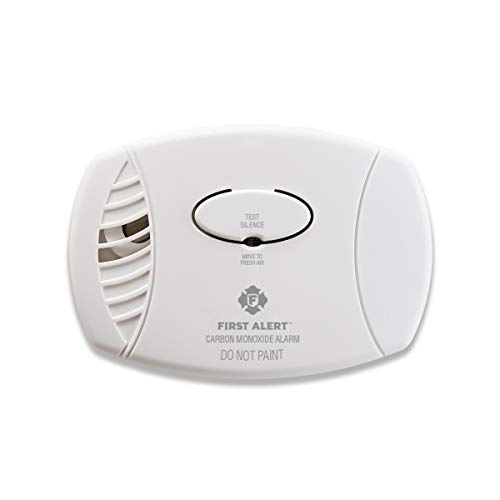
Pros
- Battery-powered monitoring during power outages
- Replaceable batteries
- End-of-life warning chirp
Cons
- Requires battery upkeep
- Who should skip it: shoppers seeking documented hardwired or interconnected operation
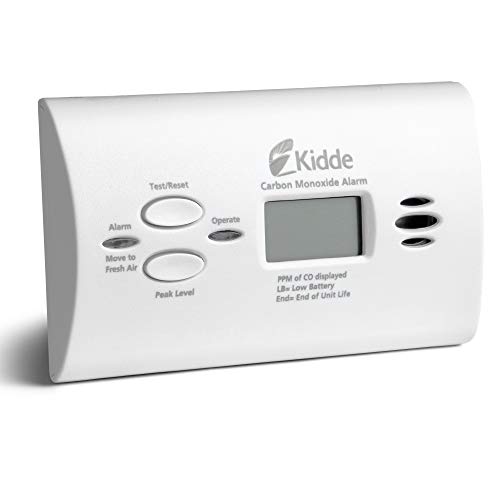
Pros
- No wiring required
- Portable wall or tabletop placement
- Peak Level Memory
- UL listed
Cons
- Who should skip it: buyers needing a hardwired alarm
- Battery-powered, so batteries require replacement
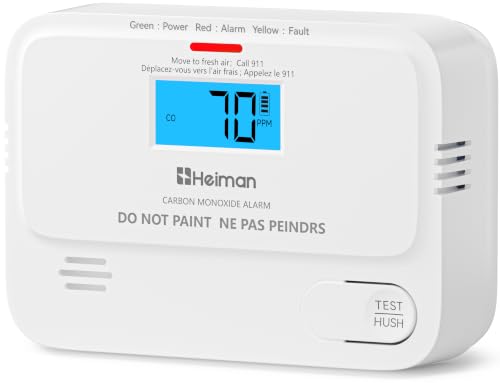
Pros
- Compact, lightweight design
- Live CO readings on LCD
- Tabletop or wall-mount placement
- UL 2034 5th Edition certified
Cons
- Battery-powered only, not plug-in or hardwired
- Operating range limited to 40°F to 100°F
- Who should skip it: buyers needing garage or workshop coverage

Pros
- CO-level display and loud alarm
- Battery backup during outages
- Rotating plug fits different outlet orientations
- 10-year limited warranty
Cons
- Skip if you need a battery-only detector
- Requires an outlet for primary power

Pros
- Low-level CO alerts
- 10-year built-in battery
- Wall or tabletop placement
- 10-year limited alarm warranty
Cons
- Battery is not replaceable
- Who should skip it: households wanting replaceable batteries

Pros
- Three alert modes
- Rechargeable with USB-C
- Includes protective case
- Alarm history and calibration settings
Cons
- Who should skip it: buyers seeking a specified fixed alarm

Pros
- Two AA batteries included
- No wiring required
- Portable for travel
- 85 dB alarm with LED warning
Cons
- Skip if you need hardwired power
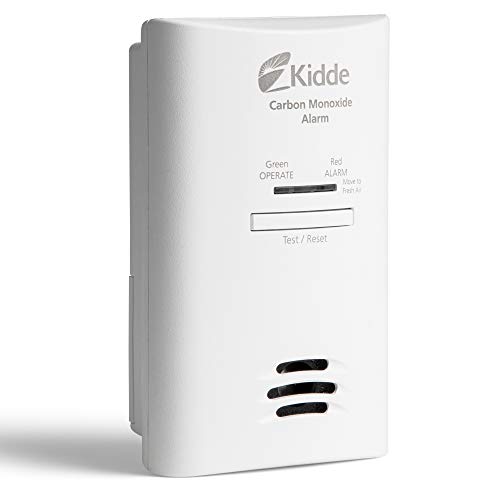
Pros
- Two-AA battery backup
- Peak Level Memory
- Test-Hush Button
Cons
- Who should skip it: households without a suitable 120V outlet

Pros
- Detects smoke and carbon monoxide
- AA battery backup included
- Interconnect capability with other Kidde alarms
- 10-year limited warranty
Cons
- Requires 120V AC wiring
- Skip it if your location lacks compatible hardwiring

Pros
- AC power with 10-year battery backup
- Electrochemical CO sensor
- Three-color status indicator
- Portable compact design
- Two alarms per pack
Cons
- Certification details are not listed
- Who should skip it: buyers requiring documented certification details
The Best Carbon Monoxide Detectors by Use Case
Best for Low-Level Alerts: Kidde Carbon Monoxide Detector
The Home Safety category includes alarms with different warning approaches. This Kidde model is a fit for households that want alerts below the product’s separate dangerous-level alarm: its listing specifies distinct patterns for 30–70 ppm and at 70 ppm. It has a digital backlit display, wall or tabletop placement, and a built-in 10-year battery. The listing says it meets UL 2034 5th Edition and is ETL Listed. Kidde Carbon Monoxide Detector
Reasons to buy:
- Separate low-level and dangerous-level alert patterns.
- Built-in 10-year battery avoids routine battery replacement during its stated battery term.
- Backlit display and wall or tabletop placement offer flexible use.
Reasons to avoid:
- Its built-in battery is not replaceable, so confirm the replacement plan for the alarm itself.
- Low-level alert behavior is product-specific and does not replace following local alarm placement guidance.
Skip it if you want a plug-in alarm or a model with replaceable batteries.
Best for Reading CO Levels: Heiman Carbon Monoxide Detectors
Heiman Carbon Monoxide Detectors suits buyers who want a screen showing readings, rather than relying only on an alarm and status light. Its listing specifies a live LCD reading from 20 ppm, a 20–999 ppm measuring range, a 30 ppm early warning, and 12-hour alarm memory. It runs on two replaceable AA batteries and can sit on a tabletop or mount on a wall. The listing identifies UL 2034 5th Edition certification and CSFM approval. Explore related home air products for a separate indoor-air category.
Reasons to buy:
- LCD displays live CO readings, starting at 20 ppm.
- Early warning and alarm memory add information beyond a basic alert.
- Replaceable AA batteries and compact tabletop or wall installation suit flexible placement.
Reasons to avoid:
- The specified operating range is 40°F to 100°F; the listing says performance may be compromised outside it.
- The manufacturer says not to use it in garages, workshops, or directly under vehicle exhaust pipes.
Skip it if you need a plug-in or hardwired alarm, or a detector for a garage or workshop.
Best for Outlet Power with Backup: Kidde Carbon Monoxide Detector
This plug-in Kidde Carbon Monoxide Detector is suited to a home with an accessible 120V outlet and a buyer who wants battery backup for outages. The listing specifies two included AA backup batteries, a rotating plug for vertical or horizontal outlets, a backlit CO-level display, and an 85 dB alarm. It also lists UL 2034 5th Edition compliance, ETL listing, and a 10-year limited alarm warranty. Our air purifier comparison covers a different kind of home equipment, not carbon monoxide safety.
Reasons to buy:
- Uses household AC power with AA backup during a power outage.
- Rotating plug can accommodate vertical or horizontal outlet orientation.
- Backlit display shows CO levels, and the unit includes a Test/Hush button.
Reasons to avoid:
- Placement depends on an outlet being available where you need an alarm.
- The product listing does not specify low-level alert thresholds.
Skip it if you need a detector for a spot without an outlet or want a hardwired alarm.
Best for Basic Battery Operation: First Alert Battery Carbon Monoxide Alarm | CO400
First Alert Battery Carbon Monoxide Alarm | CO400 is a straightforward choice for someone who wants a replaceable-battery alarm without wiring or outlet dependence. Its listing specifies an electrochemical sensor, an 85-decibel alarm, an end-of-life signal, and a five-year limited warranty. Battery operation allows monitoring during a power failure, but you need to keep fresh batteries installed. Browse more Home Safety products if you are comparing other household protection gear.
Reasons to buy:
- Battery operation does not depend on household power or outlet placement.
- End-of-life chirp signals when the alarm needs replacement.
- The listing says alarms should be placed on each home level and in each bedroom.
Reasons to avoid:
- It does not list a digital display or low-level alert feature.
- Its five-year limited warranty is shorter than the 10-year alarm warranties listed for some alternatives.
Skip it if you want a display, a built-in long-term battery, or a plug-in design.
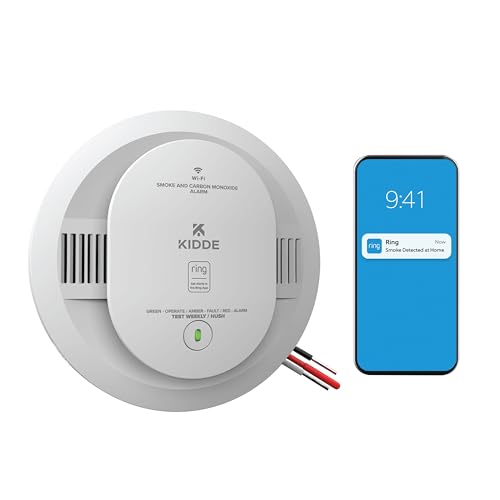
Best for Smoke and CO in One Alarm: Kidde Smoke & CO Detector
Kidde Smoke & CO Detector combines smoke and carbon monoxide detection in a hardwired unit, making it relevant when you are replacing or planning a compatible wired alarm. The listing specifies 120V AC power, two AA alkaline backup batteries, and interconnect capability with other Kidde alarms so connected alarms sound together. It lists UL 217 10th Edition, UL 2034 5th Edition, and FCC standards, plus a 10-year limited warranty from purchase. Its wiring and interconnect needs make compatibility checks especially important.
Reasons to buy:
- Combines smoke and CO detection in one device.
- AA backup batteries provide power backup if household AC power fails.
- Interconnect capability can alert occupants through other compatible Kidde alarms.
Reasons to avoid:
- Hardwired installation is not as simple as placing a battery alarm or plugging into an outlet.
- Interconnect compatibility depends on the other alarms and wiring in your home.
Skip it if you need a portable standalone alarm or cannot confirm your existing wiring and alarm compatibility.
Also Considered
Kidde Carbon Monoxide Detector is a basic AA-powered option with LED indicators, peak-level memory, and portable wall or tabletop placement, but its listing does not specify a digital display or low-level alerts. Kidde Carbon Monoxide Detector
Kidde Carbon Monoxide Detector offers battery operation, an 85 dB alarm, and travel-ready portability, but does not list the low-level alert features of the selected Kidde model. Kidde Carbon Monoxide Detector
TOPTES CT-580 Portable Carbon Monoxide Detector is a rechargeable handheld inspection tool with audible, visual, and vibration alarms; its listing positions it for manual inspection and professional use rather than clearly identifying it as a household UL 2034 alarm. TOPTES CT-580 Portable Carbon Monoxide Detector
SITERWELL Plug in Carbon Monoxide Detector 10 Year comes as a two-pack and lists AC power with battery backup, but buyers should verify its exact alarm certification and placement instructions in the listing. SITERWELL Plug in Carbon Monoxide Detector 10 Year
How to Choose the Best Carbon Monoxide Detector
Match the power source to the installation spot
Battery alarms work without an outlet and can keep monitoring through a power failure, but their batteries need attention unless the model has a built-in battery. Plug-in alarms use an outlet and may include battery backup, while hardwired alarms suit homes with compatible wiring and can require a more involved installation. Check the listing for the exact power source, backup type, included batteries, and mounting method. Do not assume that a model described as portable can replace a permanently installed alarm throughout the home.
Decide whether you need readings or early alerts
Most alarms in this group emphasize an audible warning and indicator lights. Heiman adds an LCD reading and a stated 30 ppm early warning, while the selected Kidde low-level model lists alert patterns for 30–70 ppm and a separate pattern at 70 ppm. Those features can provide more information, but alert thresholds and display ranges differ by product. Read the individual listing and manual rather than assuming every digital display or CO alarm behaves the same way.
Check certification, alarm life, and replacement signals
Look for the applicable standard stated for the exact model. Among these products, listings cite UL 2034 editions; the smoke-and-CO unit also cites UL 217 and FCC standards, while Heiman lists CSFM approval. These are product-specific claims, not interchangeable features. Compare the stated warranty, battery design, and end-of-life signal too. A warranty period does not establish battery life, and a built-in battery does not mean the alarm itself lasts indefinitely.
Plan coverage and confirm compatibility
One alarm may not cover every floor or sleeping area. The First Alert listing recommends an alarm on each level and in each bedroom; follow the instructions supplied with the model and check local requirements. For a hardwired or interconnected replacement, confirm the wiring and compatible alarm models before buying. For travel, a portable device can be convenient, but verify that its listing identifies it as an alarm suitable for the setting you plan to use.
How We Compared
This comparison uses the published product specifications, listed design details, certification and warranty claims, and customer feedback where provided. Product recommendations reflect differences in power source, display and alert features, installation, and intended use. The listing information did not include customer-review comments, so no recurring owner experiences or review consensus are claimed.
Frequently Asked Questions
Should I choose a battery, plug-in, or hardwired CO alarm?
Choose based on the installation location and existing power. Battery models do not need an outlet, plug-in models need an accessible outlet, and hardwired models need compatible household wiring. Backup power differs by product, so confirm whether it uses replaceable or built-in batteries.
What does a low-level CO alert add?
A low-level alert can notify you at a stated concentration below the product’s separate dangerous-level alarm. The Heiman listing specifies a 30 ppm early warning, and the selected Kidde model lists an alert pattern from 30–70 ppm. Thresholds and alert behavior vary, so check the exact model details.
Can I use a portable CO detector while traveling?
Some product listings describe their alarms as suitable for travel, including selected Kidde battery and plug-in models. Confirm the power source and the manufacturer’s instructions for your destination. Heiman specifies a 40°F to 100°F operating range and says not to use its alarm in garages, workshops, or directly beneath vehicle exhaust pipes.
Can a smoke and CO alarm replace two separate alarms?
A combination unit can detect both hazards, but whether it suits your home depends on required placement, wiring, and compatibility with other alarms. The Kidde combination model is hardwired and lists interconnect capability with other Kidde alarms. Check your existing setup and local requirements before replacing alarms.
How many CO alarms should my home have?
Placement depends on your home, the alarm instructions, and local rules. The First Alert CO400 listing recommends one on each level and in each bedroom. Check the manual for the specific model and consult local guidance when planning coverage.
Safety note: Install and maintain alarms according to their instructions and applicable local requirements. If an alarm sounds, follow its safety instructions and move to fresh air.


Write Your Review
No reviews yet. Be the first to share your experience!