

Extra freezer space can help with bulk groceries and meal prep, but a larger chest freezer takes up more floor space and can make small items harder to find. This guide to the best chest freezer options compares capacities, temperature controls, organization features, and garage-use claims so you can match a model to your available space and storage habits.
Check your doorway and intended location before choosing a size. The products here range from compact units for limited spaces to larger models for stocking up, and their listed features differ in practical ways, including convertible fridge mode, defrost drains, and power-outage protection.

Pros
- 12.0-cubic-foot storage capacity
- Seven-level adjustable temperature control
- Removable storage basket
- Adjustable leveling legs
Cons
- Skip if 24-hour upright setup is impractical

Pros
- Two-sided zipper access
- Adjustable straps and elastic hem
- Side ventilation mesh
- Reflective lifting handles
Cons
- Skip if freezer does not match listed dimensions

Pros
- Compact 4.0-cu.-ft. capacity
- Seven adjustable temperature settings
- Removable storage basket
- Built-in drain for defrosting
Cons
- Skip it if you need more than 4.0 cu. ft.

Pros
- Two removable storage baskets included
- Seven-position adjustable thermostat
- Compact 3.2-cubic-foot capacity
Cons
- Who should skip it: shoppers needing more than 3.2 cubic feet

Pros
- Freezer and fridge modes
- Removable storage basket
- Adjustable legs
- LED light
Cons
- Skip if 22 x 30.3 x 33.5-inch footprint won't fit.

Pros
- 10.0 cu. ft. storage capacity
- Seven-level temperature adjustment
- Removable storage basket
- Door opens from 45° to 90°
Cons
- Manual defrost requires periodic upkeep
- Who should skip it: shoppers who want frost-free operation
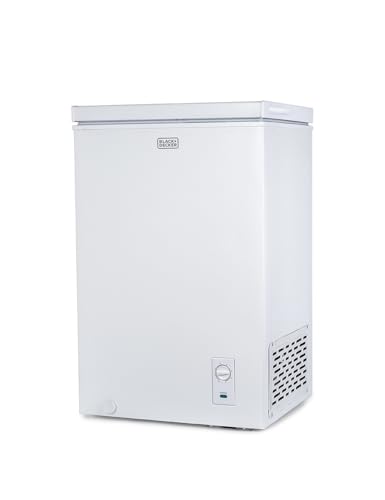
Pros
- Removable storage basket
- External temperature control
- Compact 2.0 cu. ft. capacity
Cons
- Manual defrost requires periodic maintenance
- Who should skip it: shoppers needing more than 2.0 cu. ft.

Pros
- 7.0-cubic-foot capacity
- Removable storage basket
- Six-setting thermostat
- Exterior defrost drain
Cons
- Chest layout may require reaching below top-layer items
- Who should skip it: shoppers needing another capacity or size
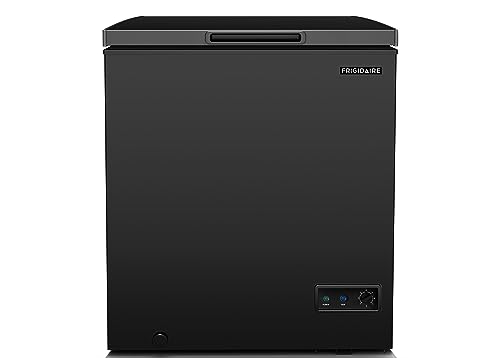
Pros
- 5.0 cu. ft. storage capacity
- Seven adjustable thermostat settings
- Removable organizing basket
- Exterior defrost drain
Cons
- Skip it if 5.0 cu. ft. is insufficient

Pros
- Adjustable thermostat
- Removable organizing basket
- Lid holds open between 45° and 90°
- Front rollers and drain plug
Cons
- Who should skip it: shoppers needing more than 3.5 cubic feet
The Best Chest Freezers by Use Case
Best for Flexible Food Storage: Midea 7.0 Cu.ft Chest Freezer
The Midea 7.0 Cu.ft Chest Freezer stands out for households that want one appliance that can switch between freezer and refrigerator modes. Its listing specifies garage-ready operation from 0°F to 110°F in freezer mode and 38°F to 110°F in fridge mode. It also claims up to 48 hours of frozen-food protection after a power outage, a useful feature to consider if outages are a concern. Browse more large appliances for other space and storage options.
Reasons to buy:
- Convertible operation gives you freezer or refrigerator storage.
- Listed garage operating ranges cover non-climate-controlled conditions.
- Removable basket and adjustable legs support organization and placement.
Reasons to avoid:
- At 7.0 cubic feet, it may take more room than a compact apartment model.
- Verify that the listed temperature range suits your specific location and seasonal conditions.
Skip it if you need a small unit for a tight kitchen or want a freezer-only model without convertible operation.
Best Budget Pick: Climate Choice 4.0 Cu.Ft Chest Freezer
The Climate Choice 4.0 Cu.Ft Chest Freezer suits buyers who need extra capacity without committing to a large footprint. Its listed dimensions are 20.67 × 16.34 × 32.52 inches, and its seven temperature settings span -7.6°F to 21.2°F. The listed energy use is 0.469 kWh per 24 hours, while a removable basket and bottom drain address everyday organization and manual defrosting. As the lowest-priced freezer among these picks in the listing information, it is the budget choice, though price can change.
Reasons to buy:
- Compact listed dimensions suit apartments, offices, and smaller kitchens.
- Seven temperature settings offer adjustment for different storage needs.
- Built-in drain makes defrosting and cleaning more straightforward.
Reasons to avoid:
- Four cubic feet offers less storage than the larger household models here.
- The listed temperature range reaches 21.2°F, so confirm the setting guidance in the manual for your intended frozen foods.
Skip it if you routinely store bulk meat or need the larger capacity of a 7.0- or 10.0-cubic-foot unit.
Best for Larger Stock-Ups: TABU 12.0 Cubic Feet Chest Freezer
The TABU 12.0 Cubic Feet Chest Freezer is the largest freezer in this selection, making it a candidate for households that need room for bulk meat, seafood, or prepared meals. Its listing gives dimensions of 22 × 32 × 34 inches and a seven-level thermostat with a stated range from -22°C to -14°C, equivalent to about -7.6°F to 6.8°F. A removable basket keeps smaller items near the top, but a chest layout still calls for a plan to label and arrange food stored below it.
Reasons to buy:
- 12.0 cubic feet provides the most listed freezer capacity in this group.
- Front-mounted seven-level temperature control is easy to reach.
- Hinged lid stays open between 45 and 90 degrees, according to the listing.
Reasons to avoid:
- The larger capacity needs more floor space than compact models.
- The product listing recommends keeping the unit upright for at least 24 hours before use; follow its setup instructions.
Skip it if your available space is limited or your household only needs a small amount of overflow storage.
Best for Simple Defrosting: FRIGIDAIRE EFRF5003-BLACK Chest Deep
The FRIGIDAIRE EFRF5003-BLACK Chest Deep offers 5.0 cubic feet of storage with an exterior defrost drain, which helps when it is time to remove meltwater during manual defrosting. The listing describes it as garage-ready and includes a seven-setting thermostat, removable vinyl-coated wire basket, and power-on indicator light. Its mid-size capacity may suit meal prep or extra family groceries without requiring as much room as the largest options.
Reasons to buy:
- Exterior defrost drain simplifies access during cleaning.
- Removable wire basket separates smaller packages from larger items.
- Power-on indicator provides a visible status check.
Reasons to avoid:
- Five cubic feet offers less room than the 7.0- to 12.0-cubic-foot choices.
- The listing does not provide a garage operating temperature range, so confirm suitability for your garage conditions.
Skip it if you need a model with a stated operating range for a hot or cold garage.
Best for Very Small Spaces: BLACK+DECKER 2.0 Cu. Ft. Compact Chest Freezer
The BLACK+DECKER 2.0 Cu. Ft. Compact Chest Freezer is designed for limited storage needs, with a listed capacity of up to 70 lb of frozen food. Its mechanical temperature control and indicator light sit on the outside, so you can adjust or check the unit without opening the lid. A removable basket helps keep frequently used items accessible, while the manual-defrost drain supports cleanup.
Reasons to buy:
- Small 2.0-cubic-foot capacity fits a limited-use role better than a full-size chest freezer.
- External controls allow adjustment without opening the lid.
- Listing states capacity for up to 70 lb of frozen food.
Reasons to avoid:
- Its capacity is the smallest among the freezers selected here.
- The listing identifies a temperature control but does not state a temperature range.
Skip it if you want to store bulk purchases, large cuts of meat, or a household’s regular frozen-food supply.
Also Considered
The Kismile 3.2 Cubic Feet Chest Freezer could suit a small household that values two removable baskets, but its capacity is modest and it lacks a listed defrost drain. See the Home Appliances category for related appliance guides. The 7.0 Cu Ft Chest Freezer from BODACIOUS offers a removable basket and exterior defrost drain, but its listing provides less detail on garage temperature suitability than the Midea option. The Muhub 10.0 Cu.Ft Deep Freezer could fit shoppers who want substantial capacity and a stated manual-defrost design, though its listing does not give an operating temperature range. The Igloo 3.5 Cu Ft. Upright Deep Freezer Chest lists front rollers, a drain plug, and a balanced hinge, but the product data uses both upright and chest descriptions, so confirm its physical format before buying. The Chest Freezer Cover Waterproof 600D is an accessory, not a freezer; check your appliance measurements and compatibility list before considering it. For other household climate products, see our Levoit and Coway air purifier comparison.
How to Choose a Chest Freezer
Match capacity to what you actually store
Capacity is the clearest starting point: 2.0 to 4.0 cubic feet can suit occasional overflow, while 7.0 cubic feet or more gives you room for larger stock-ups. A bigger interior is useful only if you have floor space and a way to keep food organized. Measure the intended location, including clearance to open the lid, then compare those measurements with the listing. The TABU model lists dimensions of 22 × 32 × 34 inches; do not assume those figures apply to other models.
Check temperature needs and garage conditions
A thermostat with several settings lets you adjust cooling, but a setting count alone does not tell you the exact temperature each level produces. Look for a stated temperature range and guidance in the manual. If the freezer will sit in a garage, check whether the listing specifies operation in non-climate-controlled conditions and the temperature limits. Midea lists separate operating ranges for fridge and freezer modes; the Frigidaire listing says garage-ready but does not give a range, so confirm details for your location.
Consider access and organization
Chest freezers store food in a deep bin, so baskets are useful for smaller packages that you want to reach first. Check how many baskets are included and whether they are removable; do not assume every model includes the same number. A lid that stays open can help when loading groceries, while external controls let you adjust settings without opening the freezer. If you store many different foods, plan to label containers and group similar items so older packages do not get buried.
Plan for defrosting and cleaning
Several models here use manual defrost, which means you should account for periodic cleanup rather than expecting automatic frost removal. A drain can make meltwater easier to manage: the Climate Choice and Frigidaire listings specifically describe drains, and the BLACK+DECKER listing specifies an easy-access drain. Before buying, check where the drain sits and whether you can direct water to a suitable container. Also read the manual for defrosting steps, since the product data does not establish that every model uses the same process.
How We Compared
We compared the published product listings by capacity, stated dimensions, temperature controls and ranges, garage-use claims, organization features, defrost details, and any listed outage protection. Customer feedback was not supplied for these products, so this guide does not use review trends to support its recommendations. Where a listing leaves a practical question unanswered, such as exact garage temperature limits or control temperatures, we identify that as a detail to verify rather than assuming an answer.
Frequently Asked Questions
Can a chest freezer go in a garage?
Some models are listed as garage-ready, but that label does not provide the same operating limits for every freezer. Check the product’s stated temperature range and manual against the temperature swings in your garage. The Midea listing gives ranges for freezer and fridge modes; the Frigidaire listing makes a garage-ready claim without stating a range.
Is a chest freezer better than an upright freezer?
A chest design can suit buyers who want a deep storage bin and do not need to access every item at eye level. Items at the bottom can be harder to reach, so baskets and labels help. An upright format may be easier to organize by shelf, but the published product details do not provide enough consistent information to compare energy use or storage efficiency across formats.
What chest freezer size should I choose?
Start with the amount and type of food you plan to store, then compare capacity and the freezer’s listed dimensions with your available space. A compact 2.0- or 4.0-cubic-foot model can suit limited overflow, while larger households or bulk shoppers may prefer 7.0 cubic feet or more. Leave room to open the lid and follow the manufacturer’s placement guidance.
Does a chest freezer need manual defrosting?
Several products in this guide list manual defrosting or a defrost drain. A drain helps manage water during cleanup, but it does not remove the need to follow the manufacturer’s defrosting instructions. Check the product manual for the recommended process and frequency.
Can a convertible freezer also work as a refrigerator?
The Midea 7.0 Cu.ft Chest Freezer is specifically listed as convertible between freezer and refrigerator modes. The other products in this guide are not described as convertible, so do not assume they can safely or reliably maintain refrigerator temperatures. Confirm the mode settings and operating range in the manual before storing food in refrigerator mode.




Write Your Review
No reviews yet. Be the first to share your experience!