

Choosing an air purifier means matching cleaning capacity to your room, then deciding which extras matter: quiet sleep settings, pet-focused features, air-quality sensors, or app controls. This Best HEPA Air Purifier guide compares five models by their listed specifications and explains what to check before choosing one.

Pros
- Quiet 24dB sleep mode operation
- AHAM-verified CADR particle ratings
- Display shutoff prevents bedroom light disruption
Cons
- Restricted to 120V United States electrical outlets
- Requires official brand replacement filters for best performance

Pros
- Quiet 20 dB sleep mode with auto-dimming screen
- Separate HEPA and carbon filter replacements cut waste
- Tracks three particle sizes via onboard sensor
- Low 7.5W average power consumption with Energy Star
Cons
- Modest 161 CFM CADR limits fast air exchanges
- Buyers needing rapid whole-house clearing should skip it
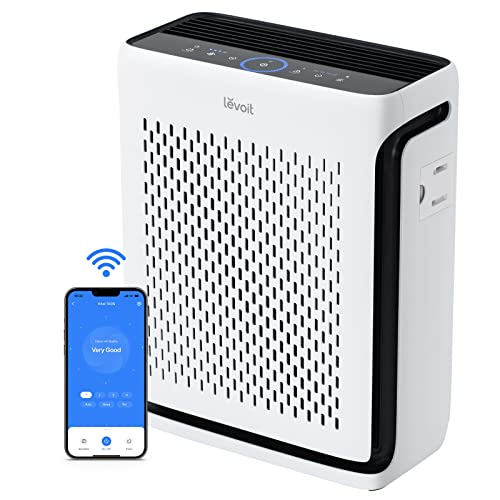
Pros
- Washable pre-filter captures fur and reduces replacement waste
- Quiet 25-decibel sleep mode with automatic light dimming
- Delivers 4.8 air changes hourly in medium rooms
Cons
- Achieves only one air change hourly in larger rooms
- Buyers needing rapid whole-home air cleaning should skip it

Pros
- Captures 99.97 percent of 0.3-micron particles
- Automatic fan adjustment based on air quality
- Air quality indicator light turns off for sleep
- Filter alert tracks processed air volume
Cons
- Requires 60 minutes to clean 1,748 square feet
- Who should skip: buyers needing faster large-room turnover

Pros
- AHAM-verified CADR performance ratings for smoke, dust, and pollen
- U-shaped inlet effectively captures pet dander and hair
- Quiet 27-decibel operation in sleep mode
- Integrated air quality monitoring
Cons
- Heavy 13.2-pound frame reduces portability between rooms
- Large footprint requires dedicated floor space
- Skip if seeking a small desktop air purifier
The Best Air Purifiers by Use Case
Best for a Bedroom on a Budget: Levoit Air Purifier for Home Pets Hair Allergens
The Levoit Air Purifier for Home Pets Hair Allergens is a straightforward choice for a bedroom or office where quiet operation and verified room-cleaning figures matter. Its listing specifies AHAM verification, a 143 CFM smoke CADR, and 4.8 air changes per hour in a 222-square-foot room. Sleep Mode is rated at 24 dB, and you can turn off the display lights, set a timer, and check the filter indicator.
Its filter is described as HEPA-grade while operating in Sleep Mode, based on IEST RP C001.7. The listing also claims 99.97% filtration efficiency for particles from 0.1 to 0.3 micrometers, based on independent-lab results. At 1,073 square feet, the listed cleaning rate falls to once per hour, so use the smaller, faster-cleaning room figure when selecting it for regular use.
Reasons to buy:
- AHAM-verified CADR figures let you compare its smoke, dust, and pollen performance.
- Sleep Mode operates at a listed 24 dB, with the option to switch off display lights.
- Timer offers 2-, 4-, 6-, and 8-hour settings.
Reasons to avoid:
- Its large-room figure means one air change per hour, not the faster rate listed for a smaller bedroom.
- The listing recommends official Levoit replacement filters; check replacement-filter cost and availability before buying.
Skip it if you want built-in particle sensing, app control, or faster air turnover across a large open space. Consider the Levoit Air Purifier for Home Pets Hair Allergens when bedroom noise and a simple timer matter more than connected features.
Best for Smart Air Monitoring: Levoit Air Purifier, Next Gen Fully Sealed HEPA
The Levoit Air Purifier, Next Gen Fully Sealed HEPA suits buyers who want particle readings and app-based control along with filtration. Its three-in-one sensor monitors PM1.0, PM2.5, and PM10, while the VeSync app provides real-time air-quality information, scheduling, timer controls, and filter-life tracking. The listing also specifies Alexa and Google Assistant connections, though buyers should confirm that their preferred controls and app features meet their needs.
The model has a 161 CFM CADR and a fully sealed HEPA system that the listing says captures 99.97% of allergens down to 0.3 micrometers. Separate HEPA and activated-carbon filters can be replaced independently. A stated two-year filter life is based on a particular standard and operating schedule, so treat it as a stated estimate rather than a guarantee for every home.
Reasons to buy:
- PM1.0, PM2.5, and PM10 readings offer more particle detail than a basic indicator light.
- App scheduling, filter-life tracking, and voice-assistant support add remote control options.
- Separate HEPA and carbon filter replacements let you replace those components independently.
Reasons to avoid:
- Smart controls depend on using the VeSync app; check device and network requirements in the product listing.
- The listing’s coverage figure is not accompanied by a room air-change rate in the published details, so compare CADR and room needs carefully.
Skip it if you prefer a purifier without app controls or do not need particle readings. The Levoit and Coway purifier comparison offers another way to review features across those brands.
Best for Pet Hair and Washable Pre-Filter Care: LEVOIT Air Purifier for Home Pets Bedroom Washable
The LEVOIT Air Purifier for Home Pets Bedroom Washable is the clearest fit here for households that want a pet-focused mode and an accessible pre-filter to maintain. The listing describes a wide U-shaped inlet that traps airborne fur and larger particles, plus a washable pre-filter that can be rinsed with water. Pet Mode, Auto Mode, and Sleep Mode can be scheduled through the VeSync app.
AHAM verification specifies 4.8 air changes per hour in a 222-square-foot room, while the listing says a 1,073-square-foot area receives one air change per hour. Its sleep setting runs as low as 25 dB, and light detection dims the display in dark conditions. The carbon filter is described as helping remove pet odors, fumes, and VOCs; this does not establish that it will eliminate every odor or gas in a particular home.
Reasons to buy:
- Washable pre-filter and wide inlet address larger airborne pet hair and particles.
- Pet Mode and scheduled operation support a pet-focused daily routine.
- App controls include timers, filter-life checks, and third-party voice-assistant connections.
Reasons to avoid:
- Washing the pre-filter adds a recurring maintenance step; follow the product instructions for care.
- The faster stated air-change rate applies to a 222-square-foot room, not the full listed large-area coverage.
Skip it if you do not need pet-specific airflow features or app scheduling and would rather choose a simpler purifier. See the Air Purifiers category for other models and buying options.
Best for Sensor-Based Automatic Operation: COWAY Air Purifier for Home Up to 1,748ft²
The COWAY Air Purifier for Home Up to 1,748ft² is aimed at buyers who want automatic fan adjustment without relying on a phone app. Its air-quality monitor tracks conditions and displays them through a colored LED, while Auto Mode adjusts the fan as needed. The listing specifies coverage up to 1,748 square feet in 60 minutes, which is a different use case from models with faster air changes in smaller rooms.
Its four-stage system combines a washable pre-filter, deodorization filter, Bipolar Device, and HEPA filter. The listing says the system reduces 99.97% of 0.3-micrometer particles and reduces VOCs and odors. Filter alerts indicate when filters need replacement and when the pre-filter needs cleaning. A three-year warranty is specified in the listing; check its terms and exclusions before purchase.
Reasons to buy:
- Auto Mode responds to the purifier’s air-quality monitoring without requiring app control.
- Washable pre-filter and filter alerts make routine maintenance easier to track.
- Listing specifies a three-year warranty and a large-area coverage figure.
Reasons to avoid:
- Its stated room coverage is based on one hour of operation, so it may not suit buyers seeking multiple air changes per hour in a large room.
- The published details do not specify a CADR figure; compare the full listing with your room-size and cleaning-rate needs.
Skip it if you need detailed app scheduling or a clearly stated CADR for a direct airflow comparison. Browse the broader Home Appliances category if your search includes other home air-care products.
Also Considered
The LEVOIT Smart Air Purifier for Home Large Room could suit buyers who need higher stated CADR figures for a large room, but its published information gives less detail about smart-app functions than the selected sensor-focused model.
The LEVOIT Smart Air Purifier for Home Large Room has AHAM-verified smoke, dust, and pollen CADR figures of 250, 254, and 289 CFM, respectively, plus a U-shaped inlet for pet hair; consider it when those airflow figures matter more than the washable pre-filter features of the pet-focused pick. See the LEVOIT Smart Air Purifier for Home Large Room listing for its room-coverage conditions.
How to Choose the Best HEPA Air Purifier
Match CADR and air changes to your room
CADR, or Clean Air Delivery Rate, indicates how quickly a purifier delivers filtered air for a given particle category. Higher figures can help when you need faster cleaning, but compare the smoke, dust, and pollen numbers separately when they are available. The Levoit Core 300-P lists a 143 CFM smoke CADR, while the Vital 200S-P lists 250 CFM for smoke, 254 CFM for dust, and 289 CFM for pollen.
Room-coverage figures need context. Some products state a fast air-change rate in a smaller room and a slower one in a larger area. Check both the room size and the listed cleaning frequency, then use the rate that matches how quickly you want air circulated. Do not treat a large maximum coverage number as equivalent to frequent cleaning across that entire area.
Understand filtration claims and maintenance
Look for the specific particle size and filtration percentage claimed, and note whether the wording applies to a particular mode or filter. For example, the Core 300-P listing describes HEPA-grade filtration in Sleep Mode, while the Eleva 300X listing specifies a fully sealed HEPA system. Those descriptions are not interchangeable, so check the exact product claim rather than relying on the word HEPA alone.
Also check how filters are replaced and maintained. The Vital 100S-P has a washable pre-filter, while the Eleva 300X allows separate replacement of its HEPA and activated-carbon filters. The Coway listing includes filter alerts. Confirm replacement-filter availability and care instructions for the exact model before deciding.
Choose noise and lighting features for where it will run
A purifier intended for a bedroom should have a sleep setting and controls for distracting display lights. Listed sleep noise varies: 24 dB for the Core 300-P, 20 dB for the Eleva 300X, and as low as 25 dB for the Vital 100S-P. These are product specifications, not a guarantee of how loud a purifier will seem in your room or at every fan speed.
Check whether the display can be dimmed or switched off, and whether the product changes settings automatically in darkness. The Core 300-P lets you switch off display lights, while the Vital 100S-P uses light detection to dim its display. These details can matter as much as a low listed sleep-mode noise level if the purifier will run beside your bed.
Decide whether sensors and app controls are useful
Built-in sensors can show changing particle readings or help a purifier adjust its fan automatically. The Eleva 300X monitors PM1.0, PM2.5, and PM10, and the Coway has a pollution sensor with a colored air-quality indicator and Auto Mode. The Levoit models with VeSync support add scheduling and filter-life checks, with voice-assistant connections specified for some models.
These features are useful when you want status information or scheduled operation, but they add control options you may not need. Check which measurements appear on the unit, which functions need an app, and whether the listing names your preferred voice assistant. If you want basic manual use, a model with a timer and filter indicator may be enough.
How We Compared
This guide compares the published product specifications, listed filtration and room-coverage claims, operating features, and available customer-feedback information. It gives greater weight to concrete details such as CADR, stated air changes, particle-size claims, noise specifications, filter care, and control options. Where room coverage lacks a corresponding cleaning rate or CADR detail, the guide notes that limitation rather than treating coverage figures as directly equivalent.
Frequently Asked Questions
Does every purifier in this guide use a HEPA filter?
The published listings describe HEPA or HEPA-grade filtration for these models, but wording and supporting details differ. The Core 300-P listing specifies HEPA-grade performance in Sleep Mode, while the Eleva 300X listing describes a fully sealed HEPA system. Check the exact model’s filter description and particle-size claim before buying.
How large a room can these air purifiers clean?
Each listing gives its own coverage figure and, in some cases, a cleaning frequency. The Core 300-P and Vital 100S-P specify 4.8 air changes per hour in a 222-square-foot room, with once-per-hour figures for larger areas. The Coway states coverage up to 1,748 square feet in 60 minutes. Compare the rate as well as the area, because the largest stated room size may involve slower air turnover.
Which model makes the most sense for pet hair?
The Vital 100S-P is the most explicitly pet-focused option in the published descriptions. It has Pet Mode, a wide U-shaped inlet intended to trap airborne fur and larger particles, and a washable pre-filter. The Core 300-P also lists pet dander among the particles its filter captures, but its published details do not include the same pet-specific inlet and mode features.
Do smart air purifiers need an app to work?
The published details do not establish that every setting requires an app. The Eleva 300X lists app controls, while the Vital 100S-P includes on-unit modes and scheduling through VeSync. The Coway describes Auto Mode and a colored air-quality indicator without app control in the provided features. Check the product listing for setup requirements and which controls are available directly on the unit.
Can an air purifier remove odors as well as particles?
Some models include activated-carbon or deodorization filters and list odor reduction as a feature. The Vital 100S-P describes a high-efficiency activated-carbon filter for pet odors, fumes, and VOCs, while the Coway lists a deodorization filter. These claims do not specify performance for every odor or gas, so review the filter details if odor control is your main reason for buying.


Write Your Review
No reviews yet. Be the first to share your experience!