

Waking to a loud alarm can feel jarring, but sunrise clocks differ in how much they do beyond brightening a room. This guide to the best sunrise alarm clock options compares two models by sunrise timing, sound choices, bedside lighting, display controls, and the features you may want at bedtime.
Pros
- Customizable sunrise simulation up to sixty minutes
- Wide selection of 26 soothing sleep sounds
- Zero to 100 percent display dimming
- Battery backup retains settings during outages
Cons
- Requires manual physical controls instead of app integration
- Skip if requiring smart home voice automation

Pros
- Simulated colored sunrise and sunset transitions
- Built-in FM radio and five natural sounds
- Bedside reading lamp with twenty brightness levels
- Tap snooze and automatic dimming display
Cons
- Bulky dimensions require significant bedside table space
The Best Sunrise Alarm Clocks by Use Case
Best Value: REACHER Wood Grain Sunrise Alarm Clock and Sound
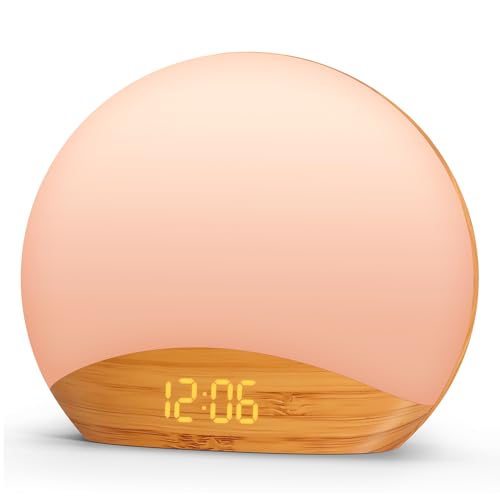
The REACHER Wood Grain Sunrise Alarm Clock and Sound suits shoppers who want sunrise lighting alongside a broad selection of sleep sounds and a nightlight. Its listing specifies a sunrise simulation that brightens from 1% to 100% over a selectable 5-to-60-minute period, so you can choose a shorter or longer lead-in before waking. The listing also describes 26 sleep sounds, eight nightlight colors, and a dimmable clock display. At its lower listed price than the Philips, it offers more listed sound choices, though it does not list FM radio or reading-lamp brightness settings.
The REACHER’s sleep timer is specified for 5 to 180 minutes, which can suit someone who wants sound and nightlight to switch off after falling asleep. Its built-in battery is described as preserving alarm, light, and sound settings during a power outage. The listing does not specify how long that backup lasts or whether the alarm itself operates during an outage, so verify those details if backup wake-up capability matters.
Reasons to buy:
- Adjustable sunrise lead-in from 5 to 60 minutes.
- 26 sleep sounds and a timer that runs from 5 to 180 minutes.
- Eight nightlight colors, adjustable nightlight brightness, and a dimmable clock display.
Reasons to avoid:
- The listing does not specify FM radio or the Philips model’s 20 reading-lamp brightness settings.
- Confirm what the built-in battery preserves and whether it supports alarm operation during a power outage.
Skip it if you specifically want an FM radio or a bedside reading lamp with a stated set of brightness levels.
Best for Radio and Reading: Philips SmartSleep Wake-up Light
The Philips SmartSleep Wake-up Light is a better fit if you want a sunrise alarm that also serves as a reading lamp and FM radio. Its listing specifies simulated sunrise and sunset, five natural wake-up sounds, tap snooze, and an automatically dimmable display. It also lists 20 brightness settings for reading, giving this model a defined bedside-lighting feature that the REACHER listing does not specify.
Philips describes its wake-up lights as recommended by physicians and pharmacists for establishing a healthy sleep and wake routine, and the listing makes claims about morning energy and mood. These are manufacturer claims, not a guarantee of an individual result; the published information does not provide study details. The listing does not specify the sunrise duration range, sleep-sound timer, or the REACHER’s multicolor nightlight, so check the product details if those features shape your choice.
Reasons to buy:
- FM radio and five natural wake-up sounds provide different alarm options.
- Twenty brightness settings let the light serve as a bedside reading lamp.
- Simulated sunset, tap snooze, and an automatically dimmable display add routine and control options.
Reasons to avoid:
- The listing specifies fewer sounds than the REACHER model and does not list a multicolor nightlight.
- The published details do not state the sunrise duration range or a sleep-sound timer.
Skip it if your priority is a large library of sleep sounds, colored nightlight options, or a stated adjustable sunrise duration.
How to Choose the Best Sunrise Alarm Clock
Check the sunrise timing range
The brightening period affects how early the light begins relative to your alarm time. A longer ramp gives the light more time to increase before the wake-up point, while a shorter ramp compresses that transition. The REACHER listing gives a 5-to-60-minute range; the supplied Philips details do not state its range. If timing flexibility is essential, confirm the setting range on the specific product listing rather than assuming two sunrise clocks offer the same adjustment.
Match sounds to your wake-up and bedtime routines
Some buyers want a sound alarm, while others mainly want audio to help mask distractions at bedtime. The Philips lists five natural wake-up sounds and FM radio. The REACHER lists 26 sleep sounds, including examples such as white noise, ocean waves, rain, and wind, plus a 5-to-180-minute timer for sound and nightlight. Its listing does not establish that all 26 sounds are alarm tones, so check which sounds can be assigned to waking if you plan to use one as your alarm.
Decide whether you need a reading lamp or nightlight
Bedside lighting can be useful beyond waking, but the two listings describe different approaches. Philips specifies a reading lamp with 20 brightness settings. REACHER specifies a nightlight with eight color options and adjustable brightness. If you read in bed, consider whether the listed reading-light function matches your needs; if you want colored ambient light, check the REACHER’s stated options. Neither description supplies measured brightness, so the number of settings alone does not show how bright the light will feel in your room.
Consider display controls and nighttime comfort
A bright clock display can distract some sleepers, so dimming controls matter when the clock stays visible overnight. Philips lists an automatically dimmable display, while REACHER lists a display with a full-range dimmer. The descriptions do not give brightness measurements or specify identical control behavior. Check the listing and product instructions for how to adjust the display, especially if you need to set brightness manually or keep the screen very dim.
Verify backup and setup details that affect your routine
REACHER describes a built-in battery that preserves alarm, light, and sound settings during a power outage. That wording does not confirm how long the backup lasts or whether it powers the clock’s alarm during the outage. Philips’ published details do not mention a backup battery. If you rely on the clock as your only wake-up method, confirm backup behavior, power requirements, alarm setup, and whether settings remain saved as expected before choosing either model.
These are standalone alarm-clock features in the published descriptions, not evidence of smart-home integration. Neither listing specifies app control, Wi-Fi, Bluetooth, voice-assistant support, or compatibility with a phone ecosystem. If you need those capabilities, verify them directly rather than assuming a sunrise clock can connect to other devices.
How We Compared
This comparison uses the published product listings, including their stated alarm, lighting, sound, display, and backup features. We considered how those details map to distinct bedside routines, such as using FM radio, choosing sleep sounds, or keeping a reading light nearby. The published ratings are not treated as proof of performance, and the provided information does not include customer feedback or review details that support broader conclusions. Where a specification is absent, the guide identifies it as something to verify instead of assuming the models behave alike.
For more products in this area, browse the site’s Sleep Tech category or the broader Health & Fitness Tech category. If reading is part of your bedtime routine, our guide to Kindle options for reading covers a separate device category.
Frequently Asked Questions
How does a sunrise alarm clock work?
A sunrise alarm clock uses light that gradually brightens before a wake-up time. The REACHER listing specifies a 5-to-60-minute brightening period. The supplied Philips information confirms simulated sunrise but does not state its duration range. A light-based wake-up routine may suit people who prefer a gradual change in room lighting, but the product descriptions do not establish how any individual will respond.
Can these clocks wake me with sound as well as light?
Both listings describe sound options. Philips specifies five natural wake-up sounds and FM radio; REACHER specifies 26 sleep sounds. The descriptions do not clearly detail whether every REACHER sound can be used as an alarm tone, so confirm alarm-sound choices in the listing or instructions if that is important to you.
Which model is better for bedtime sounds?
REACHER is the more directly specified option for bedtime audio: its listing names 26 sleep sounds and a timer that can run from 5 to 180 minutes. Philips lists five natural wake-up sounds, but the published details do not specify a sleep timer. If you want audio to stop automatically, check the REACHER’s timer behavior and controls before purchase.
Which clock is a better fit for reading in bed?
Philips lists a bedside reading lamp with 20 brightness settings, making its stated lighting features more directly suited to that use. REACHER lists a dimmable, multicolor nightlight, but its description does not identify the light as a reading lamp. Consider the purpose of the light, not only the presence of one.
Will the REACHER clock keep working during a power outage?
The listing says its built-in battery helps preserve alarm, light, and sound settings during an outage. It does not specify backup duration or confirm that the clock continues sounding an alarm without external power. Contact the seller or consult the product instructions if uninterrupted alarm operation is a requirement.
Do either of these sunrise clocks work with a phone or smart-home system?
The published descriptions do not specify phone apps, Wi-Fi, Bluetooth, or voice-assistant compatibility for either model. Do not assume those functions are included. If connected control is important, verify the exact model’s compatibility details before buying.


Write Your Review
No reviews yet. Be the first to share your experience!