

Advertised range rarely tells you how well a walkie-talkie will work once buildings, trees, or hills get in the way. Choosing the best walkie talkies for your plans means weighing radio type, weather features, durability, battery options, and the number of people who need to stay connected.
This guide compares license-free FRS models with a GMRS option, along with compact pairs and larger work-team bundles. Check the radio type and local licensing rules before buying, especially if you plan to use a GMRS model.
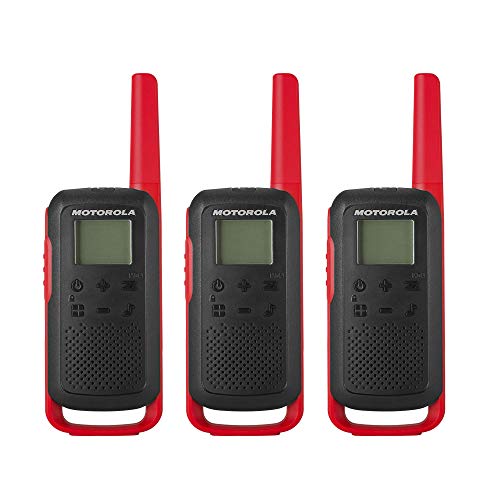
Pros
- Three radios included
- NOAA weather alerts
- USB charging
- Compatible with FRS radios
Cons
- Actual range may fall below 20 miles
- Who should skip it: buyers needing dependable 20-mile coverage

Pros
- Six radios included
- Six-way charging
- Ear-hook earpieces included
- License-free FRS
Cons
- Who should skip it: buyers needing a specified communication range

Pros
- Six radios with six-way charger
- IP67 rating
- Glove-friendly front PTT button
- Five-year warranty
Cons
- Coverage varies by site and conditions
- Who should skip it: Buyers needing verified site-specific range
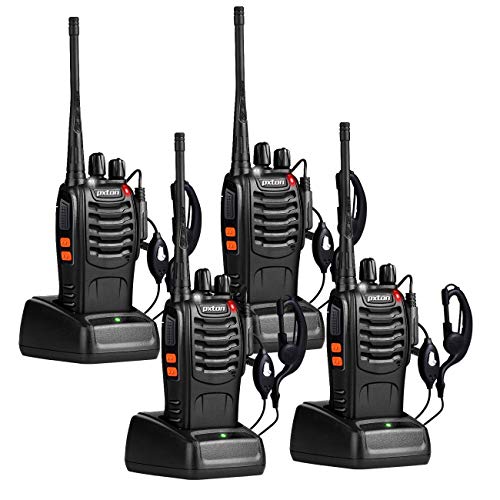
Pros
- Four radios included
- Four charging stations included
- Earpieces and belt clips included
- VOX and flashlight functions
Cons
- Range varies with obstacles and surroundings
- Who should skip it: users needing predictable coverage through obstacles

Pros
- License-free FRS operation
- NOAA weather scan and alerts
- Voice-activated hands-free transmission
- Two radios included
Cons
- 28-mile radius is an advertised maximum, not guaranteed coverage
- Who should skip it: buyers needing guaranteed long-distance coverage

Pros
- Two radios included
- Rechargeable packs and desktop charger
- NOAA weather alerts
- Hands-free voice activation
Cons
- Up-to-36-mile range is not guaranteed coverage
- Who should skip it: buyers needing guaranteed 36-mile coverage

Pros
- Four radios in one pack
- IP67 rating
- Large front push-to-talk button
- Five-year warranty
Cons
- Advertised coverage does not guarantee real-world range
- Who should skip it: buyers needing verified real-world range

Pros
- Rechargeable packs and AAA backup option
- NOAA weather scan and alert
- Two radios included
Cons
- Skip if you need reliable long-distance coverage through obstructions

Pros
- IP67 water and dust protection
- Two radios included
- VOX hands-free operation
- Dual-port dock charger included
Cons
- Who should skip it: teams needing more than two radios

Pros
- Two radios included
- 22 channels and channel scan
- Hands-free voice activation
- NOAA weather alerts
Cons
- Advertised range depends on open, unobstructed terrain
- Who should skip it: users needing reliable coverage through obstructions
The Best Walkie-Talkies by Use Case
Best for Rugged Work Crews: Retevis RB48 Walkie Talkies for Adults
The Retevis RB48 Walkie Talkies for Adults is a six-radio FRS set aimed at demanding job sites and larger teams. Its listing specifies an IP67 rating, MIL-STD-810H qualification, a 2,000mAh battery rated for up to 20 hours, NOAA weather alerts, and a six-way charger. The large front push-to-talk button and vibration alerts can help crews communicate while wearing gloves or working in noisy surroundings.
Reasons to buy:
- Six radios and a six-way charger support a coordinated team.
- IP67 and MIL-STD-810H specifications suit buyers prioritizing water, dust, and impact protection.
- Vibration alerts, NOAA weather alerts, and a glove-friendly front button address worksite needs.
Reasons to avoid:
- This six-radio package may be more than a small household needs.
- Coverage figures in the listing are not a promise of real-world range; obstructions and terrain affect reception.
Skip it if you need only a compact pair for occasional family outings or want a GMRS radio.
Best for a Larger Team: Retevis RT68 Business FRS Walkie Talkies Long
The Retevis RT68 Business FRS Walkie Talkies Long bundle includes six compact radios, earpieces, and a six-way charging station. The listing describes a rugged body, a sealed, non-removable antenna, and a 500mW speaker. That combination makes it a practical candidate for a shop, school, or hospitality team that wants radios charged together and earpieces for discreet communication.
Reasons to buy:
- The six-way station can charge up to six radios or batteries at once.
- Included ear-hook earpieces support hands-free listening and communication.
- The sealed antenna avoids a removable part that could be lost during routine use.
Reasons to avoid:
- The published feature information does not specify battery capacity or rated runtime.
- The fixed antenna limits replacement options, so verify that the radio suits your team’s communication setup.
Skip it if you need a documented waterproof rating or a small two-radio package.
Best for Water and Dust Protection: DEWALT DXFRS800 FRS Walkie Talkies Long Range, 2W
The DEWALT DXFRS800 FRS Walkie Talkies Long Range, 2W is a two-radio FRS set with an IP67 rating and a listing-specified 2W output. DEWALT lists protection against water and dust, an 18-hour battery rating, VOX hands-free operation, vibration alerts, and a dual-port dock charger. Its stated coverage of up to 300,000 square feet or 25 floors is a manufacturer claim, not a guarantee for every building or job site.
Reasons to buy:
- IP67 protection is a useful specification for dusty or wet work environments.
- The included dual-port dock charges both radios in the package.
- VOX and vibration alerts add options for hands-free use and incoming-call notification.
Reasons to avoid:
- Two radios may not cover a larger crew without compatible additional units.
- Advertised coverage depends on surroundings and should not be treated as a guaranteed operating distance.
Skip it if you need more than two radios in one bundle or prefer a license-free family set with weather alerts listed.
Best for GMRS Features: Midland GXT1000VP4 GMRS Two-Way Radios
The Midland GXT1000VP4 GMRS Two-Way Radios is a two-radio GMRS package with rechargeable battery packs, a desktop charger, and headsets. It offers 50 channels, 142 privacy codes, NOAA weather scanning, dual power with AA cells, and hands-free EVOX. GMRS is a different radio service from FRS, so check FCC licensing requirements before transmitting; its channel count does not make it interchangeable with every FRS radio on every setting.
Reasons to buy:
Reasons to buy:
- Dual-power operation lets you switch to AA cells when rechargeable packs are depleted.
- NOAA scanning and an SOS siren add features for outdoor trips.
- The included headsets and EVOX support hands-free communication.
Reasons to avoid:
- GMRS use has licensing requirements in the United States; verify current FCC rules before use.
- Its 36-mile range figure is a best-case listing claim, not expected coverage in obstructed terrain.
Skip it if you want a license-free FRS-only set or do not need GMRS features.
Best Budget Pick: Midland T10 X-Talker FRS Walkie Talkie, Black
The Midland T10 X-Talker FRS Walkie Talkie, Black is a straightforward two-radio FRS option for casual use. Its listing specifies 22 channels, 38 CTCSS privacy codes, channel scan, eVOX hands-free operation, and NOAA weather scan and alert. Belt clips are included, but the published details do not specify a rechargeable battery pack or charging dock, so check the box contents and power requirements before ordering.
Reasons to buy:
- License-free FRS operation is accessible for casual family or travel communication.
- NOAA weather scanning and alerts provide a weather-information feature.
- eVOX offers hands-free transmission, and belt clips are included.
Reasons to avoid:
- The listing information does not list a rechargeable battery pack, charger, or battery runtime.
- It has fewer listed privacy codes than several other models in this comparison.
Skip it if you need a multi-radio work bundle, rugged water protection, or a clearly specified rechargeable setup.
Also Considered
The Motorola Solutions, Portable FRS, T210TP could suit families wanting a three-radio FRS bundle with USB charging and NOAA alerts, but the other picks offer more distinct work or durability features.
The pxton Walkie Talkies Long Range for Adults may fit buyers seeking a four-radio kit with earpieces and charging stations, but its listing does not provide a formal water-resistance rating.
The Midland T51VP3 X-Talker FRS Walkie Talkie, Orange is worth considering for a compact FRS pair with eVOX and NOAA alerts, though the chosen picks provide more clearly differentiated team or battery features.
The Midland LXT600VP3 Walkie Talkies – 36 Channels could work for outings where backup AAA batteries are useful, but its listed channel and weather features overlap with the selected Midland options.
How to Choose the Best Walkie Talkies
Check FRS and GMRS service before comparing range
Most radios in this group use FRS, which is designed for license-free personal communication in the United States. The Midland GXT1000VP4 is a GMRS model, and FCC rules require a license for GMRS operation. Do not assume two radios communicate just because they share a brand or have overlapping channel numbers. Check each model’s service, supported frequencies, and channel settings, and confirm current FCC requirements if you choose GMRS.
Treat range as a condition-dependent claim
Manufacturers typically state maximum range under favorable conditions. Buildings, hills, trees, weather, and radio interference can reduce usable distance, so a stated mileage figure is not a reliable prediction for a city block, warehouse, or wooded trail. Look for a description of the intended environment, then consider whether the radio’s features suit that setting. The DEWALT and Retevis RB48 listings include square-foot and floor coverage claims for work areas, but those remain manufacturer claims rather than guaranteed coverage.
Match durability and weather protection to the setting
For outdoor work in dust or rain, compare explicit ingress ratings rather than relying on words such as rugged or rainproof. The DEWALT DXFRS800 and Retevis RB48 listings specify IP67. The RT68 listing describes a rugged body but does not provide an IP rating in the published details. Verify what protection you need, and review the manufacturer’s instructions for any limits on water exposure or cleaning.
Compare battery plans and charging routines
A rechargeable pack and dock can simplify routine use, while replaceable batteries can help when you cannot reach a charger. The Midland GXT1000VP4 supports AA cells as an alternative power source, and the LXT600VP3 listing also specifies rechargeable packs plus four AAA alkaline batteries as an option. For crews, a six-way charger such as the one included with the RT68 or six-radio RB48 bundle can centralize charging. Check what is included, the stated runtime, and whether batteries are replaceable before buying.
Choose channels, alerts, and accessories for how you communicate
Privacy codes can reduce interruptions from other users on the same channel, but they do not encrypt conversations or prevent someone from listening. For weather awareness, NOAA alerts appear on several models, including the Motorola T210TP, Midland radios, and the Retevis RB48. Earpieces can help in customer-facing work, while VOX or eVOX can be useful when pressing a button is inconvenient. Check that each radio in your group supports compatible service and channel settings, and confirm included accessories match your needs.
How We Compared
We compared the published listing information, including radio service, channel and privacy-code counts, stated battery details, charging accessories, durability ratings, weather alerts, and communication features. We also considered package size and intended use, such as a two-radio family set versus a six-radio work bundle. Where a listing used maximum range or coverage language, we treated it as a manufacturer claim and noted that actual communication depends on terrain, obstructions, and conditions.
Frequently Asked Questions
Can FRS and GMRS walkie-talkies communicate with each other?
Some FRS and GMRS radios may communicate on shared channels when both models support the same channel and settings, but compatibility is not automatic. Confirm the frequencies and operating rules in each radio’s manual. GMRS operation requires an FCC license in the United States, so check current requirements before transmitting with the Midland GXT1000VP4.
Do privacy codes make conversations private?
No. CTCSS or similar privacy codes help filter out transmissions from other users who are not using the same code, but they do not encrypt a conversation. Someone with a compatible radio can still listen on the channel without using your code.
Will a walkie-talkie reach its advertised maximum distance?
Not necessarily. Maximum range figures are usually tied to favorable conditions, while buildings, trees, hills, interference, and weather can shorten practical coverage. If you need radios for a particular worksite or route, check return terms and confirm what coverage the manufacturer claims for that type of environment.
Are these radios compatible with other brands?
Brand alone does not determine compatibility. Radios generally need to use the same radio service and matching channel and code settings. Check the model manuals, especially when adding radios to an existing team, and do not assume that matching channel numbers mean matching frequencies or permissions.
What is the practical difference between VOX and push-to-talk?
Push-to-talk sends your voice when you press a button. VOX or eVOX can activate transmission in response to your voice, which may help when your hands are occupied, but background sound and sensitivity settings can affect how it behaves. Check the product listing for the feature and its adjustment options, then review the manual before relying on hands-free operation at work.



Write Your Review
No reviews yet. Be the first to share your experience!