

Action cameras differ in how they frame footage, handle fast movement, and fit into your editing routine. A conventional wide-angle camera is easier to use when you know where the action will happen, while a 360-degree model captures all directions and lets you choose a view later.
This guide to the best action camera under $300 compares video modes, stabilization features, waterproofing claims, battery details, and included accessories. Use those differences to narrow the field by activity, then check app needs and included gear before buying.

Pros
- Waterproof to 33 feet
- 5.3K60 video and 27MP photos
- HyperSmooth 6.0 stabilization
- Enduro battery included
Cons
- Up to 70 minutes at 5.3K60
- Who should skip it: Buyers needing longer continuous recording

Pros
- 5.7K 360 video with reframing
- 4K single-lens video option
- FlowState Stabilization and Horizon Lock
Cons
- Skip it if you want fixed framing without app editing

Pros
- 128GB storage included
- Flip touchscreen
- Native vertical shooting
- Power handle included
Cons
- Recording limits by resolution are unclear
- Who should skip it: buyers seeking independently verified image quality

Pros
- Captures spherical video for flexible reframing
- Includes Enduro battery and lens caps
- Supports pole-mounted footage with stitched-out pole
Cons
- Single-lens video tops out at 1440p
- Who should skip it: Buyers needing higher-resolution single-lens video
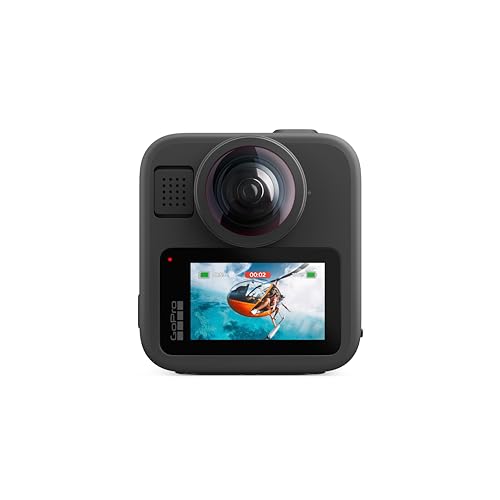
Pros
- Spherical 8K video
- Reframing to traditional 4K
- Replaceable glass lenses
- Six microphones
Cons
- Skip it if you do not want app-based reframing

Pros
- 5.7K 360-degree video
- Included 256GB microSD card
- Invisible selfie stick included
- AI subject tracking
Cons
- Frame-rate details are not listed
- Who should skip it: buyers needing frame-rate details upfront

Pros
- 4K/120fps video
- Subject tracking in two orientations
- 360° HorizonSteady stabilization
- Dual OLED touchscreens
Cons
- DJI Mimo activation required
- Android app download is outside Google Play
- Skip if sideloading DJI Mimo is not acceptable
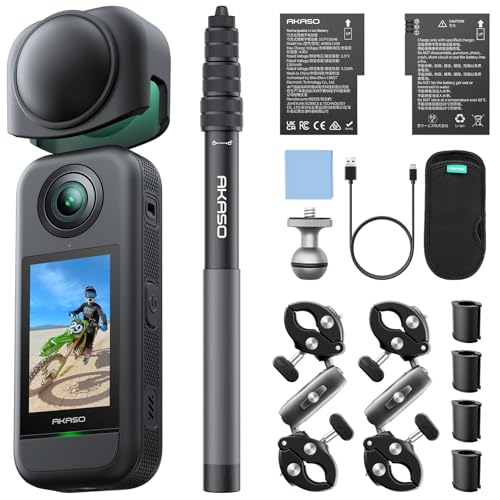
Pros
- 5.7K 360 video
- Invisible selfie stick included
- 360° Horizon Lock
- Two rechargeable batteries included
Cons
- Reframing is part of the 360-footage workflow
- Who should skip it: buyers wanting ready-framed footage

Pros
- High-frame-rate video up to UHD 4K120
- Front and rear touchscreens
- RockSteady 3.0 stabilization
- Includes 128GB card and mounting kit
Cons
- Large accessory bundle may be more than some users need
- Who should skip it: buyers seeking a minimal camera kit
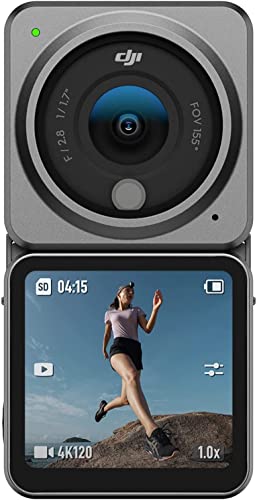
Pros
- Compact camera unit
- Dual OLED touchscreens
- Magnetic accessory system
- 4K/120fps video recording
Cons
- Magnetic protective case not included
- Who should skip it: buyers needing an included protective case
The Best Action Cameras by Use Case
Best for High-Resolution POV: GoPro Hero12 Black E-Commerce Package
The GoPro Hero12 Black E-Commerce Package suits riders, hikers, and other users who want detailed conventional action footage rather than 360-degree reframing. Its listed modes include 5.3K video at 60 frames per second and 27MP photos, while HyperSmooth 6.0 stabilization and 360-degree Horizon Lock target shaky or rotating footage. The camera is specified as waterproof to 33 feet (10 meters), so it can suit water activities within that stated limit.
Reasons to buy:
- 5.3K60 recording gives you a high-resolution option for detailed action footage.
- HDR video and photo modes are listed for scenes with bright and shadowed areas.
- The package includes an Enduro battery, curved adhesive mount, mounting buckle, and thumb screw.
Reasons to avoid:
- The listing specifies up to 70 minutes of continuous 5.3K60 recording, so long sessions may call for charging breaks or additional power planning.
- Its maximum stated waterproof depth is 33 feet, less than some other cameras here.
Skip it if you need 360-degree capture, or if your planned dives exceed the stated depth. See the Action Cameras category for more options in this type of gear.
Choose this model when your priority is a familiar forward-facing view with strong resolution and built-in leveling. Before buying, confirm that your mounts suit your helmet, bike, or other setup; the included curved adhesive mount may not fit every surface.
Best for Long Recording Claims: SJCAM SJ30 6K 128GB Action Camera for Vlogging
The SJCAM SJ30 6K 128GB Action Camera for Vlogging stands out for its included power handle and flip touchscreen. The listing claims up to seven hours of 4K recording with the built-in 2,000mAh battery and 4,200mAh handle, but actual runtime can vary with settings and use. Its stated recording options range from 4K60 to 8K20, and the listing also describes a dedicated low-light lens and native vertical recording.
Reasons to buy:
- The power handle is listed as part of the package and is central to the extended runtime claim.
- A 2.51-inch flip touchscreen can help when framing vlogs or checking shots from the front of the camera.
- Native 9:16 shooting can avoid cropping horizontal footage for vertical social posts.
Reasons to avoid:
- The 8K mode is listed at 20 frames per second; choose a listed 4K mode if you prioritize higher frame rates.
- The product listing makes several specialized image and runtime claims, so check the precise bundle and modes before purchase.
Skip it if you want a compact camera without a power handle, or if your workflow depends on verified performance in dim conditions.
This is a fit for vloggers who value the flip screen and for users who want the power handle included instead of assembling a separate power solution. The claimed runtime is not a guarantee of a full day for every setting, so consider how long you record at once and whether you can recharge between sessions.
Best for Reframing After Recording: Insta360 X3, 360 Action Camera with 5.7K 360
The Insta360 X3, 360 Action Camera with 5.7K 360 is suited to activities where you cannot keep the camera pointed at every moment. It records 5.7K 360 video, which you can reframe in the Insta360 app after recording, and also offers a single-lens 4K30 mode. FlowState stabilization and Horizon Lock are listed for smoother, level footage.
Reasons to buy:
- 360-degree capture lets you select framing after the activity rather than aiming before recording.
- Single-lens 4K30 offers a conventional wide-angle option alongside 360 footage.
- The included protective pouch and lens cloth help with storage and lens care.
Reasons to avoid:
- Reframing depends on using the companion app, which adds an editing step compared with ready-framed footage.
- The listing specifies 4K30 for single-lens video, not 4K at a higher frame rate.
Skip it if you want the simplest workflow or need a conventional action camera with a listed high-frame-rate 4K mode.
Consider the X3 for cycling, winter sports, or travel when capturing the whole scene matters more than choosing the final angle in advance. 360 footage offers editing flexibility, but you should plan for app-based reframing and decide whether that extra step suits how you share videos.
Best for Low-Light Claims and Subject Framing: DJI Osmo Action 5 Pro Standard Combo
The DJI Osmo Action 5 Pro Standard Combo is a renewed model listed with a 1/1.3-inch sensor, dual OLED touchscreens, and subject tracking. DJI describes the sensor as suited to low-light scenes, and lists 360-degree HorizonSteady stabilization and direct connection to DJI Mic 2 or Mic Mini transmitters without a receiver. Those features make it worth considering for solo vlogging or activities where you want the subject to stay in frame.
Reasons to buy:
- Subject tracking is listed for keeping moving subjects centered in 16:9 or 9:16 framing.
- Dual OLED touchscreens provide a viewing and control option from either side.
- DJI Mic 2 and Mic Mini transmitter connection is listed without a receiver.
Reasons to avoid:
- The listing identifies this unit as renewed, so check the seller’s condition and return details before ordering.
- DJI Mimo activation is required, and the listing says the app is not on Google Play; Android users are directed to download it by scanning the camera’s QR prompt.
Skip it if you do not want to activate through DJI Mimo or prefer a new rather than renewed product.
App setup is an important compatibility check here, especially for Android owners. The listing’s battery-life claim is up to four hours, but recording conditions affect runtime; check the included battery and bundle details for the specific renewed unit.
Best for Deep-Water Use: DJI Osmo Action 4 Standard Combo
The DJI Osmo Action 4 Standard Combo is a conventional action camera bundle for users who want a wide field of view and a broad set of mounting accessories. The listing specifies a 1/1.3-inch CMOS sensor, a 155-degree field of view, up to UHD 4K120 video, and waterproofing to 59 feet. RockSteady 3.0 and HorizonBalance and HorizonSteady leveling features are also listed.
Reasons to buy:
- The stated 59-foot waterproof depth is useful for buyers whose water activities exceed another camera’s listed depth limit.
- Up to UHD 4K120 supports high-frame-rate capture when you want options for slow-motion editing.
- The bundle lists a 128GB memory card and multiple mounts, straps, and anti-fog inserts.
Reasons to avoid:
- The extensive accessory bundle may include mounts you do not need; check the list against your setup.
- Waterproof depth is a stated limit, not permission to exceed it or disregard setup instructions.
Skip it if you want 360-degree footage or need a lightweight package with fewer accessories.
This bundle suits water sports and buyers starting without a collection of mounts. Confirm that the listed mounts fit your intended equipment and follow the camera’s instructions before taking it underwater. For a wider look at camera-related gear, visit the Cameras category.
Also Considered
The smartphone tripod guide may help creators comparing camera support options, though it covers phone tripods rather than action cameras.
The GoPro MAX2 – Waterproof 360 + Traditional Action may suit buyers wanting 8K 360 capture and replaceable lenses; its listing centers on 360 reframing rather than a simpler forward-facing camera.
The GoPro MAX, Waterproof 360 + Traditional Action offers 5.6K30 spherical footage and 1080p or 1440p single-lens modes, but its listed single-lens resolution is more limited than the main conventional-camera picks.
The AKASO 360 Action Camera Creator Combo includes a 256GB microSD card and 1.2-meter invisible selfie stick, but its 5.7K 360-first approach suits buyers comfortable choosing framing later.
The AKASO 360 Action Camera Motorcycle Combo may appeal to motorcycle users seeking 360 capture and two rechargeable batteries; its listing does not specify recording runtime for those batteries.
The DJI Action 2 Dual-Screen Combo (32GB) is a compact magnetic modular option with listed 4K120 recording, but its 32GB capacity and magnetic accessory approach differ from the other picks.
How to Choose the Best Action Camera Under $300
Choose between conventional and 360-degree video
A conventional action camera records the view its lens faces, so it works well when you can aim it at the trail, rider, or activity. A 360 camera records in every direction and lets you reframe afterward, which can save a shot when you cannot predict where the action will move. That flexibility adds an editing step and makes app support part of the purchase decision. Check whether the listing includes a single-lens mode if you also want standard footage.
Match resolution and frame rate to the footage
Resolution and frame rate answer different needs. Higher resolution can preserve more detail, while a higher frame rate can give you more options for slow-motion playback. Compare the exact mode rather than relying on the largest number in a title: the SJCAM listing, for example, specifies 8K at 20 frames per second and 4K at 60 frames per second. For 4K120, the DJI Action 4 listing states that mode explicitly.
Read stabilization and leveling claims closely
Stabilization can reduce the appearance of camera movement, while horizon features aim to keep the frame level. Product names and mode names vary, so compare the stated feature and the way you plan to mount the camera. The Hero12 lists 360-degree Horizon Lock, while the DJI Osmo Action 5 Pro lists 360-degree HorizonSteady. Those names alone do not show how every mode behaves, so check operating limits in the manufacturer’s documentation.
Check waterproof limits and mounting needs
Waterproof depth claims differ: the Hero12 listing says 33 feet, the SJCAM SJ30 says 30 meters, and the DJI Action 4 says 59 feet. Do not assume those limits apply to every accessory, or that a rating covers conditions beyond the stated depth. Compare included mounts with your helmet, handlebar, or other planned setup, and confirm fit before relying on a mount in motion.
Plan for batteries, storage, and app workflow
Battery claims depend on the recording mode, and listed maximums are not guarantees for every outing. Look for the exact mode tied to a runtime claim, as with the Hero12’s stated 5.3K60 duration, and consider whether you need spare batteries or charging breaks. Check whether a memory card is included, its stated capacity, and whether your editing workflow depends on an app. The DJI Action 5 Pro listing specifically calls for DJI Mimo activation, while 360 models rely on reframing tools to select a final view.
How We Compared
We compared the published product specifications, design details, listed recording modes, stabilization features, waterproof limits, battery claims, and included accessories. Customer feedback information was also reviewed where supplied, but the provided product data did not include review narratives to assess. Recommendations reflect how those documented features align with different activities and workflows, not a claim that one camera suits every buyer.
Frequently Asked Questions
Should I choose a 360 camera or a standard action camera?
Choose a standard camera when you know where to aim and want footage ready to edit or share in a conventional frame. Choose 360 capture when you want to select the angle after recording and accept the additional reframing step. Several 360 models here also list single-lens modes, but check their specific resolution and frame-rate limits.
Does a higher resolution mean a better action camera?
Not by itself. Resolution affects recorded detail, but frame rate, stabilization, lighting, lens view, and editing needs also matter. Compare the exact resolution and frame rate offered together, then choose a mode that fits the way you plan to capture and share video.
Can I use these cameras for underwater recording?
Some listings specify waterproof depth limits, including 33 feet for the Hero12 and 59 feet for the DJI Action 4. Follow the stated limit and the manufacturer’s instructions. Do not assume that every accessory or camera setup has the same waterproof capability.
Do I need an app to use an action camera?
App needs vary. The Insta360 X3 listing describes app-based AI reframing, and the DJI Osmo Action 5 Pro listing requires activation through DJI Mimo. Check app availability and device compatibility before purchase, especially if a specific phone platform or editing feature is important to you.
How should I compare battery-life claims?
Compare the stated runtime with its recording mode, because a maximum claim tied to one resolution and frame rate may not apply to other settings. Consider whether the package includes a power handle or additional battery, and plan for charging breaks on longer outings. Treat manufacturer runtime figures as claims, not guaranteed results for every use.






Write Your Review
No reviews yet. Be the first to share your experience!