

Choosing a smart TV involves more than picking a screen size: panel technology, streaming interface, and gaming features can change how well a TV fits your room and routine. This guide compares five models, from compact Fire TV and straightforward Roku options to larger Samsung OLED and Mini LED sets, so you can focus on the features that matter for your viewing.

Pros
- 4K QLED display with HDR10
- Built-in Roku streaming platform
- Bluetooth headphone listening mode
- Voice remote with lost-remote finder
Cons
- Skip if you need confirmed refresh-rate or HDMI-version details

Pros
- 65-inch 4K OLED display
- Stated 165Hz refresh rate
- NVIDIA G-SYNC and AMD FreeSync Premium Pro support
- AI upscaling for lower-resolution content
Cons
- HDMI version and smart platform details are unspecified
- Skip it if you need HDMI or platform details confirmed
Pros
- 65-inch 4K display
- Built-in free streaming channels
- 4K upscaling for lower-resolution content
Cons
- HDR and HDMI specifications are not provided
- Who should skip it: Buyers requiring confirmed HDR or HDMI details

Pros
- 4K resolution with HDR10+
- Four HDMI inputs
- Alexa voice remote included
- AirPlay support
Cons
- Who should skip it: shoppers needing a specified refresh rate

Pros
- Mini LED display with 4K resolution
- 750+ subscription-free Samsung TV Plus channels
- Gaming Hub and DLG 120Hz feature
Cons
- Native refresh rate and HDMI version aren't specified
- Skip if confirmed HDMI version or native refresh rate matters
The Best Smart TVs by Use Case
Best for Roku Simplicity: Roku 55-Inch Select Series Smart TV 2026-4K
The Roku 55-Inch Select Series Smart TV 2026-4K pairs a 55-inch 4K QLED screen with HDR10 and Roku’s streaming interface. Its simple Home Screen, voice remote, and access to free live TV make it a fit for households that want streaming and local entertainment gathered in one place. The listing also specifies Apple AirPlay and voice control through Roku Voice, Siri, Alexa, or Google Assistant.
Reasons to buy:
- QLED, 4K resolution, and HDR10 provide a useful feature mix for varied streaming content.
- The Home Screen and voice search make finding shows across apps more direct.
- AirPlay support helps Apple device owners share videos, photos, and music on the TV.
Reasons to avoid:
- The listing does not specify a refresh rate, HDMI port count, or supported HDR formats beyond HDR10, so confirm these if your setup depends on them.
- At 55 inches, it may not suit a small room or a setup that needs a larger screen.
Skip it if you need confirmed high-refresh-rate gaming features or a larger display.
Best for High-Refresh Gaming: Samsung 65-Inch Class S90H Series, OLED, 4K
The Samsung 65-Inch Class S90H Series, OLED, 4K is the gaming-focused option in this group. Samsung lists Motion Xcelerator 165Hz, NVIDIA G-SYNC, and AMD FreeSync Premium Pro, alongside an OLED panel and an NQ4 AI Gen3 processor. Its 65-inch screen and glare-reduction feature may also appeal if you watch sports or films in a room where reflections distract.
Reasons to buy:
- The listed 165Hz motion feature and G-SYNC or FreeSync Premium Pro support target smooth, responsive gaming.
- OLED HDR+ and Glare Free are specified for contrast, color, and reduced reflections.
- AI upscaling and motion enhancement are intended to improve the appearance of lower-resolution material and fast action.
Reasons to avoid:
- The listing does not provide HDMI port details, so check supported connections and features for your console or PC before buying.
- Its gaming feature set may be unnecessary if you mainly watch ordinary streaming video.
Skip it if you want a basic TV for casual viewing and do not need the listed gaming features.
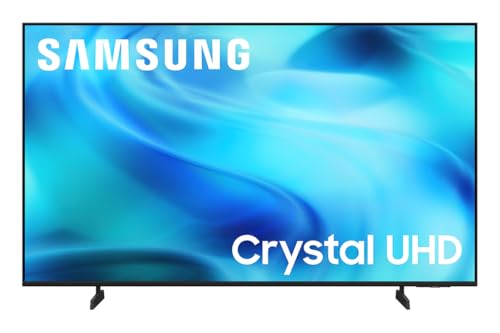
Best for Free Streaming Channels: Samsung 65-Inch Class Crystal UHD U8000H Series
The Samsung 65-Inch Class Crystal UHD U8000H Series is a 65-inch 4K set for viewers who want a broad selection of no-subscription programming. Samsung lists more than 2,700 free streaming options, including over 750 channels on Samsung TV Plus. Its Crystal Processor, 4K upscaling, and Motion Xcelerator address everyday viewing, though the listed motion performance reaches up to 4K at 60Hz.
Reasons to buy:
Reasons to buy:
- Samsung TV Plus offers listed subscription-free channels alongside other free streaming choices.
- 4K upscaling can improve the appearance of lower-resolution shows and sources.
- Motion Xcelerator is described for clearer sports and gaming motion, with up to 4K 60Hz performance.
Reasons to avoid:
- The listing does not identify an advanced panel type such as OLED or Mini LED.
- Its stated motion capability is up to 60Hz, so it is not the strongest match here for high-refresh-rate gaming.
Skip it if you want a TV with a listed 120Hz or 165Hz gaming feature.
Best for a Smaller Room: Amazon Ember 43″ 4-Series with Fire TV
The Amazon Ember 43″ 4-Series with Fire TV is the smallest screen in this comparison, making it worth considering for a bedroom, office, or other space where a 65-inch TV could dominate. It combines 4K resolution, HDR10+, Wi-Fi 6, and a quad-core processor with the Fire TV interface and Alexa+ voice search. The listing also describes an Ambient Experience that can display artwork when its sensors detect someone entering.
Reasons to buy:
- The 43-inch screen gives buyers a smaller-size option while retaining 4K resolution.
- Fire TV and Alexa+ support voice-based searches across entertainment apps.
- The listing specifies Wi-Fi 6 and a quad-core processor for its streaming platform.
Reasons to avoid:
- The listing does not state a refresh rate or HDMI port details, which gamers and device-heavy setups should verify.
- Some content may require subscriptions, and the listing notes that fees may apply.
Skip it if you want a larger screen for a main living room or need confirmed high-refresh-rate gaming support.
Best for Mini LED Contrast: Samsung 65-Inch Class M70H Series, Mini LED, 4K
The Samsung 65-Inch Class M70H Series, Mini LED, 4K uses Mini LED backlighting, with Samsung describing brighter highlights, deeper blacks, and local dimming. Its listed Motion Xcelerator + DLG 120Hz feature targets sports and gaming, while Soccer Mode adjusts the picture for soccer viewing. These features make it a strong candidate if you want a large screen with an emphasis on contrast and fast-moving action.
Reasons to buy:
- Mini LED HDR and Supreme Mini LED Dimming are specified for contrast and bright highlights.
- The listing includes Motion Xcelerator + DLG 120Hz for motion-focused viewing.
- Soccer Mode offers a dedicated picture option for the sport.
Reasons to avoid:
- The listing does not detail HDMI ports or explain how the DLG 120Hz mode works with individual sources; verify compatibility with your gaming devices.
- Its special soccer feature may add little value if you do not watch the sport.
Skip it if you prefer a smaller screen or do not need its Mini LED and motion-focused features.
How to Choose a Smart TV
Match screen size to the room
Screen size affects how comfortably a TV fits your viewing space, so consider both room layout and seating position before choosing. This group includes a 43-inch model, a 55-inch model, and three 65-inch models. A smaller screen may be easier to fit in a bedroom, while a larger one may suit a main room; check your available wall or stand space and make sure the screen will not crowd the area.
Understand panel type and picture features
Resolution is only one part of picture quality. The Roku model lists QLED and HDR10, the Samsung S90H uses OLED, and the Samsung M70H uses Mini LED. The U8000H is identified as Crystal UHD, while the Amazon Ember lists 4K and HDR10+. These technologies describe different approaches to color, contrast, or HDR support, but the published details do not establish a direct picture-quality ranking. Match the named features to your priorities and verify supported HDR formats for the content sources you use.
Check refresh and gaming compatibility
For console or PC gaming, look beyond the 4K label. The Samsung S90H lists Motion Xcelerator 165Hz and G-SYNC or FreeSync Premium Pro, while the M70H lists Motion Xcelerator + DLG 120Hz. The U8000H specifies up to 4K 60Hz. The other published product details do not state a refresh rate, so check the manufacturer listing for the panel’s supported modes and the HDMI connections required by your device before choosing.
Choose the smart platform you will use
The interface affects how you find programs and control the TV. Roku emphasizes a simple Home Screen, cross-app voice search, and support for Apple AirPlay. Fire TV combines Alexa+ search with smart-home controls, according to its listing. Samsung’s two models list Samsung TV Plus and free content options. Check that your preferred apps and voice assistant are supported; the published information does not provide a complete app list for every model.
Confirm connections, audio, and room setup
Port details are not supplied for these models, so check each full listing before planning a setup with a soundbar, console, or streaming box. Also verify available audio outputs and supported formats if you use external speakers. Roku lists Bluetooth Headphone Mode, which may suit private listening, but the product information does not give comparable audio-output details for the other sets.
For more size-specific choices, compare this guide with our 55-inch TV comparison. If your budget is the main constraint, our TVs under $300 guide covers that shopping angle. Roku shoppers can also consult our Roku TV comparison, while buyers considering another brand can see our TCL TV guide.
How We Compared
This comparison uses the published product listings, including stated screen sizes, resolution, panel descriptions, HDR formats, refresh and gaming features, smart platforms, voice controls, and streaming options. We considered how those details match common needs such as fitting a smaller room, watching free channels, or playing games. Customer ratings were supplied without review text, so they do not support conclusions about recurring owner experiences or long-term reliability.
Frequently Asked Questions
Which TV is the better fit for a smaller room?
The Amazon Ember 43″ 4-Series with Fire TV is the smallest model listed here. Check your room and seating layout before deciding, since the product data does not specify a recommended viewing distance.
Which models list features for high-refresh-rate gaming?
The Samsung S90H lists Motion Xcelerator 165Hz with NVIDIA G-SYNC or AMD FreeSync Premium Pro. The Samsung M70H lists Motion Xcelerator + DLG 120Hz, while the U8000H specifies up to 4K 60Hz. Confirm the exact modes and connections needed for your console or PC in the full listing.
Do all five TVs include the same streaming apps?
No complete app-by-app comparison is provided. The listings identify Roku, Fire TV, or Samsung’s smart platform and highlight particular free-content options, but you should confirm availability of your essential services on the platform you plan to use.
Can I use an iPhone or other Apple device with these TVs?
The Roku Select Series listing specifically names Apple AirPlay for sharing videos, photos, and music from Apple devices. The published information does not confirm equivalent support for the other models, so check their listings if AirPlay is important to your setup.
Are free channels the same as free access to every show?
No. Roku and Samsung describe free live TV or streaming options, and Samsung specifies subscription-free channels on Samsung TV Plus. Other apps and programs may require a subscription or payment; the Amazon Ember listing also notes that fees may apply to some content.


Write Your Review
No reviews yet. Be the first to share your experience!