

Choosing a high-capacity power bank means weighing charging speed and device support against the size of a battery you will carry. This guide to the best 20,000mAh power bank focuses on the supplied Anker model, its stated output and built-in USB-C cable, and the details you should confirm for your own phone, tablet, or laptop.

Pros
- Up to 65W single-port laptop charging
- Integrated durable USB-C cable
- Fast 1.5-hour recharge with 65W charger
- Airline-approved 20,000mAh capacity
Cons
- Heavy 15.5-ounce weight limits pocket portability
- Who should skip: ultralight travelers wanting compact carry
The Best Power Banks by Use Case
Only one product was supplied for this guide, so this is a focused recommendation rather than a multi-model ranking. Its stated 20,000mAh capacity and 87W shared output make it a potential fit for travelers who want one battery for several personal devices, provided the output and USB-C connection match those devices.
Best for Multi-Device Travel: Anker Power Bank, 20,000mAh Travel Essential
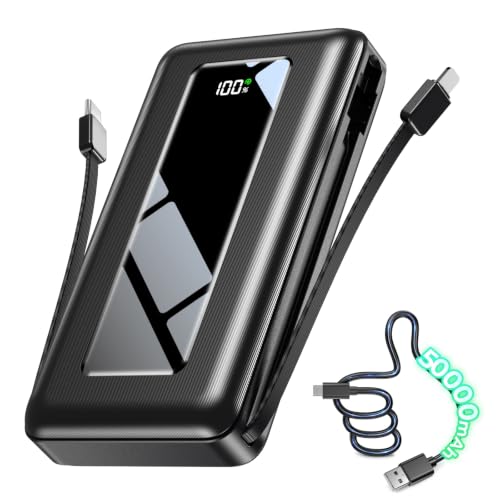
The Anker Power Bank, 20,000mAh Travel Essential has three ports and a built-in USB-C cable. Anker specifies up to 87W distributed across three connected devices, with up to 65W available to one device, giving it more flexibility than a phone-only backup battery on paper. The listing also says the 20,000mAh unit is approved for airline travel, but check your airline’s current battery rules before flying.
Reasons to buy:
- Three ports let you connect several devices, with total output specified at up to 87W.
- The built-in USB-C cable means you do not need to pack a separate cable for compatible USB-C devices.
- The listing specifies a 20,000mAh capacity and airline approval for travel.
Reasons to avoid:
- Its 6.2 × 2.9 × 1.0-inch size and 15.5-ounce weight may feel bulky if you want a small pocket battery.
- The published information does not identify charging protocols or the output of each individual port, so confirm device and port compatibility before purchase.
Skip it if you need the lightest possible backup battery, do not use USB-C charging, or cannot confirm that its output suits your device.
How to Choose the Best 20,000mAh Power Bank
Capacity, output, port layout, cable compatibility, and size shape the everyday experience of a power bank. A large capacity alone does not tell you how quickly it will charge a particular device, how many devices it can charge at once, or how convenient it will be to carry. Use the checks below to compare the listing with your actual devices and travel habits.
1. Match capacity to the devices you carry
Capacity, stated in milliamp-hours (mAh), gives a useful basis for comparing power banks, but it does not translate directly into a fixed number of full phone charges. The power bank and the device use different battery voltages, and charging also involves energy losses. Actual results depend on the connected device and how you use it while charging.
A 20,000mAh model can suit a long travel day, multiple devices, or charging away from an outlet. It also tends to take more room and weigh more than a smaller-capacity alternative. The Anker unit weighs 15.5 ounces according to its listing, so consider whether you will carry it in a backpack or bag rather than expect it to disappear into a pocket.
For a useful comparison, check the battery capacities of your phone, tablet, or other devices, then treat the power bank’s capacity as a relative indicator rather than a promise of a specific number of recharges. Do not infer exact phone-charge counts from the 20,000mAh label alone. If the product listing does not provide device-specific results, avoid relying on assumed counts.
2. Check wattage and charging protocol
Output wattage affects whether a power bank can charge a device at its expected rate. Anker specifies up to 65W for one connected device and up to 87W shared across three devices. Shared output matters when you plug in a phone, earbuds, and another device together: the total is divided among connections, and the listing does not say how much each device receives in every combination.
Compare the power bank’s supported output with the charging requirements in your device’s documentation. A wattage figure by itself does not establish support for every fast-charging standard. The published product details do not name specific charging protocols, so verify protocol support and port-specific output in the current listing if your device depends on a particular standard. USB-C connectors also do not guarantee identical charging behavior across products.
The listing gives example charging claims: an iPhone 15 Pro to 58% and a MacBook Air to 52% in 30 minutes using the built-in cable, and a 14-inch MacBook Pro to 50% in under 40 minutes. Treat these as manufacturer-listed examples, not a guarantee for every model or situation. Starting charge, device use, temperature, and the precise device version can affect results.
3. Evaluate port count and cable fit
Three ports can reduce the need to carry multiple power banks when you have several devices. But port count alone does not show which connections can charge which devices, how output is divided, or whether charging all three at once matches your needs. Confirm those details in the product listing and compare them with the cables and charging inputs you already use.
The Anker model includes an integrated USB-C cable. That is convenient if your devices accept USB-C charging and you want one fewer separate accessory to pack. It will not replace every cable: a device with a different charging connector may need its own compatible cable, and the published information does not describe every supported connector combination. Check your device’s input and the bank’s available ports before relying on the built-in lead.
Anker says the integrated cable is designed to withstand over 10,000 bends. This is a manufacturer durability specification, not a guarantee of how long a particular cable will last in your routine. The listing also states that a 65W charger can recharge the power bank in 1.5 hours. That recharge claim depends on using the stated charger; the published details do not say that a 65W wall charger is included, so check what comes in the box.
4. Consider carrying size and travel rules
Dimensions and weight matter when you carry a power bank every day. The listed measurements are 6.2 × 2.9 × 1.0 inches, and the listed weight is 15.5 ounces. Compare those figures with your bag, travel kit, or pocket, especially if you already carry a laptop and its charger. A higher-capacity battery may reduce the need for an outlet, but it adds weight compared with a compact phone-only option.
Anker describes this 20,000mAh model as approved for airline travel. That statement does not replace checking current airline requirements, which can vary by carrier and route. Confirm the applicable rules before departure, and follow the airline’s instructions for carrying and storing spare batteries. Do not assume a product’s general travel claim answers every airline’s specific policy.
5. Look for details the listing does not provide
When a listing omits a feature you depend on, treat that as a point to verify rather than a reason to guess. The published details do not name the charging protocols, individual port output ratings, or the included wall charger. If you need a specific fast-charging standard, a particular port arrangement, or a fast way to recharge the bank between trips, confirm those details directly in the current product specifications.
Warranty information can also affect a purchase decision. The published listing states an 18-month warranty and includes a welcome guide. Review the warranty terms and coverage conditions before buying, since the summary alone does not explain exclusions or the claims process. For category browsing, see our Power Banks category and the broader Power & Charging category.
How We Compared
This guide evaluates the product information available for this roundup: stated capacity, output, number of ports, built-in cable, listed dimensions and weight, charging examples, travel claim, and warranty summary. The published data did not include customer feedback or details for competing models, so the recommendation is limited to the Anker product and its stated use cases. Where port-specific output or charging protocols were not provided, the guide identifies those details as points for buyers to verify.
Frequently Asked Questions
Can this power bank charge a laptop?
The listing names MacBook models and specifies up to 65W for one device. It also provides charging examples for a 14-inch MacBook Pro and a MacBook Air. Check your laptop’s charging requirements and the current listing’s port and protocol details before relying on it as a laptop power source.
Can it charge three devices at once?
The product is described as a three-port power bank, with up to 87W distributed across three devices. Total output is shared, and the published information does not specify the exact wattage each port provides in every combination. Check the listing if you need a particular device to receive a minimum charging rate while other devices are connected.
Does the built-in USB-C cable work with every phone?
No single connector works with every phone. The built-in lead is USB-C, so confirm that your phone accepts USB-C charging and that its charging requirements match the power bank. A phone that uses another connector may need a separate compatible cable and an appropriate available port.
Does the power bank include a wall charger?
The published product details list the power bank, a welcome guide, an 18-month warranty, and customer service, but do not list a wall charger. Anker says a 65W charger can recharge the bank in 1.5 hours. Check the package contents and charger requirements in the current listing if you want to recharge it at that rate.
Is 20,000mAh enough for a full day away from an outlet?
It may suit a day with several charging needs, but the capacity label does not guarantee a specific number of full device charges. Results depend on your devices and usage while charging. Compare the bank’s output and capacity with the devices you plan to carry, and account for the Anker model’s listed 15.5-ounce weight.
Can I take this power bank on a flight?
The listing says the 20,000mAh model is approved for airline travel. Still, verify current rules with your airline before flying, because carrier requirements may vary. Follow the airline’s instructions for carrying spare batteries rather than relying on a general product description alone.





Write Your Review
No reviews yet. Be the first to share your experience!