

A built-in cable can cut down on loose accessories, but it does not tell you how much power a bank can deliver or which devices it can charge. This guide to the best power bank with built in cable compares a high-capacity model with a USB-C option rated for laptop charging, so you can match capacity, output, cable type, and travel needs to your routine.
Pros
- Massive 50000mAh capacity for multiple device recharges
- Integrated cables reduce need for loose cords
- Clear digital LED battery percentage readout
- Built-in emergency flashlight for power outages
Cons
- Bulky one-inch thick profile limits pocket carry
- 22.5W output limits laptop charging speeds
- Skip if needing lightweight everyday pocket carry

Pros
- Up to 65W single-port laptop charging
- Integrated durable USB-C cable
- Fast 1.5-hour recharge with 65W charger
- Airline-approved 20,000mAh capacity
Cons
- Heavy 15.5-ounce weight limits pocket portability
- Who should skip: ultralight travelers wanting compact carry
The Best Power Banks by Use Case
Best for Long Trips and Multiple Devices: 50000mAh Portable Charger Power Bank
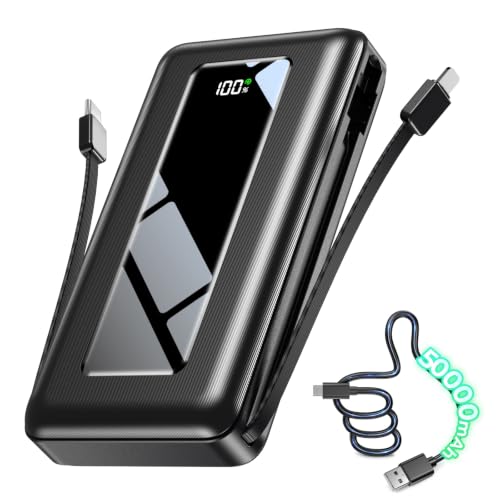
The Moihosso 50000mAh Portable Charger Power Bank is the capacity-focused choice here. It has a 50,000mAh capacity, built-in USB-C and iOS cables, an extra USB-C port, and the ability to charge four devices. That combination may suit camping, long outings, or situations where several devices need a top-up and outlets are scarce.
Reasons to buy:
- 50,000mAh capacity suits buyers prioritizing extended charging between wall outlets.
- Built-in USB-C and iOS cables reduce the need to pack separate charging cables for compatible devices.
- 22.5W output, an LED battery display, and an emergency flashlight.
Reasons to avoid:
- A 50,000mAh bank is a large battery to carry, and no dimensions or weight are given, so check bag fit before buying.
- Its 22.5W output is well below the Anker’s 65W, so it is the slower option for power-hungry devices.
Skip it if you need a documented high-wattage USB-C output for a laptop; a 22.5W rating does not establish laptop charging performance.
Best for USB-C Laptop Charging: Anker Power Bank, 20,000mAh Travel Essential
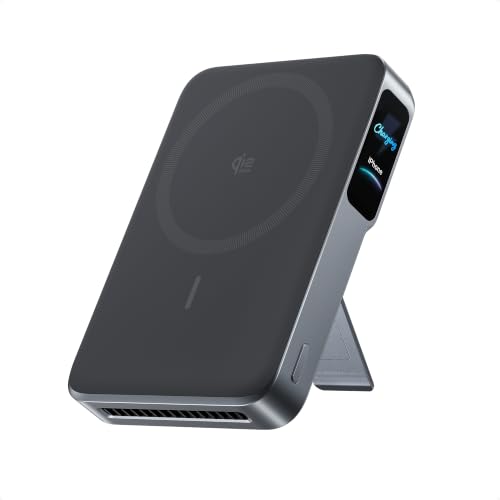
The Anker Power Bank, 20,000mAh Travel Essential fits mobile workers who want a built-in USB-C cable and higher-power output. Anker rates it at up to 65W for one device and up to 87W shared across three devices. It also has 20,000mAh capacity and airline-travel approval, making it a more travel-oriented option than the larger-capacity pick, with less capacity.
Reasons to buy:
- Single-device output of up to 65W makes it the clearer choice for compatible USB-C laptops.
- Three ports and an 87W shared maximum let you charge several devices, subject to that shared-power limit.
- A stated weight of 15.5 ounces and dimensions of 6.2 × 2.9 × 1.0 inches help you judge bag fit.
Reasons to avoid:
- Its 20,000mAh capacity is lower than the Moihosso model’s, which may matter when you need the most capacity between outlets.
- The built-in cable is USB-C, so check your device’s port and charging requirements if you use an iPhone or another device with a different connector.
Skip it if your priority is the highest capacity or built-in cables for both USB-C and iOS devices.
How to Choose a Power Bank with Built-In Cable
Match the cable and ports to your devices
Built-in cable type decides whether you can connect directly or need another cable. The Moihosso has built-in USB-C and iOS cables, while the Anker includes a built-in USB-C cable. Check the connector on each device you plan to charge, then confirm whether the power bank also has the ports you need for other cables or devices.
Connector fit does not prove that every charging feature will work. Neither maker names charging protocols or device-by-device compatibility. For a phone, tablet, or laptop with particular fast-charging needs, check the device maker’s requirements and the power bank’s specifications before buying.
Choose capacity for your time away from outlets
The capacities are 50,000mAh for the Moihosso and 20,000mAh for the Anker. A higher capacity can be useful when you expect to recharge devices repeatedly, but capacity alone does not establish the exact number of charges. Device battery size, charging losses, and how many devices you connect all affect what you get in practice.
Choose the Moihosso if the higher capacity matters more than knowing its exact size and weight. Choose the Anker if its lower capacity is enough for your routine and its stated dimensions and weight help you plan what to carry. Compare the specifications with your trip length and device needs rather than treating capacity as a guaranteed charge count.
Check output wattage for phones, tablets, and laptops
Capacity describes stored energy, while wattage indicates the power available for charging. The Moihosso is rated at 22.5W fast charging. The Anker is rated at up to 65W for one device and up to 87W shared across three. That makes the Anker the better-supported option for compatible USB-C laptop charging, but actual charging speed depends on the device, cable, and charging conditions.
Do not assume a USB-C connector guarantees laptop charging or a particular speed. Check the laptop’s required input and the bank’s output details. If you plan to charge multiple devices at once, look for the shared-output limit too: the Anker’s 87W is divided across three connected devices, not 87W for each one.
Weigh portability against capacity and features
The Anker comes with stated dimensions and weight, which helps assess whether it fits a daily bag or travel kit. The Moihosso’s size is the open question, so confirm it with the seller if portability matters. Its flashlight and battery-percentage display may be useful for outdoor or emergency use, but neither feature replaces checking how much capacity and output your devices need.
Airline rules can depend on battery energy ratings and carrier policies. Anker says it is approved for airline travel but does not give a watt-hour rating. Verify current airline requirements and the product’s battery label before flying, particularly when choosing a high-capacity bank.
How We Compared
This comparison uses each power bank’s stated capacity, output, cable and port details, dimensions, weight, included features, and travel claims. Those details support a use-case comparison, but they do not establish real-world charge counts, charging speed across every device, or output when several devices share power. Confirm compatibility, current travel requirements, and any missing specifications with the seller before purchase.
If you are still comparing options, our guide to the best MagSafe power bank for iPhone 18 Pro Max covers related picks, and the power banks guides list every guide in this category.
Frequently Asked Questions
Can a power bank with a built-in cable charge any phone?
No. The cable connector must match the phone, and the power bank must support the phone’s charging needs. The Moihosso has USB-C and iOS cables; the Anker has a built-in USB-C cable. Check your phone’s port and the power bank’s compatibility information before buying.
Which of these power banks is better for a USB-C laptop?
The Anker is the clearer fit: it is rated at up to 65W for a single device, and Anker names MacBook models among compatible devices. Confirm that your laptop accepts USB-C charging at the available output. The Moihosso is rated at 22.5W, with no stated laptop charging support.
Does a 50,000mAh power bank provide more usable power than a 20,000mAh model?
The Moihosso has the higher capacity, 50,000mAh versus the Anker’s 20,000mAh. That makes it the higher-capacity option on paper, but the figures do not provide an exact number of full device charges. Conversion losses and the devices being charged affect usable energy.
Can both power banks charge multiple devices at once?
Moihosso says it can charge four devices, using two built-in cables plus an additional USB-C port, but it does not say how output is divided. The Anker has three ports and a stated 87W shared maximum across three devices. Check the product details if simultaneous charging speed matters.
Is the Anker suitable for air travel?
Anker describes this model as approved for airline travel. Still, check the current rules of your airline and the power bank’s battery label before departure. Airline policies can set limits on portable batteries, and Anker does not state this model’s watt-hour rating.
Should I choose the built-in flashlight or higher charging output?
Choose based on the task. The Moihosso includes an emergency flashlight and a digital battery display, alongside higher capacity. The Anker offers higher single-device output and stated dimensions and weight, which can help laptop users and travelers assess fit. Neither set of features replaces checking device compatibility and charging requirements.


Write Your Review
No reviews yet. Be the first to share your experience!