

Winter heating can dry indoor air, but the right humidifier depends on more than tank size. Room coverage, moisture-delivery type, refill routine, and humidity controls all affect whether a unit suits your bedroom, nursery, office, or larger living space.
This guide to the best humidifier for winter dry air compares compact, bedroom, and large-room options using listed specifications and features. It also explains when cool mist, warm mist, or evaporative designs may better suit your water, cleaning, and household needs.

Pros
- Large 4-liter water tank
- Top-fill design
- Humidity display and control
- Dedicated essential-oil tray
Cons
- 40-hour runtime applies only on low mode
- Who should skip it: people humidifying rooms over 300 square feet

Pros
- Two mist settings
- Removable 1.7-liter tank
- Auto shut-off
- Five-year manufacturer’s warranty
Cons
- Coverage limited to rooms up to 250 sq. ft.
- Skip it for larger rooms

Pros
- Compact dimensions for small spaces
- Automatic shut-off
- Vapor pad tray included
Cons
- Who should skip it: Anyone needing humidification beyond small spaces
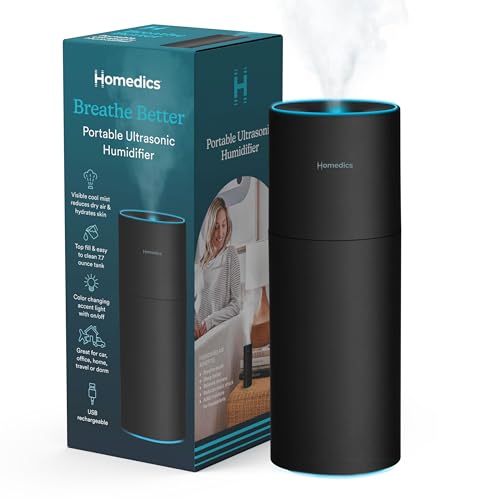
Pros
- Compact 2.51-by-2.51-by-7-inch design
- Top-fill 8.5-ounce tank
- Two mist settings
Cons
- Skip for extended cordless use; up to 3.5-hour battery runtime

Pros
- Removable tank simplifies refilling and rinsing
- Four mist levels
- Sleep mode turns off lights and display
- Built-in aromatherapy pad
Cons
- 40-hour runtime applies only at lowest setting
- Skip it if you need confirmed runtime at higher settings

Pros
- Digital humidity control
- Nine fan speeds
- Automatic shutoff
- Rated for up to 2,400 square feet
Cons
- 18-inch-square footprint and 27-pound weight
- Who should skip it: shoppers needing a compact, lightweight unit

Pros
- Convenient top-fill design
- Wide opening for cleaning
- Adjustable mist direction
- Automatic shutoff
Cons
- Room coverage area not specified
- Who should skip it: buyers needing stated room coverage

Pros
- Cool and warm mist options
- Three settings per mist temperature
- Up to 36-hour runtime
- No filter changes
Cons
- Room-coverage rating is not specified
- Skip it if you need a stated room-coverage rating

Pros
- Large 10L tank
- App and voice control
- Built-in humidity sensor
Cons
- Skip for spaces larger than 1,000 sq ft
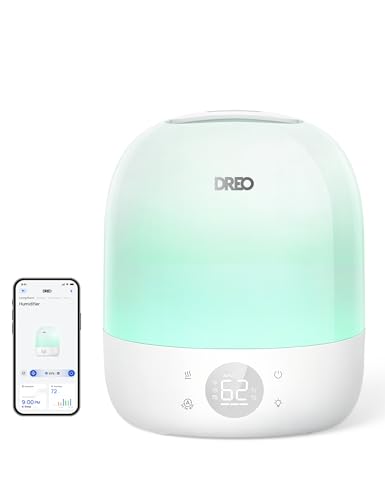
Pros
- Top-fill 3L tank
- App, voice, and touch controls
- Automatic humidity control
- Adjustable sleep-trainer lighting
Cons
- Coverage limited to 300 square feet
- Who should skip it: Shoppers needing humidification for larger rooms
The Best Humidifiers by Use Case
Best for Whole-Home Coverage: AIRCARE Digital Whole-House Pedestal-Style
The AIRCARE Digital Whole-House Pedestal-Style is an evaporative unit listed for spaces up to 2,400 square feet. Its digital humidistat is designed to maintain a selected humidity level, while nine fan speeds let you choose an operating level for your space. That combination suits buyers who want broader coverage and automatic humidity control rather than a small bedside device. Its larger-room focus makes placement and available floor space worth checking before purchase. Browse more humidifier options if your room needs differ.
Reasons to buy:
- Listed coverage reaches up to 2,400 square feet.
- Digital humidistat and humidity readout support set-level control.
- Nine fan speeds offer more operating choices than single-speed designs.
Reasons to avoid:
- Its pedestal format may take more room than a tabletop humidifier.
- The published details do not specify tank capacity, runtime, or noise level, so verify these if they matter to your routine.
Skip it if you need a compact bedside unit or want confirmed runtime and tank-capacity figures before choosing.
Best for Large Rooms Without Visible Mist: DREO Smart Evaporative Humidifier Large Room up
The DREO Smart Evaporative Humidifier Large Room up is listed for areas up to 1,000 square feet, with a 10-liter tank and up to 50 hours of runtime. Its evaporative design adds moisture without visible mist, and the listing says it avoids white powder and wet surfaces associated with airborne mineral droplets. App control, Alexa and Google compatibility, humidity reports, and adjustable humidity settings make it a fit for buyers who want connected controls. Listed output is up to 800 milliliters per hour, though actual room results depend on conditions and placement. See other home appliance guides for related indoor-comfort products.
Reasons to buy:
- Large 10-liter tank and listed runtime of up to 50 hours reduce refill frequency.
- Evaporative operation avoids visible mist and airborne mineral dust.
- App and voice assistant controls support remote adjustments and humidity reports.
Reasons to avoid:
- Confirm the app and voice-control features fit your preferred setup before buying.
- The listing does not state noise level or filter replacement cost, so check ongoing ownership details.
Skip it if you want a simple, inexpensive tabletop humidifier or do not want to manage app-connected features.
Best for Easy Bedroom Refills: Levoit Top Fill Humidifiers for Bedroom
The Levoit Top Fill Humidifiers for Bedroom pairs a 2.5-liter tank with a top-fill design and a large opening for cleaning. The listing specifies up to 25 hours on low, a noise level as low as 25 decibels, and lights-off sleep operation. A 360-degree nozzle lets you direct mist, while a single knob adjusts output. Those straightforward controls and refill access suit bedrooms and nurseries, although this ultrasonic cool-mist model has no listed square-foot coverage figure in the published details. Compare air purifiers for other indoor-air needs separately from humidification.
Reasons to buy:
- Top-fill access avoids turning the tank upside down for refills.
- Wide opening and detachable parts are described as easier to clean.
- Sleep mode turns off the lights, and the listed noise level is as low as 25 decibels.
Reasons to avoid:
- The published product details do not give a room-coverage rating.
- As an ultrasonic model, it may disperse minerals from hard water; check the manual for water guidance.
Skip it if you need verified coverage for a large open room or prefer an evaporative design.
Best for Warm or Cool Mist Choice: Honeywell Dual Comfort Cool + Warm Mist
The Honeywell Dual Comfort Cool + Warm Mist offers both mist temperatures, with three settings for each, according to the manufacturer. It is described as suitable for large-sized rooms and provides up to 36 hours of runtime, with no filter to change. A two-direction mist outlet and essential oil cup add flexibility, but the published details do not include a specific square-foot rating or tank capacity. Warm mist involves heated water, so place the unit where children cannot reach it and follow the manufacturer’s safety and cleaning instructions. For more options in this category, visit the humidifier category.
Reasons to buy:
- Cool and warm mist modes let you choose between two operating styles.
- Three mist settings per mode provide adjustment options.
- Listed runtime is up to 36 hours, and the product does not require filter changes.
Reasons to avoid:
- No exact room-coverage area or tank capacity appears in the published details.
- Warm mist uses heated water, making careful placement and supervision important around children.
Skip it if you want cool mist only, need a stated coverage figure, or prefer to avoid a heated-water appliance.
Best for Personal Spaces and Travel: Homedics Portable Humidifier
The Homedics Portable Humidifier is a compact cool-mist option for personal use, with an 8.5-ounce tank and two mist settings. Its listing specifies up to 10 hours of runtime when plugged in and up to 3.5 hours on battery, making it more suited to a desk or travel use than humidifying a large room. It includes three wicks and a USB charging cord, and has an optional color-changing accent light. The published information does not state room coverage, so treat it as a personal-zone product rather than a room-wide solution.
Reasons to buy:
- Small 8.5-ounce tank and portable design suit personal spaces.
- Two mist settings and an optional accent light offer simple customization.
- The listing includes three wicks and a USB charging cord.
Reasons to avoid:
- Battery runtime is listed at up to 3.5 hours, shorter than its plugged-in runtime.
- No room-coverage figure is listed, and its small tank is not suited to whole-room use.
Skip it if you need overnight room coverage or a humidifier with a large reservoir.
Also Considered
The humidifier category includes additional models, while these listed options fill more specific needs: KZF Humidifiers for Bedroom offers a 4-liter tank and listed 40-hour runtime, but its published details do not identify room coverage beyond the large-room listing language; Pure Enrichment MistAire Ultrasonic Cool Mist suits users wanting a 1.7-liter tank, up to 25 hours, and a 250-square-foot rating, though its published product information gives less detail about top-fill cleaning access; Crane Warm Mist Humidifier is a compact warm-mist choice with a vapor pad tray, but its 0.5-gallon capacity is aimed at smaller spaces; KZF Humidifiers for Bedroom adds four mist levels and 360-degree direction adjustment, but overlaps with the other 4-liter KZF option.
The DREO Smart Humidifiers for Bedroom Baby may suit buyers who want app and voice control, sleep-training light cues, and listed coverage up to 300 square feet; it is not a main pick because its specialized nursery lighting is less useful to shoppers seeking a general-purpose model.
How to Choose the Best Humidifier for Winter Dry Air
Match the coverage to the room
Start with the room where you will use the humidifier, not the whole floor plan. A unit rated for 250 or 300 square feet may suit a bedroom, while larger spaces may call for a model with a higher stated coverage area, such as the AIRCARE pedestal unit or DREO evaporative model. Coverage claims are not a promise that every layout will humidify evenly: open doorways, heating airflow, and room shape can affect where moisture travels. Check the listing’s coverage rating and compare it with the space you intend to humidify.
Choose mist type with water and placement in mind
Ultrasonic models create visible cool mist. Minerals in hard tap water can become airborne with that mist, so check the manual’s water recommendations and consider whether you can use the water type it specifies. Evaporative models add moisture without visible mist and are a useful alternative for shoppers concerned about mineral dust, but their fans and filter needs may affect noise and upkeep. Warm-mist units heat water, which may appeal to buyers who prefer warm vapor, but they need careful placement around children and pets.
Compare tank capacity and realistic refill routines
A larger tank can reduce how often you refill, but runtime varies with mist setting and operating conditions. For example, the DREO evaporative model lists a 10-liter tank and up to 50 hours, while the Levoit lists 2.5 liters and up to 25 hours on low. Treat “up to” figures as manufacturer-listed maximums rather than guaranteed daily performance. Check whether a top-fill opening, removable reservoir, or wide cleaning access fits your sink and maintenance routine.
Decide how much humidity control you need
Basic mist settings let you adjust output manually. A built-in humidistat or automatic mode can adjust operation toward a selected humidity level, which may be more convenient if you do not want to change settings often. The AIRCARE and DREO evaporative models list humidity control features, while app and voice control on the DREO model add remote access. Verify that listed controls match how you plan to use the device; connectivity alone does not guarantee that a particular app or assistant setup will suit your home.
Check cleaning access, noise, and ongoing supplies
Humidifiers hold standing water, so a tank that is easy to reach and clean can make regular care less cumbersome. Look for a wide opening, removable parts, and clear manufacturer cleaning instructions. Noise figures can help when choosing a bedroom unit, but compare only specifications available for the model you are considering. Also check whether the design uses replaceable filters or wicks and confirm their availability and replacement guidance before purchase.
How We Compared
We compared the published product specifications and descriptions, including stated room coverage, tank capacity, runtime, mist type, humidity controls, refill access, noise figures, and listed accessories. Recommendations reflect how those features align with common use cases, such as bedside operation, portable personal use, and larger-room humidification. Where important details were absent, such as coverage or tank capacity, we identified that gap rather than assuming a value. Product claims are attributed to the published listings and should be checked against current manufacturer instructions before purchase.
Frequently Asked Questions
Which humidifier type is better for winter: cool mist or warm mist?
Both types add moisture to indoor air, but they operate differently. Cool-mist ultrasonic models use vibration to create droplets, while warm-mist units heat water. Choose based on your room, preferred operation, cleaning needs, and household safety considerations. Keep warm-mist appliances out of children’s reach and follow the manufacturer’s instructions.
Can I use tap water in an ultrasonic humidifier?
Check the product manual for the manufacturer’s water guidance. Ultrasonic humidifiers can disperse minerals from hard water along with mist, which may leave white dust on nearby surfaces. Water recommendations vary by model, so do not assume that one instruction applies to every unit.
Do evaporative humidifiers need replacement filters?
Many evaporative designs use a wick or filter, but requirements and replacement schedules vary. The DREO listing refers to filter life and a dry mode, while the AIRCARE listing does not specify filter details. Check the manual for the exact replacement part, care schedule, and ongoing supply needs.
How do I know what room coverage to choose?
Measure or confirm the size of the room where the humidifier will operate, then compare it with the model’s stated coverage. Do not rely on a large-room description alone when the listing does not provide a square-foot figure. Open layouts and airflow between rooms can make effective coverage differ from a single-room rating.
Are portable humidifiers suitable for a bedroom?
A portable unit can provide moisture near a desk or bedside area, but a small tank and missing coverage rating make it harder to judge room-wide performance. The Homedics portable model lists an 8.5-ounce tank and up to 10 hours plugged in. For a full bedroom, consider a model with a stated room rating and larger reservoir.
What humidity level should I set?
Use the humidifier’s instructions and monitor the room, especially near cold windows and exterior walls. Excess moisture can lead to condensation, so reduce output or stop operation if you see persistent dampness. A model with a humidistat can help manage a selected setting, but sensor accuracy and control behavior are product-specific.





Write Your Review
No reviews yet. Be the first to share your experience!