

Indoor antennas save space and avoid outdoor mounting, but reception depends on tower distance, obstructions, and antenna placement. This guide compares the best TV antenna options for different homes, from compact indoor designs to a directional outdoor model, and explains what to check before buying.

Pros
- 16.5-foot cable
- Multiple placement options
- Includes signal booster
Cons
- May require repositioning and rescanning to find channels
- Skip it if you need reception without placement adjustments

Pros
- 10-foot cable
- Magnetic base
- Compact design
- No cable service needed for over-the-air channels
Cons
- Reception varies by location and placement
- Who should skip it: viewers outside usable broadcast range

Pros
- Includes 16-foot coax cable
- Supports digital and smart TVs
- No separate power source listed
Cons
- Incompatible with older analog TVs
- Analog TV owners should skip it

Pros
- Included 38-foot coaxial cable
- Amplified signal reception
- Supports TVs with digital tuners
Cons
- Who should skip it: viewers expecting guaranteed 6,000-mile reception

Pros
- Long 38-foot coaxial cable
- USB-powered amplifier
- Mounting accessories included
- Compatible with older TVs using a converter box
Cons
- Best reception may require high or window placement
- Who should skip it: viewers unwilling to adjust antenna placement

Pros
- 16.5-foot coaxial cable
- Indoor or outdoor placement
- Included signal booster
Cons
- Reception depends on local signal coverage
- Who should skip it: viewers in weak-signal areas
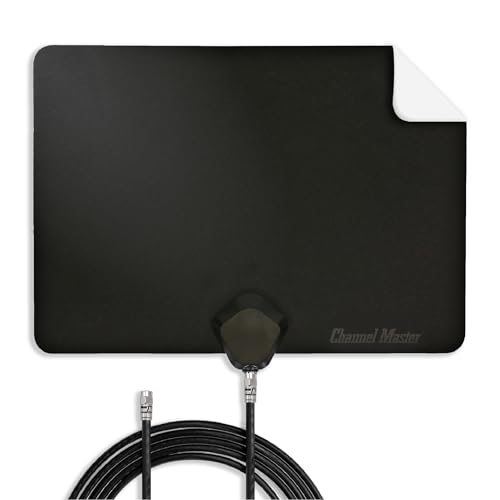
Pros
- 12-foot coaxial cable included
- Reversible black-and-white design
- Supports ATSC 3.0 and 4K
Cons
- Skip if your location has substantial obstructions or interference
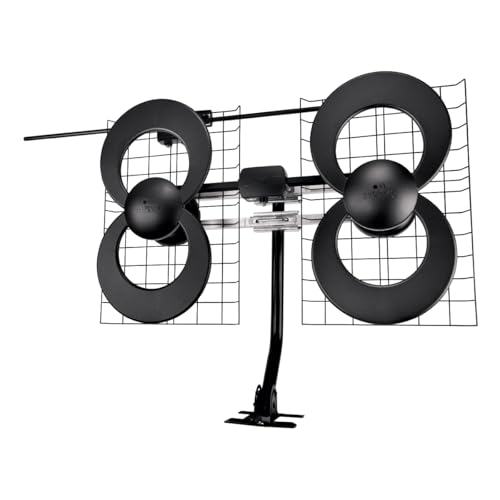
Pros
- UHF and Hi-VHF elements
- Multidirectional design
- Pivoting mast base
- Indoor, attic, or outdoor installation
Cons
- Reception varies with tower distance and obstructions
- Cannot provide cable channels
- Skip it if you need cable TV

Pros
- Three flexible placement options
- Built-in amplifier and LTE filter
- ATSC 3.0 compatible
Cons
- Reception is not guaranteed across the full 50-mile range
- Who should skip it: buyers needing guaranteed channel reception
The Best TV Antenna by Use Case
Best for Top-of-TV Placement: Philips Hover Amplified HD TV Antenna
The Philips Hover Amplified HD TV Antenna suits rooms where an antenna can sit above the television without taking up a shelf or window. Philips lists reception up to 50 miles, a built-in amplifier, and a 4G/5G LTE filter intended to reduce cellular interference. Its removable bracket also allows wall mounting or flat-surface placement, so you can try different positions.
The listing says this antenna supports VHF and UHF broadcasts and is compatible with ATSC 3.0 broadcasts where available. Its mounting options and stated filter make it a practical choice when you want a compact setup near the TV. The listed range is not a guarantee: buildings, terrain, and tower direction can affect which stations arrive clearly.
Reasons to buy:
- Bracket supports placement on top of the TV or on a wall.
- Removable bracket permits flat-surface placement.
- Built-in amplifier and 4G/5G LTE filter are specified.
Reasons to avoid:
- The stated range reaches up to 50 miles, which may not suit locations farther from towers.
- Reception still depends on the room, obstacles, and local broadcast layout.
Skip it if your towers are distant or an indoor antenna cannot reach a suitable position near the TV.
Best for Indoor or Attic Installation: Antennas Direct ClearStream 4V Outdoor TV Antenna
Despite its name, the Antennas Direct ClearStream 4V Outdoor TV Antenna can be installed indoors, in an attic, or outdoors. Its four loop elements, Hi-VHF elements, and reflectors target buyers who want a larger antenna and have room for a more involved mounting setup. The listing specifies a 70-mile range and a 43-degree horizontal reception pattern, so check tower directions before choosing it.
The reflectors focus reception forward, which can help limit interference arriving from other directions, but they also make tower alignment more important than with a broadly receiving indoor antenna. The package includes a 20-inch mast, mounting hardware, and an adjustable clamp. Its size, 17.4 inches high by 27.8 inches wide by 6 inches deep, needs more installation space than a flat indoor model.
Reasons to buy:
- Supports indoor, attic, or outdoor installation.
- Dedicated UHF and Hi-VHF elements address both broadcast bands.
- Includes a pivoting mast base and all-weather mounting hardware.
Reasons to avoid:
- The larger frame and mounting parts take more space and setup effort than flat indoor antennas.
- The 43-degree reception pattern makes tower direction a key placement consideration.
Skip it if you need a small antenna that can be placed quickly beside or behind a television.
Best for Window and Wall Flexibility: Channel Master FLATenna
The Channel Master FLATenna is an ultra-thin indoor antenna for urban and suburban viewers who need flexible placement rather than a rooftop installation. Its listing gives a 35-mile range and includes a 12-foot RG6 coaxial cable. The reversible black-and-white design can suit different walls, windows, or tabletops without requiring a separate mounting bracket.
Channel Master describes the cable as professional-grade and specifies enhanced shielding. The antenna supports ATSC 3.0 and 4K broadcasts, but those labels describe compatibility rather than a promise of available channels or picture quality. The 35-mile listed range is more modest than the claims attached to some amplified models, which makes checking local tower coverage especially useful.
Reasons to buy:
- Thin, reversible design supports wall, window, or tabletop placement.
- Includes a 12-foot RG6 coaxial cable.
- Listing specifies support for ATSC 3.0 and 4K broadcasts.
Reasons to avoid:
- The stated 35-mile range may not fit more remote homes.
- It has no amplifier listed, so buyers needing amplification should compare other options.
Skip it if you need a long coaxial run or an antenna designed for outdoor mounting.
Best Value: DAANT TV Antenna Indoor Long Range
The DAANT TV Antenna Indoor Long Range is a straightforward indoor option for buyers who want a long cable and basic placement flexibility. Its listing includes a 16-foot coaxial cable and says to try the antenna near a window, then test vertical and horizontal orientations. That advice matters because shifting an indoor antenna can change which local stations a television can receive.
The product description lists support for 4K, UHD, and 1080 HDTV broadcasts and identifies compatibility with smart and digital TVs. It explicitly says the antenna is not suitable for older analog televisions. The listing does not provide a clear numeric reception range, so buyers who live far from towers should not assume that “long range” guarantees reception.
Reasons to buy:
- Includes a 16-foot cable for flexible indoor placement.
- Instructions recommend trying both vertical and horizontal orientations.
- Supports smart and digital televisions, according to the listing.
Reasons to avoid:
- The listing does not state a numeric range.
- Older analog televisions need a digital converter box, which is not listed as included.
Skip it if you have an analog TV without a converter or need a stated range for a distant tower location.
Best for Magnetic-Base Placement: HIDB TV Antenna for Smart TV Indoor
The HIDB TV Antenna for Smart TV Indoor offers a compact design with a magnetic base and 10-foot cable. The base can make it easier to position the antenna on a suitable metal surface, while the small body can be moved between a TV stand and a table. Its listing describes omnidirectional reception, but actual results still depend on signal strength and the location of nearby towers.
HIDB recommends placing the antenna high and near a window facing local broadcast towers, then rescanning channels after moving it. The product description also advises trying both vertical and horizontal placement. Those setup steps are useful, but the listing information does not state a numeric range or specify a separate amplifier, so buyers should focus on local coverage rather than broad range language.
Reasons to buy:
- Magnetic base offers another placement option.
- Compact design can be moved between nearby surfaces.
- Includes a 10-foot cable for indoor positioning.
Reasons to avoid:
- No numeric reception range is provided in the listing.
- Best placement may take some adjustment and repeated channel scans.
Skip it if you need a long cable, an outdoor antenna, or a clearly stated range.
Also Considered
The 2026 Upgraded Indoor TV Antenna Up to 6000+ Miles includes a 38-foot cable, but its extraordinary 6,000-plus-mile range claim is not a reliable way to predict reception; check local coverage and placement needs instead.
The Indoor TV Antenna for Local Channels also lists a 38-foot cable and amplifier, but its 6,000-plus-mile range claim is similarly not a practical reception guarantee.
The TV Antenna for Local Channels offers a 16.5-foot cable and a booster, though its stated 180-mile range should not replace checking actual local broadcast coverage.
The TV Antenna for Smart TV Indoor includes a 16.5-foot cable and is described for indoor and outdoor use, but the listing does not provide a clear numeric range.
How to Choose a TV Antenna
Check local channels and tower locations first
Reception starts with the stations available near your home, not the largest range number on a product page. Look up local broadcast coverage and note which directions the stations use. If several towers sit in different directions, a directional antenna such as the ClearStream 4V may need careful aiming; a flat indoor model may offer an easier placement process, but it cannot remove distance or building obstacles.
Range figures describe manufacturer claims, not a guaranteed service radius. Trees, hills, walls, roofing materials, and tower direction all affect over-the-air reception. Treat unusually large figures cautiously, and compare the design, cable length, and installation options alongside the claim.
Choose indoor, attic, or outdoor placement
Indoor antennas are easier to set up and reposition, but a television room may have fewer clear paths to broadcast towers. A window or higher position can help, and a longer cable gives more freedom to move the antenna away from the TV. The DAANT model has a 16-foot cable, while Philips offers top-of-TV, wall, and flat-surface placement.
An attic or outdoor antenna can provide more placement choices when indoor reception is limited, but it brings mounting and alignment decisions. The ClearStream 4V supports indoor, attic, and outdoor installation and includes mounting hardware. Before buying, confirm where you can install it and whether its directional pattern fits the tower layout.
Understand amplification and signal filters
An amplifier is not a substitute for a clear signal. It can boost a received signal, but it cannot create missing broadcasts or overcome every obstruction. The Philips listing specifies a built-in amplifier and a 4G/5G LTE filter; the NEOSIGN listing says its booster can be switched on when distance exceeds 35 miles. Compare the exact amplifier details and power connection, and do not assume every antenna includes one.
For nearby towers and strong reception, a simpler antenna may be sufficient. When reception is weak, first try moving the antenna higher or nearer a window, then rescan for channels. This can reveal whether placement is the issue before you decide that amplification is needed.
Match the antenna to VHF and UHF broadcasts
Local stations can use different broadcast bands. Check whether the antenna listing specifies VHF and UHF support, especially if you want a particular local station. Philips lists both bands, and the ClearStream 4V describes dedicated UHF and Hi-VHF elements. Broad claims about HD or 4K do not, by themselves, tell you which bands the antenna receives.
Resolution compatibility is also distinct from channel reception. An antenna can carry a broadcast signal, but available channels and picture quality depend on local stations and reception conditions. Check whether your TV has a digital tuner; the DAANT listing says older analog TVs are not suitable without a digital converter box.
Check cable length, mounting, and tuner compatibility
Cable length affects where you can put an antenna. A short cable can limit placement to the TV area, while a longer cable can reach a window or a higher shelf. Compare the included length with your room layout and avoid assuming that all models include a cable of the same type or length.
Confirm how the antenna attaches, too. Philips includes a removable mounting bracket, HIDB lists a magnetic base, and the ClearStream 4V includes a mast and mounting hardware. For an older television, verify whether it has a digital tuner or whether you need a converter box. After connecting the antenna, select the TV’s antenna or air input and run a channel scan; rescan after moving the antenna.
How We Compared
This comparison uses the published product listings, including their stated antenna types, reception claims, cable lengths, mounting options, amplifier and filter details, compatibility notes, and warranty information where provided. We also considered the supplied customer-rating information, but no review text was provided, so ratings alone do not establish a recurring owner experience. Manufacturer range figures are presented as claims, not verified reception results.
Frequently Asked Questions
Will an indoor TV antenna work with my smart TV?
Usually, if the TV has a digital tuner and a coaxial antenna input. Connect the antenna, select the TV’s antenna or air input, and run a channel scan. A smart TV does not need internet to receive over-the-air broadcasts, but the supplied antenna listings do not guarantee reception in every home. Older analog TVs may need a digital converter box.
Does a longer advertised range mean more channels?
No. Range claims do not guarantee reception or channel count. Terrain, buildings, tower direction, broadcast bands, and antenna placement all matter. Check local channel coverage and use the listed range as a manufacturer claim, not a promise.
Should I choose an amplified antenna?
An amplifier may help boost a signal the antenna receives, but it cannot restore a signal blocked by distance or obstacles. Compare whether the model includes an amplifier and how it is powered. If you already receive strong nearby signals, an amplified model may not be necessary.
Where should I place an indoor antenna?
Try a high position near a window, ideally toward local broadcast towers, and keep the antenna away from obstructions where practical. Test different orientations and rescan channels after moving it. A longer cable can make it easier to find a better position without relocating the TV.
What is the difference between a flat antenna and an outdoor antenna?
A flat indoor antenna is generally compact and easy to reposition, making it suitable when local signals are accessible from inside the home. A larger outdoor or attic model offers different mounting and directional options, but needs more space and installation effort. The right type depends on tower direction, obstacles, and the positions available at your home.
Do I need internet or a subscription to watch local broadcasts?
An antenna receives available over-the-air broadcasts without an internet connection or a cable subscription. Channel availability varies by location, and an antenna does not provide cable-only channels. Check local stations before choosing a model.


Write Your Review
No reviews yet. Be the first to share your experience!