

Choosing an AV receiver can mean deciding between a straightforward 5.1 system, height speakers for immersive formats, and enough HDMI connectivity for a TV, console, and other sources. This best AV receiver guide compares channel layouts, video support, room correction, and streaming features to help you narrow the choices to your setup.

Pros
- Three 40Gbps HDMI 2.1 inputs
- 5.2.2-channel Dolby Atmos and DTS:X playback
- Discrete Zone 2 audio and video
- THX Select certification
Cons
- Only three HDMI 2.1 inputs listed
- Who should skip it: buyers needing more than three HDMI 2.1 inputs

Pros
- Six HDMI inputs and two outputs
- Dolby Atmos and DTS:X decoding
- Multiple built-in streaming options
- Sonos integration support
Cons
- 100-watt rating specified for two channels only
- Who should skip it: shoppers seeking a basic stereo receiver

Pros
- Dirac Live included
- Four THX listening modes
- Multiple streaming platform integrations
- Bidirectional Bluetooth
Cons
- Skip if you need a compact, lightweight receiver

Pros
- Seven HDMI inputs
- eARC support
- Dolby Atmos and DTS:X
- MusicCast multi-room audio
Cons
- Who should skip it: buyers with limited shelf space
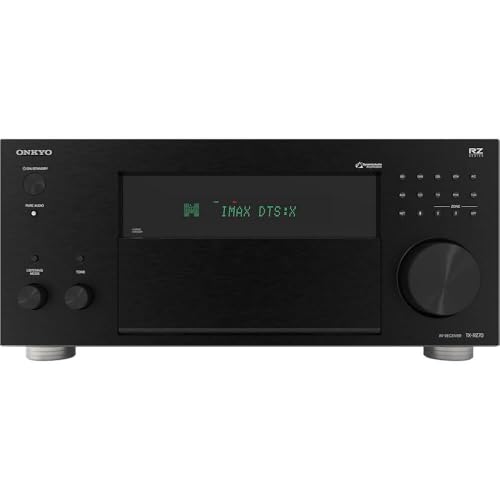
Pros
- Built-in Dirac Live Full Bandwidth
- Eleven channels, multiple subwoofer support
- Four THX listening modes
Cons
- Dirac Live Bass Control requires an upgrade
- Who should skip it: buyers needing a lighter, smaller receiver

Pros
- Wide range of audio inputs
- Phono input for a turntable
- Stores volume and EQ settings
Cons
- No Dolby or DTS decoding
- Who should skip it: listeners needing Dolby or DTS decoding

Pros
- Four 8K HDMI 2.1 inputs
- eARC support
- Bluetooth audio streaming
- VRR and QFT support
Cons
- Limited to five powered channels
- Who should skip it: buyers needing more than 5.1-channel audio

Pros
- Three dedicated 8K HDMI inputs
- Dolby Atmos and DTS:X support
- HEOS multi-room streaming
- On-screen setup guide
Cons
- Who should skip it: buyers seeking a receiver for large rooms

Pros
- Dirac Live room correction
- 9.2-channel configuration
- THX certified
Cons
- 36.05 lb weight may complicate handling
- Who should skip it: buyers needing a lightweight receiver

Pros
- 7.2-channel audio with Zone 2
- Three 8K60B and 4K120AB HDMI inputs
- Multipoint room calibration
- Built-in Wi-Fi, Bluetooth, and AirPlay 2
Cons
- 25.35 lb chassis needs room and sturdy support
- Who should skip it: buyers needing more than 7.2 channels
The Best AV Receivers by Use Case
Best for a Simple 5.1 Setup: Denon AVR-S570BT 5.2 Channel AV Receiver
The Denon AVR-S570BT 5.2 Channel AV Receiver suits a living-room system built around five speakers and up to two subwoofers. Its listing specifies four HDMI 2.1 8K inputs, eARC, and support for Dolby TrueHD and DTS-HD Master Audio, covering useful connections and formats for movies, consoles, and a compatible TV. It does not decode Dolby Atmos or DTS:X, so it is a better fit for conventional surround sound than an overhead-speaker system.
Reasons to buy:
- Four HDMI inputs give you connections for several video sources.
- eARC can carry audio from a compatible TV to the receiver.
- The on-screen setup assistant guides connection and initial setup.
Reasons to avoid:
- It supports 5.1 surround, not Dolby Atmos or DTS:X decoding.
- Wireless music features include Bluetooth, but the listing does not specify Wi-Fi streaming.
Skip it if you plan to add height speakers or want built-in Wi-Fi streaming.
Best for THX-Certified 8K Gaming: Onkyo TX-NR6100 7.2 Channel THX Certified Network
The Onkyo TX-NR6100 7.2 Channel THX Certified Network combines a 7.2-channel receiver with support for 5.2.2-channel Dolby Atmos and DTS:X playback. Its listed HDMI 2.1 connections include three 40 Gbps inputs with 8K support, making it worth considering if you need modern video connections alongside immersive audio. THX Select certification and discrete Zone 2 audio and video add options for a separate listening area.
Reasons to buy:
- Supports Dolby Atmos and DTS:X in a 5.2.2-channel layout.
- Three specified 40 Gbps HDMI 2.1 inputs support 8K video.
- Zone 2 audio and video can serve a second area.
Reasons to avoid:
- Three HDMI inputs are specified for 40 Gbps, so check connection needs if you have several high-bandwidth sources.
- Confirm your speaker layout and available room for height speakers before choosing an Atmos setup.
Skip it if you need more than seven main channels or prefer a receiver with listed room correction such as Dirac Live.
Best for Dirac Live and Flexible Surround: Onkyo TX-NR7100 9.2-Channel THX Certified AV
The Onkyo TX-NR7100 9.2-Channel THX Certified AV is a strong candidate if you want more channel flexibility than a typical seven-channel model. Its listing specifies 9.2 channels, Dirac Live room correction out of the box, and THX certification. It also supports Sonos, Chromecast built-in, AirPlay 2, and DTS Play-Fi, giving you several ways to connect it to a music-streaming setup.
Reasons to buy:
- Nine-channel layout offers more speaker-placement options than a seven-channel receiver.
- Dirac Live room correction is listed as included.
- Multiple streaming and smart-home options support varied listening habits.
Reasons to avoid:
- The published feature details do not specify its HDMI input count or bandwidth.
- Check the manual for exact supported speaker layouts before planning a system.
Skip it if you need a clearly specified HDMI 2.1 port count before buying, or only need a basic five-channel system.
Best for Multi-Room Music and Height Effects: YAMAHA RX-V6A 7.2-Channel AV Receiver
The YAMAHA RX-V6A 7.2-Channel AV Receiver combines Dolby Atmos and DTS:X support with MusicCast, Wi-Fi, Bluetooth, and AirPlay 2. Its listing specifies seven HDMI inputs and one output, including three inputs with 8K60B and 4K120AB support. YPAO R.S.C. with multipoint measurement is included for room calibration, while Atmos with Height Virtualization offers a way to create height effects without dedicated height channels.
Reasons to buy:
- MusicCast and a broad range of listed streaming services support multi-room listening.
- Atmos and DTS:X provide format support for compatible surround systems.
- Seven HDMI inputs simplify connections for multiple sources.
Reasons to avoid:
- Only three inputs are specified for 8K60B and 4K120AB; confirm which inputs suit your devices.
- Virtual height effects are not the same speaker layout as installing physical height speakers.
Skip it if you need more than seven channels or want all HDMI inputs specified for 8K and 4K/120.
Best for a Large, Advanced Theater: Onkyo TX-RZ70 11.2-Channel AV Receiver
The Onkyo TX-RZ70 11.2-Channel AV Receiver is aimed at a larger system that needs eleven channels, multiple subwoofers, or discrete zones. Its listing specifies 140 watts per channel, Dirac Live Full Bandwidth room calibration, THX certification, and eARC. Klipsch Optimize Mode may help owners of listed Klipsch Reference and Reference Premiere speakers select crossover settings, but buyers should confirm their exact speaker model is supported.
Reasons to buy:
- Eleven channels allow a more extensive surround layout than the other selected models.
- Built-in Dirac Live Full Bandwidth calibration adapts settings to the room and speaker system, according to the listing.
- Multiple subwoofers and discrete zones suit more involved home theater plans.
Reasons to avoid:
- Its eleven-channel feature set may be unnecessary for a compact or basic system.
- Confirm the HDMI specifications and intended speaker layout before purchase; those details are not supplied here.
Skip it if you have a small system and do not expect to use its extra channels, zones, or calibration features.
Also Considered
The Sony STRAZ1000ES Premium ES 7.2 CH 8K A/V Receiver could suit a Sony-focused or Sonos-connected system, with six HDMI 2.1 inputs, 360 Spatial Sound Mapping, and several wireless streaming options, but its published details make it harder to compare channel expansion and room correction with the picks above.
The Denon AVR-X1800H 7.2 Channel AV Stereo Receiver may fit a small or medium room that needs Atmos, DTS:X, HEOS streaming, and three listed 8K inputs; the main list favors models with more distinctive channel, HDMI, or calibration detail.
The Yamaha RX-A2A AVENTAGE 7.2-Channel AV Receiver could suit buyers who value Yamaha’s listed Surround:AI processing, multipoint YPAO R.S.C., and MusicCast, though its seven-channel design may not fit plans for a larger speaker layout.
The Onkyo TX-RZ50 9.2-Channel THX Certified AV is worth checking if you want nine channels and Dirac Live room correction; the published product information is too limited to assess its video connections and other features in detail.
The Donner Stereo Receivers 5.2Channel Surround Sound could suit a listener who needs analog and phono inputs, but its listing explicitly says Dolby and DTS decoding are not supported, a substantial limitation for movie surround formats.
How to Choose the Best AV Receiver
Match channels to the speakers you plan to use
Channel count affects how many speakers the receiver can power and which layouts are possible. A five-channel system suits conventional surround, while a 5.2.2 layout adds two height channels for compatible Dolby Atmos or DTS:X playback. Nine- and eleven-channel models offer more placement options, but extra channels only help if you plan to install and connect the corresponding speakers. Check the listing and manual for supported layouts, not just the large channel number in the model name.
Check HDMI features against every source
Count your sources, such as a game console, streaming device, and disc player, then compare that number with the receiver’s HDMI inputs. If you want 4K/120 or 8K passthrough, verify that the specific input you will use supports the format and bandwidth you need. For example, the TX-NR6100 specifies three 40 Gbps HDMI 2.1 inputs, while the RX-V6A specifies three inputs with 8K60B and 4K120AB. Do not assume every input has identical capabilities.
Also check that your TV and receiver both support eARC if you want to send audio from TV apps back to the receiver. HDR format support can matter when you use compatible video sources and a compatible TV, but it does not replace checking resolution, refresh rate, or input-specific limits. For television choices that pair with a receiver, compare the 55-inch TV options and TVs under $300 separately.
Choose room correction and speaker support thoughtfully
Room correction adjusts receiver settings to account for the room and connected speakers. The TX-NR7100 and TX-RZ70 list Dirac Live, while the Yamaha models specify YPAO room calibration. These systems differ, and a feature name alone does not guarantee a particular result in your room. Check which calibration method is included, whether its full feature set needs an upgrade, and whether it supports the number of subwoofers you plan to use.
Speaker matching matters too. The TX-RZ70 lists a Klipsch Optimize Mode for specific Reference and Reference Premiere speakers. Confirm your precise speaker model and the setup instructions before relying on a preset or crossover feature.
Compare streaming and smart-home connections
Bluetooth is useful for sending audio from a nearby phone, while Wi-Fi-based platforms can provide more streaming services or multi-room playback. The RX-V6A lists MusicCast, Wi-Fi, and AirPlay 2; the TX-NR7100 lists Chromecast built-in, AirPlay 2, and Sonos support. Check which services and devices you already use, and confirm whether integration needs another component. A compatibility label does not mean every feature works without setup or additional equipment.
If you already use television speakers or a soundbar, compare the receiver route with other audio products before committing to separate speakers and wiring. An AV receiver makes more sense when you want control over speaker placement, surround formats, or multiple sources.
How We Compared
This comparison uses the published product specifications and feature descriptions, including channel layouts, HDMI details, audio formats, room correction, and streaming support. We considered how those details relate to common setups, from a basic 5.1 living-room system to a larger theater with height speakers and multiple zones. Customer ratings were supplied, but no written customer feedback was provided, so they do not support claims about recurring ownership experiences.
Frequently Asked Questions
Do I need a receiver with Dolby Atmos?
Choose a model that supports Dolby Atmos if you want to play that format through a compatible speaker layout. For overhead effects, check the receiver’s supported layout and plan for the required speakers. Some models also list height virtualization, which creates virtual height effects without dedicated height channels, but that is not the same physical setup.
Will an 8K receiver work with a 4K TV?
An 8K-capable receiver can be part of a system with a 4K TV, but confirm that the receiver’s HDMI inputs support the formats your sources and TV use. The TV, receiver, cable, and source all need compatible capabilities for a particular resolution or refresh rate. Check input-specific details rather than relying only on an 8K label.
What does 7.2-channel mean?
It identifies a receiver designed for seven main speaker channels and two subwoofer outputs. The exact speaker layouts it can support depend on the model. Check its manual for whether those channels can be assigned to a surround or height-speaker arrangement.
Can I connect my TV to an AV receiver with eARC?
Yes, if the TV and receiver both support eARC and you connect their designated eARC ports. This connection can return audio from compatible TV apps to the receiver. Check the TV’s settings and the receiver’s setup instructions, and verify that the audio formats you want are supported at both ends.
Should I choose Dirac Live or YPAO room correction?
Both are room-calibration features, but the published information does not establish that one will work better in every room. Compare the specific model’s included calibration features, supported speaker and subwoofer setup, and any upgrade requirements. Your room layout and speaker placement still matter.


Write Your Review
No reviews yet. Be the first to share your experience!