

Steam Deck and Lenovo Legion Go handhelds put PC games in your hands, but suit different routines. Steam Deck models focus on Steam access and compact controls, while Legion Go models pair Windows with larger, high-refresh displays and detachable controllers. Your game library, preferred operating system, and tolerance for a larger device matter more than a single specification.
This comparison covers several versions, not one exact matchup. The published listings differ in storage, memory, screen type, and even some stated specifications, so check the specific model details before choosing.

Pros
- Multiple built-in control options
- Expandable storage via microSD
- Carrying case included
Cons
- Listing conflicts on storage and variant details
- Skip if you need confirmed model specifications

Pros
- 8.8-inch WUXGA OLED display with 144Hz refresh rate
- 32GB RAM and 1TB NVMe SSD
- Detachable controllers with FPS mouse mode
- Wi-Fi 6E and Bluetooth 5.3
Cons
- At 2.03 lb, less suited to buyers prioritizing a lighter handheld

Pros
- High-resolution 144Hz touchscreen
- Expandable SSD and microSD storage
- Two USB4 ports
Cons
- Skip if you prioritize a lighter handheld

Pros
- 7.4-inch HDR OLED display
- 90Hz refresh rate
- Includes multiple listed accessories
Cons
- Listing conflicts: 2TB upgrade claim versus 1TB specification
- Skip it if you require an unopened original seal

Pros
- 512GB storage capacity
- OLED screen
- HDR support listed
Cons
- Listing omits display, battery, and connectivity specifications
- Skip if you need detailed specs before choosing
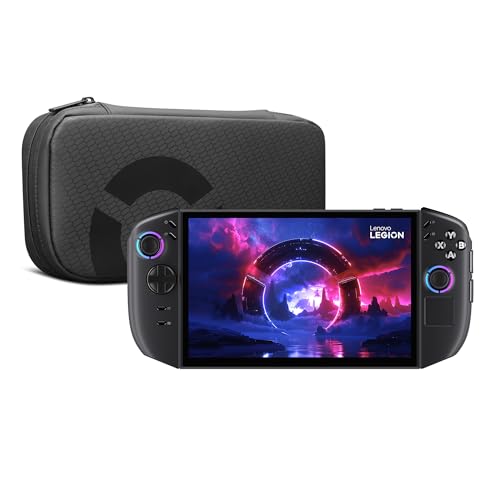
Pros
- 8.8-inch WQXGA OLED display
- 144Hz refresh rate
- Detachable controllers with FPS mode
- 1TB PCIe SSD storage
Cons
- Weighs 2.02 pounds
- Who should skip it: buyers prioritizing a lighter handheld
Quick Verdict
Choose a Steam Deck if you mainly play games from Steam and want its built-in trackpads, touchscreen, and compact design. The Steam Deck Oled 512 GB Handheld Gaming Console lists a 512 GB SSD and microSD expansion. Its listing gives conflicting display resolutions, so confirm the exact panel specification before buying. Skip it if you need Windows compatibility or a larger screen.
Choose a Lenovo Legion Go if you want Windows 11, a larger screen, and detachable-controller options. The Lenovo Legion Go | Gaming Handheld specifies an 8.8-inch 2560 × 1600 IPS touchscreen at 144Hz, plus 16GB RAM and a 512GB SSD. Skip it if compact size or a Steam-centered interface matters more than Windows flexibility.
Steam Deck vs Legion Go: Key Differences
Display size and panel
Steam Deck OLED listings specify a 7.4-inch HDR OLED panel with a 90Hz refresh rate. One listing calls its resolution 1200 × 800 in the features and 1280 × 800 in the title, so verify that detail with the seller. OLED can offer strong contrast, while the smaller screen keeps the device more compact.
The original Lenovo Legion Go listing specifies an 8.8-inch 2560 × 1600 IPS touchscreen with a 144Hz refresh rate. Legion Go 2 listings instead specify an 8.8-inch WQXGA OLED display at 144Hz. The larger screen gives menus and games more room, but the listed refresh rate alone does not establish how smoothly every game will run.
Operating system and game access
Steam Deck listings emphasize direct access to a Steam library and built-in controls, including trackpads. Lenovo Legion Go listings specify Windows 11 Home, which may suit buyers who want a Windows-based PC gaming experience. Game compatibility and setup can vary by title and service, so check the games and launchers you rely on before purchasing.
If you want more general handheld PC options, browse the Handheld Gaming PCs category. The broader Gaming category may also help you compare related gear.
Processor, memory, and storage
The supplied Steam Deck listing identifies a custom AMD APU with Zen 2 CPU and RDNA 2 GPU, plus 512GB NVMe storage. A separate upgraded Steam Deck listing claims 2TB storage, but notes that its original seal is opened for the upgrade. Confirm who performed the upgrade and what support applies before choosing that version.
The original Legion Go listing specifies an AMD Ryzen Z1 Extreme, 16GB RAM, and 512GB SSD, with microSD support and an M.2 slot described for expansion. Legion Go 2 listings specify an AMD Ryzen Z2 and 1TB SSD, but one lists 32GB RAM and another 16GB. These are different listed variants, not interchangeable specifications. Match memory and storage to your multitasking needs and library size.
Controls and portability
Steam Deck listings describe built-in thumbsticks, trackpads, and touchscreen controls. Those trackpads can be useful for games designed around mouse input. The listings describe the design as lightweight and compact, but provide no weight measurement for a direct portability comparison.
The Legion Go 2 listings describe detachable TrueStrike controllers, including an FPS mode in which the right controller can be used as a mouse. That gives you another control option, but adds a different setup to manage. Choose based on whether you value integrated controls or detachable ones; published data does not establish which device is more comfortable for every player.
Battery and connectivity
Legion Go 2 listings specify a 74Wh battery and Wi-Fi 6E. The battery capacity is a specification, not a runtime promise; actual play time depends on settings and games. The original Legion Go listing specifies Wi-Fi 6E, Bluetooth 5.3, and two USB4 ports.
Steam Deck OLED listings specify Wi-Fi 6E, Bluetooth 5.3, and microSD expansion. One listing advertises longer battery life but provides no measured runtime. For long trips, compare verified runtime information for the exact model and games you plan to play, rather than relying on broad battery claims.
Which Should You Buy?
Steam-focused players: Consider the Valve Steam Deck OLED 512GB Handheld if you want a Steam-centered device with an OLED screen. Its listing supplies few other specifics, so verify storage, accessories, and exact model details.
Windows game and app users: The Lenovo Legion Go | Gaming Handheld is a fit if Windows 11, its high-resolution IPS screen, and stated USB4 ports match your needs. Check the dimensions and weight if you plan to carry it daily; the published listing does not state them.
Players who want a newer listed Legion Go 2 configuration: Compare the Lenovo Legion Go 2 Gaming Handheld Gaming PC and Lenovo Legion Go 2 – Mobile Gaming Console. Both listings specify a Ryzen Z2, 8.8-inch OLED screen, and 1TB storage, but memory differs: 32GB versus 16GB. Confirm the exact SKU and configuration.
Buyers prioritizing extra Steam Deck storage: The Valve Steam Deck OLED 2TB Handheld Gaming Console is a seller-upgraded option with a listed accessory kit. Skip it if you prefer an unopened, unmodified device or cannot confirm upgrade support and included accessories.
How We Compared
We compared the published product listings, including their stated operating systems, screens, processors, memory, storage, controls, and connectivity. Some listings conflict or omit details, and the listed customer ratings have no review details available here. Treat seller claims as claims and verify the exact model, configuration, and included items before ordering.
Frequently Asked Questions
Is Steam Deck or Legion Go better for Steam games?
Steam Deck listings emphasize Steam integration and built-in trackpads. Legion Go runs Windows 11, which may suit players who want a Windows environment. Check compatibility for specific games and launchers; the published information does not confirm support for every title.
Does every Legion Go 2 have 32GB of RAM?
No. The supplied Legion Go 2 listings differ: one specifies 32GB and the other 16GB. Confirm the exact product configuration before buying.
Can you expand storage on these handhelds?
Steam Deck listings specify a microSD card slot. The original Legion Go listing specifies microSD support and an M.2 slot for expansion. For Legion Go 2, the published listings specify 1TB SSD storage but do not establish an expansion method, so check the exact model documentation.
Is a 144Hz screen automatically smoother for games?
A 144Hz screen can refresh more often than a 90Hz screen, but that specification does not guarantee a game will run at 144 frames per second. Game demands and device settings affect the actual experience.
Which is easier to carry?
The Steam Deck listing describes its design as compact, while Legion Go models have larger 8.8-inch screens. The published data does not include comparable weights or dimensions, so check those measurements if bag space or comfort during travel is a priority.





Write Your Review
No reviews yet. Be the first to share your experience!