

Choosing between wireless earbuds vs wired earphones usually comes down to a trade-off between physical freedom and continuous reliability. Wireless models remove cord tangles and snagging hazards during movement, but they introduce battery management and connection latency. Wired options deliver zero-latency playback without recharging requirements, yet tether your movement directly to a source device.
Modern mobile devices increasingly omit analog headphone jacks, pushing many listeners toward the wireless earbuds category. This guide evaluates core technical differences, including power autonomy, signal latency, controls, and ergonomic stability, helping you select the format that matches your daily habits.

Pros
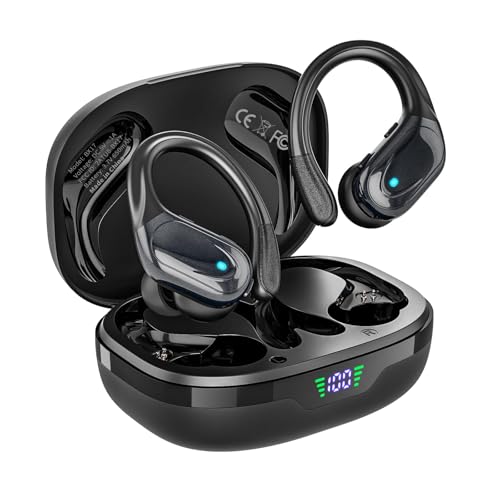
- Dual LED battery display on case
- Secure over-ear hooks for active movement
- Physical buttons prevent accidental inputs
- Eight-hour single-charge earbud battery life
Cons
- Reaching 80-hour runtime requires alternating single earbud use
Buying Guide: Key Factors in Wireless Earbuds vs Wired Earphones
Battery Life and Power Reliance
Power delivery is the fundamental functional divide between these two audio styles. Wired earphones draw power directly through a 3.5mm or USB-C connection, operating indefinitely without downtime. Wireless earbuds rely entirely on integrated rechargeable cells, requiring regular storage in a dedicated battery case.
When assessing wireless options, total playtime dictates travel suitability. For example, the bmani Ear Buds Wireless Earbuds Bluetooth pair offers up to 8 hours per charge, reaching up to 80 hours total when cycled through its dual LED display case. For users needing uninterrupted sound during multi-day trips without easy outlet access, higher case capacities reduce charging anxiety.
Audio Latency and Transmission Stability
Analog copper connections transmit signals at the speed of electricity, providing near-instantaneous audio synchronization. This makes wired models an industry standard for competitive gaming, music production, and precision video editing where millisecond delays disrupt workflow.
Bluetooth architectures introduce processing latency due to audio encoding, wireless transmission, and decoding stages. Recent Bluetooth versions reduce this delay significantly for casual video streaming and calls. The bmani design integrates Bluetooth connectivity built for low latency and automatic pairing, which suits workouts and daily streaming, though wired sets still lead for zero-lag professional audio monitoring.
Physical Fit, Retention, and Activity Suitability
Earbud retention mechanics depend heavily on your intended use case. Standard in-ear wired monitors can be yanked loose if a cable snags on gym equipment, doorknobs, or commuter crowds. Conversely, fully wireless buds risk tumbling onto hard surfaces if their shell geometry mismatches your ear canal shape.
For high-impact activities, mechanical stabilization provides extra insurance. The bmani wireless set incorporates adjustable over-ear hooks along with a sweat-resistant and dust-resistant build. This mechanical hook design keeps the 10mm dynamic drivers positioned securely during runs or weight training, whereas traditional dangling wired cables often generate mechanical cable noise (microphonics) against clothing.
Hardware Controls and User Interface
How you adjust volume and track progression significantly impacts daily usability. In-line remotes on wired cables are easy to locate by touch, but their placement can pull on the earphone housing. Many wireless earbuds rely on touch-capacitive sensors, which can trigger accidental pauses when adjusted with sweaty fingers or brushed by hair.
Physical tactile buttons offer a dependable middle ground. bmani implements separate main and volume buttons directly on the earbud chassis. This tactile layout prevents inadvertent inputs during workouts, allowing clear, intentional adjustments even while wearing gloves or moving quickly.
Device Compatibility and Port Availability
Physical audio ports have become sparse across modern flagship smartphones, requiring dongles or dedicated DAC adapters to run legacy wired earphones. This hardware shift favors wireless protocols that connect universally across phones, tablets, and laptops without proprietary port adapters.
However, legacy desktop PCs, flight entertainment systems, and studio equipment still standardise on 3.5mm jacks. Buyers focused on wide hardware ecosystems inside our broader audio category should evaluate whether their primary playback sources include built-in Bluetooth transmitters or standard analog output jacks.
How We Compared These Products
We evaluated the options in this guide by analyzing manufacturer specifications, driver dimensions, battery capacities, Bluetooth connectivity standards, and aggregate customer feedback patterns. Our assessment focuses on structural design factors, such as ear hook ergonomics, physical button configurations, and power readout clarity, cross-referencing published data against common consumer requirements.
Which Option Fits Your Needs?
For active individuals, runners, and gym-goers who need secure retention and freedom from snagging cables, bmani Ear Buds Wireless Earbuds Bluetooth is a strong candidate. Its integrated ear hooks, physical button controls, dual-microphone array, and combined 80-hour battery life fit demanding physical routines. Pros include the distinct LED battery readout case, secure over-ear stability, and sweat resistance. Cons include a bulkier charging case footprint compared to standard pocket buds, along with absence of an analog wired backup option. Who should skip it: Audio purists seeking ultra-compact pill-style cases or zero-latency studio monitoring setups.
Wired earphones remain the appropriate choice for desktop gamers, audio editors, and frequent travelers who prioritize zero latency, uncompressed signal delivery, and zero dependency on battery recharge cycles. If your daily listening takes place primarily at a desk with an accessible audio jack, a wired format delivers endless operation without pairing steps.
Frequently Asked Questions
Do wired earphones sound better than wireless earbuds?
Wired earphones transmit uncompressed analog signals directly to the drivers, avoiding the compression algorithms and digital-to-analog conversion steps inherent in Bluetooth transmission. While modern wireless drivers, such as 10mm dynamic units, produce rich stereo response, equivalent-tier wired units generally provide slightly greater detail retrieval and zero transmission artifacts.
How long do wireless earbud batteries typically last?
Most wireless earbuds offer between 5 and 9 hours of continuous playback on a single charge. Combined with storage case battery reserves, total usage often spans 24 to 80 hours depending on battery size, as seen in high-capacity storage designs with external LED power readouts.
Can I use wireless earbuds for competitive gaming?
Standard Bluetooth audio introduces minor latency, often between 40 to 200 milliseconds. While acceptable for casual media consumption, this slight delay can disrupt real-time positional cues in fast-paced competitive shooters, where direct wired connections remain preferable.
Are physical buttons better than touch controls on wireless earbuds?
Physical buttons provide positive tactile feedback and prevent accidental track skips caused by sweat, rain, or unintentional contact. Touch controls allow for sleeker, seamless shell designs, but they can prove finicky during high-movement activities or wet conditions.
What should I do if my phone does not have a headphone jack?
If you prefer wired earphones with a modern jack-free smartphone, you will need a USB-C or Lightning to 3.5mm adapter containing a digital-to-analog converter (DAC). Alternatively, switching to Bluetooth wireless earbuds circumvents physical port constraints entirely.


Write Your Review
No reviews yet. Be the first to share your experience!