

Earbuds that press into the canal or rely on a tight seal can feel uncomfortable for some listeners, but open-ear designs may not provide the isolation they want. This guide to the Best Wireless Earbuds for Sensitive Ears compares wearing styles, ear tips, hooks, battery claims, and listening features so you can match a pair to your comfort needs and daily routine.

Pros
- Compact case fits easily into small pockets
- Up to 35 hours of total playback time
- Customizable EQ settings via JLab mobile app
- Be Aware ambient pass-through mode included
Cons
- Lacks active noise cancellation for loud environments
- Users requiring advanced audio codecs should skip it

Pros
- Secure earhooks keep earbuds in place during workouts
- Charging case dual LED display shows exact battery percentage
- IPX7 waterproof rating resists intense sweat and moisture
- Offers up to ninety hours of total playtime
Cons
- Earhook style is bulkier than stem-only earbuds
- Listeners seeking compact discreet profiles should skip them
Pros
- Up to eighty hours total playback time
- IPX7 waterproof rating for sweat resistance
- Ear hook design ensures secure workout fit
- Dual digital LED battery indicator display
- Large 14.3mm audio drivers

Pros
- 80-hour total playback with charging case
- IPX7 waterproof rating resists sweat and rain
- Earhooks provide secure fit for workouts
- Bluetooth 5.4 offers fast pairing
The Best Wireless Earbuds by Use Case
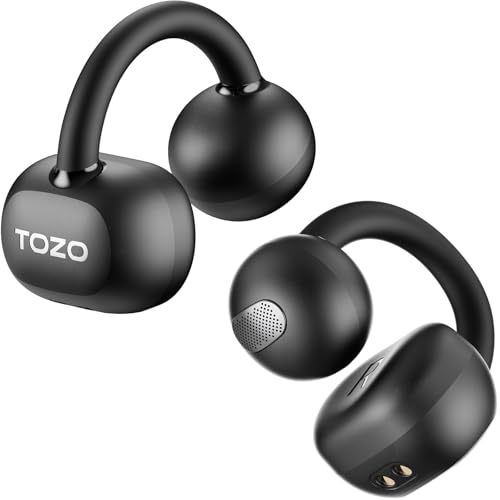
Best for Avoiding Ear-Canal Pressure: TOZO OpenEarRing Open Ear Earbuds 40H Bluetooth
The TOZO OpenEarRing Open Ear Earbuds 40H Bluetooth use a clip-on, open-ear design rather than an ear tip inserted into the canal. The listing specifies a 5.1-gram weight per earbud and says the shape is designed with glasses wearers in mind, making this the clearest option here for listeners who want to avoid canal contact. Its listed 40-hour total playback claim includes up to 10 hours per charge and 30 additional hours from the case. Compare fit-focused options for small ears if compact in-ear buds also interest you.
Reasons to buy:
- Open-ear clip-on design avoids inserting an ear tip into the canal.
- Listing specifies 5.1 grams per earbud and a glasses-conscious shape.
- TOZO app offers 32 EQ modes for adjusting sound preferences.
Reasons to avoid:
- Open-ear listening provides less physical isolation than a sealed in-ear fit.
- The listing does not specify a water-resistance rating, so verify suitability before choosing them for wet workouts.
Skip it if you need ear tips to create a seal or want stronger passive isolation from nearby sound.
Best for Compact In-Ear Fit: JLab Go Air Pop+ True Wireless Earbuds
The JLab Go Air Pop+ True Wireless Earbuds are the in-ear choice for shoppers who prefer a small bud and a choice of tip sizes. The listing says the earbuds are 15% smaller and 40% lighter than the earlier Go Air wireless earphones, and includes three tip sizes to help create a snug fit. That seal can improve sound isolation, but it also means the tips touch the ear canal, so a smaller size does not guarantee comfort for every ear.
Reasons to buy:
- Three included tip sizes let you compare fit rather than relying on one tip shape.
- JLab app offers Signature, Balanced, and Bass Boost EQ presets.
- Be Aware Mode lets ambient sound in, according to the listing.
Reasons to avoid:
- The in-ear seal may bother listeners who are sensitive to canal pressure.
- The published information does not state a water-resistance rating.
Skip it if you want an earbud that rests outside the canal or need a stated water-resistance rating for exercise.
Best for Workout Fit Choices: Active Noise Cancelling Ear Buds Wireless Earbuds
The Active Noise Cancelling Ear Buds Wireless Earbuds from WHYKJTEK combine flexible over-ear hooks with three sizes of gel tips. That gives active listeners ways to adjust fit, although the tips still enter the canal and may not suit someone who wants contact-free listening. The listing specifies IPX7 water resistance and describes ANC and Transparency Mode, but its stated noise reduction and battery figures are manufacturer claims rather than guaranteed results in every setting.
Reasons to buy:
- Flexible hooks are designed to hold the earbuds in place during workouts.
- Three tip sizes allow some adjustment to the in-ear fit.
- Physical buttons reduce reliance on touch gestures, and the listing specifies IPX7 water resistance.
Reasons to avoid:
- Hooks and gel tips create more contact points than a simple open-ear clip design.
- The listing combines advanced feature claims with limited detail about how ANC behaves across different environments.
Skip it if your main priority is keeping the ear canal uncovered or avoiding hooks around the ear.
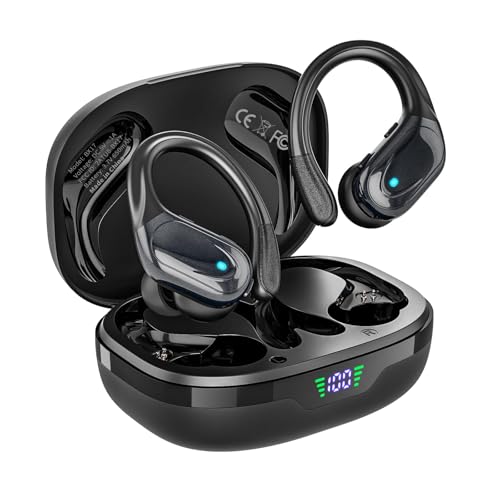
Best for Long Workout Sessions: HAOYUYAN Wireless Earbuds
The HAOYUYAN Wireless Earbuds are sports-style in-ear buds with soft ear hooks and three ear-tip sizes. The listing claims up to 15 hours of playback per charge and up to 80 hours total with the case, alongside an IPX7 rating. Those details may appeal if you want a stable workout fit and less frequent charging, but the tips still contact the canal, and comfort depends on how the hook and tip shape match your ears.
Reasons to buy:
- Three ear-tip sizes offer options for adjusting the in-ear fit.
- Soft hooks are intended to help keep the buds secure during exercise.
- The listing specifies IPX7 water resistance and a digital battery display on the case.
Reasons to avoid:
- The hook-and-tip construction may feel bulky to listeners who prefer minimal ear contact.
- Its 80-hour total is a listed claim; actual playback varies with use.
Skip it if you need an open-ear design or are unwilling to wear ear tips inside the canal.
Best Open-Ear Workout Alternative: Open Ear Wireless Earbuds Bluetooth Headphones
The TRAUSI Open Ear Wireless Earbuds Bluetooth Headphones are described as open-ear sports earbuds with ear hooks. They suit listeners who want awareness of surrounding sounds while running or exercising and prefer not to use a conventional sealed ear-tip fit. The listing specifies Bluetooth 5.4 and claims up to 80 hours with the case, but it does not explain the ear-hook shape in enough detail to predict comfort for every wearer.
Reasons to buy:
- Open-ear design is intended to keep surrounding sound audible.
- Ear hooks provide a sports-oriented way to secure the earbuds.
- The listing specifies Bluetooth 5.4 and an IPX7 rating.
Reasons to avoid:
- Open-ear listening will not isolate you like a sealed in-ear fit.
- The listing does not give a per-charge playback figure, so the 80-hour total claim offers limited detail about listening between charges.
Skip it if you want a fully sealed fit for blocking nearby noise or need a clearly stated per-charge battery estimate.
How to Choose the Best Wireless Earbuds for Sensitive Ears
Start with contact points and fit style
First decide which parts of your ear you can comfortably have an earbud touch. Conventional in-ear models use tips inside the canal, while clip-on or open-ear designs sit outside it. Ear hooks can improve stability, but they add contact around the outer ear. If canal pressure is your main concern, compare the TOZO clip-on design and TRAUSI open-ear option before considering tip-based picks.
Product labels such as “open ear” do not describe every point of contact or guarantee a comfortable fit. Check listing images and descriptions for clips, hooks, and tips. If you wear glasses, look for information about frame clearance; TOZO specifically describes its design as glasses-conscious, but individual fit can still vary.
Check tip sizes and seal needs
In-ear tips can create a seal that helps keep earbuds secure and limits some outside sound. That same seal can create pressure for sensitive listeners. JLab, WHYKJTEK, and HAOYUYAN list three tip sizes, which gives you options to compare, but the published details do not establish that their tips use identical shapes or materials. Do not assume a small tip will suit every ear.
When comparing listings, confirm how many tip sizes are included and whether the product uses a hook or another stabilizing feature. If the listing does not explain tip dimensions or shape, treat fit as something to verify rather than a promised result. A fit that feels comfortable at first may also feel different during a longer listening session.
Decide how much isolation you want
Open-ear models leave the ear canal uncovered and can make it easier to hear nearby sounds, but they do not provide the same physical isolation as sealed tips. In-ear models can reduce some outside sound through their fit. The WHYKJTEK listing also describes ANC and Transparency Mode, while JLab lists Be Aware Mode. These are distinct features: check the exact model’s controls and mode descriptions rather than treating every “noise cancelling” phrase as proof of the same behavior.
Use your surroundings to guide the decision. For quiet home listening, you may prefer the seal of an in-ear model. For exercise where hearing ambient sound matters to you, an open-ear design may be a better match. For more advice on workout fit and features, see our wireless earbuds for working out guide.
Read battery claims in context
Advertised total playback usually combines earbud use with extra charges from the case, so it does not tell you how long the earbuds run before returning to the case. The published listings vary: TOZO specifies up to 10 hours per charge, HAOYUYAN claims up to 15 hours, and TRAUSI lists an 80-hour total without a per-charge figure. Compare both numbers where available, and remember that listening volume and feature use can affect real-world runtime.
A case display can make remaining charge easier to check, but it does not make a longer battery claim more reliable. Consider your routine: a commuter may value clear per-charge runtime, while someone who often forgets to recharge may prefer a case with extra listed capacity. Verify charging port details and the exact accessories included in the listing before ordering.
Match controls and water resistance to your routine
Controls matter when you want to pause audio without reaching for your phone. The listed products describe touch controls, button controls, or app-based adjustments, but the listings do not establish that each control method is equally easy to use. If accidental touches concern you, compare the physical-button descriptions on the WHYKJTEK and HAOYUYAN models with the touch controls listed for TOZO and TRAUSI.
For workouts, check the water-resistance rating on the exact model, not just broad claims such as “sweatproof.” WHYKJTEK, HAOYUYAN, and TRAUSI list IPX7; the supplied JLab and TOZO details do not state a rating. A rating does not mean a product is suitable for every kind of liquid exposure, so follow the manufacturer’s care guidance and confirm intended use.
How We Compared
This comparison uses the published product listings, including their stated fit styles, ear-tip and hook details, controls, connectivity, battery claims, app features, and water-resistance information. We also considered the published rating figures as listing data, not as proof of a recurring customer experience. Where a listing leaves out a useful detail, such as a water-resistance rating or per-charge runtime, we call that out instead of filling the gap with an assumption.
Frequently Asked Questions
Are open-ear earbuds always more comfortable for sensitive ears?
No design can guarantee comfort for every person. Open-ear models avoid inserting tips into the canal, which may help if canal contact is uncomfortable, but clips or hooks can still press against the outer ear. Compare the contact points and fit descriptions, then check the seller’s return terms before buying.
Do these earbuds work with both Android and iPhone?
The published descriptions identify Bluetooth connectivity and, for some models, broad compatibility or Android features. They do not provide a complete compatibility matrix for every phone, app, or operating-system version. Check the exact listing for your device, and verify whether app-based EQ or pairing features require a specific platform.
What is the difference between open-ear and in-ear earbuds?
Open-ear designs sit outside the ear canal and generally allow more surrounding sound to reach you. In-ear models use tips in the canal, often creating a seal that can reduce some outside noise and help hold the buds in place. The choice comes down to contact comfort, desired isolation, and how securely each style fits your ears.
Will ANC help if I am sensitive to ear pressure?
ANC describes an audio feature, not an ear-fit style. An ANC model may still use tips that sit inside the canal, as the WHYKJTEK listing describes for its ear-hook design. If pressure from tips is your concern, check the construction first and do not assume ANC means open-ear or pressure-free listening.
Can I use these earbuds for running or cycling?
Several listings describe workout use, hooks, or open-ear designs, and three list an IPX7 rating. Those details do not establish that every model suits every activity or weather condition. Check the exact fit and water-resistance information, and choose a listening style that lets you stay aware of your surroundings when your activity calls for it.



Write Your Review
No reviews yet. Be the first to share your experience!