

Portable power stations under $500 can look similar on paper, yet their output, charging options, and portability vary. Choosing the right one depends on whether you need to run appliances during an outage, charge devices at camp, or keep a work setup powered through a brief interruption.
This guide compares capacity, AC output, recharge methods, UPS features, and portability across the listed models. Check your devices’ wattage and required runtime before buying, since battery capacity alone does not tell you how long a station will power a particular load.

Pros
- LiFePO4 battery rated for 3,000 charge cycles
- Three recharge methods
- 14 total outputs
- UPS switching within 10 milliseconds
Cons
- Who should skip it: users with combined AC loads over 1,200W

Pros
- 1,152Wh LiFePO4 battery capacity
- Fast AC charging claim
- 500W solar input
- Five-year warranty
Cons
- 37.4 lb weight limits easy carrying
- Who should skip it: shoppers needing a lightweight power source
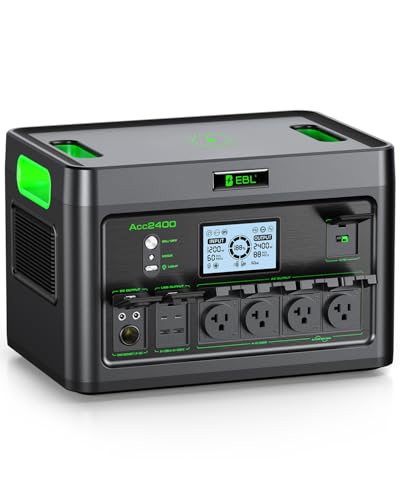
Pros
- Four AC outlets with 2400W maximum output
- Multiple charging options for up to 12 devices
- LiFePO4 battery rated for over 3,500 cycles
Cons
- 54 lb weight limits easy portability
- Skip it if you need a lightweight power station
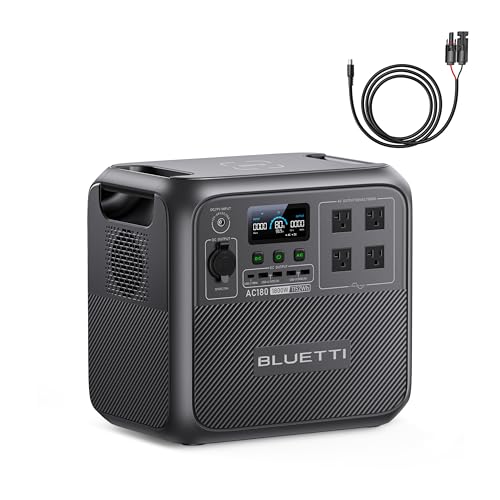
Pros
- 1,800W output, with 2,700W peak claim
- Four AC outlets
- AC and solar charging support
- LiFePO4 battery chemistry
Cons
- Skip it if you need a lightweight power station

Pros
- 1,056Wh LiFePO4 battery
- Fast AC charging option
- Car charging cable included
- 11 versatile ports
Cons
- UltraFast AC charging requires app and smartphone
- Skip if unwilling to use app for fastest AC charging

Pros
- 1,024Wh LiFePO4 battery
- 100W USB-C output
- 45-minute charge to 80% claimed
- 26.7 lb listed weight
Cons
- Incompatible with specified DELTA extra batteries
- Skip it if you need compatibility with those extra batteries

Pros
- 1,024Wh capacity
- 2,000W output, 3,000W peak
- Ten device ports
- Under-10ms UPS switchover
Cons
- 49-minute recharge requires enabling HyperFlash in the app
- Skip it if you need a lighter carry than 24.9 lb

Pros
- 1,800W rated AC output
- 1,024Wh capacity
- 10ms UPS switchover
- 25 lb weight
Cons
- Who should skip it: users needing capacity beyond 1,024Wh

Pros
- Expandable capacity up to 5,120Wh
- Two 100W USB-C PD ports
- Stated 3,500-plus-cycle LiFePO4 rating
- Built-in UPS with claimed under-20ms transfer
Cons
- Skip if you need pocketable backup; weighs 27.8 lb

Pros
- 1024Wh LFP battery
- Dual 140W USB-C ports
- Claimed 37-minute recharge to 80%
Cons
- Skip if you need built-in solar or car charging
The Best Portable Power Stations by Use Case
Best for High-Wattage Appliances: EBL 2400W Portable Power Station LiFePO4 Battery
The EBL 2400W Portable Power Station LiFePO4 Battery combines 1,843.2Wh capacity with 2,400W AC output, making it a fit for buyers whose compatible appliances draw more power than a typical 1,800W station can supply. Its listing describes support for equipment such as kettles, hair dryers, and power tools, but you should confirm each device’s running and startup wattage. At 55 lb, it is better suited to a vehicle, jobsite, or home backup spot than frequent carrying.
Reasons to buy:
- Higher listed continuous AC output than the 1,800W models in this guide.
- 1,843.2Wh capacity and 12-device charging support group use.
- Listing specifies over 3,500 charge-discharge cycles and a 0.1-second emergency backup switch.
Reasons to avoid:
- Its stated 55 lb weight makes it a poor match for carrying long distances.
- Verify appliance startup demand and the specific output needed before relying on it.
Skip it if you want a lighter station for frequent campsite-to-car trips.
Best for Fast Solar Recharging: Anker SOLIX C1000 Portable Power Station with Car
The Anker SOLIX C1000 Portable Power Station with Car suits campers and outage planners who can make use of its listed solar input of up to 600W. It has a 1,056Wh battery and 1,800W output, with a stated 2,400W SurgePad output for compatible appliances. The listing says solar charging can take 1.8 hours, but actual charging depends on sunlight, panel compatibility, and conditions.
Reasons to buy:
- Up to 600W solar input gives buyers a higher listed solar ceiling than several alternatives here.
- App controls adjust charging speed and show power statistics.
- Eleven ports offer multiple connection options for a mixed device setup.
Reasons to avoid:
- UltraFast charging requires AC input and enabling the feature through the Anker app.
- The listed solar time depends on a compatible panel and suitable conditions; panel inclusion is not specified.
Skip it if you do not plan to use solar input or app-based charging controls.
Best for Expandable Backup: OUPES Mega 1 Portable Power Station 1024Wh 2000W
The OUPES Mega 1 Portable Power Station 1024Wh 2000W stands out for buyers who may want more stored energy later. Its listing says the 1,024Wh unit can connect to up to two B2 Extra Batteries, expanding capacity to 5,120Wh. The station also lists 2,000W continuous output and a UPS transfer time under 20 milliseconds; confirm accessory compatibility and whether extra batteries fit your budget before choosing it for an expandable setup.
Reasons to buy:
- Expansion option raises listed capacity from 1,024Wh to 5,120Wh with compatible batteries.
- 2,000W continuous output and 4,500W surge rating suit loads within those limits.
- Two 100W USB-C PD ports support compatible laptops and other USB-C devices.
Reasons to avoid:
- The added capacity depends on separately sourced compatible B2 batteries.
- Its listed UPS transfer time is under 20ms, not the 10ms figure stated for some alternatives.
Skip it if you want a fixed-capacity setup and do not need expansion.
Best for Compact Carrying: BLUETTI Elite 100 V2 Portable Power Station
The BLUETTI Elite 100 V2 Portable Power Station is the clearest fit here for buyers who prioritize carrying a roughly 1kWh station. The listing gives its weight as 25 lb and describes a compact 17L design, alongside 1,024Wh capacity and 1,800W rated AC output. Its stated 10ms UPS and 30dB silent mode may also appeal for indoor backup or quiet overnight use, though confirm that the output and runtime suit your equipment.
Reasons to buy:
- At a listed 25 lb, it is lighter than the EBL 55 lb model.
- Eleven ports provide several ways to connect devices.
- App support includes Wi-Fi and Bluetooth monitoring, according to the listing.
Reasons to avoid:
- Its 1,024Wh battery offers less listed capacity than the EBL model’s 1,843.2Wh.
- Vehicle fast charging requires a separate BLUETTI Charger 1, according to the listing.
Skip it if you need higher stated capacity for longer appliance runtime.
Best for Rapid UPS Switching: EF ECOFLOW Portable Power Station Delta 3 Classic
The EF ECOFLOW Portable Power Station Delta 3 Classic fits buyers who want a fast-switching backup for a computer, router, or other compatible electronics. Its listing specifies a UPS transfer time under 10ms, 1,024Wh capacity, and 1,800W AC output with a 3,600W surge rating. It also supports up to 500W solar input, while the listing notes that it is not compatible with DELTA 2 Smart Extra Battery or Delta 3 Series Smart Extra Battery.
Reasons to buy:
- Under-10ms UPS transfer is a useful listed feature for equipment that needs brief-interruption backup.
- 100W USB-C output supports compatible higher-power USB-C devices.
- App controls include usage monitoring, charging schedules, and backup modes.
Reasons to avoid:
- Its listed 1,024Wh capacity is below the higher-capacity EBL and UDPOWER options.
- It does not work with the named DELTA 2 and Delta 3 Series extra batteries.
Skip it if you need more than 1,024Wh or plan to use one of the listed incompatible expansion batteries.
Also Considered
The UDPOWER S1200 Portable Power Station, 1,191Wh may suit home-office users who want 14 outputs and a listed 10ms UPS, though its 1,200W continuous AC output is lower than the main appliance-focused picks.
The BLUETTI Portable Power Station AC180 offers 1,800W output, 1,152Wh capacity, and 500W solar input; the separate AC180 listing below specifies 11 outlets, so check the exact version before buying.
The BLUETTI AC180 Portable Power Station 1152Wh 1800W lists 11 outlets, 1,152Wh capacity, and a 20ms UPS switch, but its feature set overlaps with the other AC180 listing.
The Anker SOLIX C1000 Gen 2 Portable Power Station may appeal if you want 2,000W output, 4,000 listed battery cycles, and a 10ms UPS, but its capacity is 1,024Wh.
The DJI Power 1000 V2 Portable Power Station is worth considering for creators using compatible DJI drone batteries, with listed dual 140W USB-C ports and 26dB operation; verify the required DJI charging accessories.
How to Choose the Best Portable Power Station Under $500
Match AC output to your appliances
Continuous AC output limits the combined power draw of devices running at the same time. Add the running wattage of the appliances you expect to use, then compare that total with the station’s rated output. The EBL lists 2,400W continuous output, while several other models list 1,800W or 2,000W. A surge rating describes a brief higher output, not a continuous allowance, so check both figures and your appliance’s startup demand.
Estimate usable capacity and runtime
Watt-hours describe stored energy, but actual runtime depends on the device load and conversion losses. Divide the station’s capacity by a device’s wattage only for a rough upper-bound estimate; real results can be lower. A 1,843.2Wh model may offer more potential runtime than a 1,024Wh model, but the larger battery also may mean more weight. List the devices you need to run and how long you need them powered before comparing capacities.
Check charging inputs and included equipment
AC, solar, and car charging serve different situations. Solar input can help away from outlets, but the station’s maximum input, panel compatibility, sunlight, and whether panels are included all affect the setup. For example, the Anker SOLIX C1000 lists up to 600W solar input, while the BLUETTI Elite 100 V2 listing describes vehicle fast charging through a separately named Charger 1. Check the exact listing for required cables, panels, and chargers rather than assuming they come in the box.
Choose UPS features for the equipment you need to protect
A UPS mode can switch connected equipment to battery power during an outage, but transfer time and device compatibility matter. The products here list transfer times from under 10ms to 20ms, or 0.1 seconds for the EBL model. These figures do not prove that every computer, router, or medical device will work as intended. Check the equipment maker’s requirements and the station’s manual before relying on it for sensitive devices.
Weigh portability against output and expansion
A station that stays in a home backup location can prioritize capacity and output. For camping or moving between rooms, weight and carrying design matter more. The BLUETTI Elite 100 V2 lists a 25 lb weight, while the EBL lists 55 lb. If your needs may grow, the OUPES Mega 1 lists support for compatible extra batteries, but expansion adds equipment to source and carry.
How We Compared
This comparison uses the published product listings, including stated battery capacity, AC output, charging inputs, port counts, UPS transfer times, weight where provided, app support, and expansion options. We also considered the stated use cases and customer-rating information supplied with the products. Ratings alone do not establish how a station will perform for your appliances, so confirm the exact model details and compatibility before purchase.
For another outage-focused comparison, see our portable power stations for hurricane backup. If your setup depends on wired networking, our guide to choosing a Cat 8 Ethernet cable covers a related connection need. Smaller personal charging needs may call for a power bank with a built-in cable instead of a station.
Frequently Asked Questions
Can a portable power station run a refrigerator?
It depends on the refrigerator’s running and startup wattage, the station’s AC output, and how long you need it to run. Compare those requirements with both the continuous and surge ratings, then account for other devices sharing the station. The listings describe some models as suitable for refrigerators, but do not establish runtime for a specific refrigerator.
Is a 1,000Wh station enough for a camping trip?
It can be enough for charging phones, laptops, lights, and other modest loads, depending on how many devices you use and for how long. High-wattage appliances consume stored energy faster. Make a list of devices and estimate their total energy use, then compare that need with the station’s capacity.
Do portable power stations include solar panels?
Do not assume so. A listing may describe solar charging capability without including panels. Check the package contents and confirm panel voltage, connector, and maximum input compatibility for the exact model.
What does the UPS transfer time mean?
It is the listed time for the station to switch from utility power to battery power when an outage occurs. A shorter stated time may help reduce interruption, but it does not guarantee compatibility with every device. Check the connected equipment’s requirements and the station’s instructions before using UPS mode for essential electronics.
Can I use a portable power station while it charges?
Some models may support charging while powering devices, but the published details do not confirm that behavior for every product or input mode. Check the manual for pass-through use, supported loads, and any operating limits. Do not treat a fast recharge claim as confirmation that simultaneous charging and output are supported.


Write Your Review
No reviews yet. Be the first to share your experience!