

Selecting the best smartphone for kids presents a fundamental choice between communication capability and digital safety. Giving a young child or teen an unmonitored mobile device introduces unrestricted internet access, unauthorized app downloads, and unsolicited calls. Conversely, basic offline gadgets can fail to provide essential GPS tracking or cellular calling when a student commutes independently.
This guide analyzes hardware configurations across 5 products, distinguishing between full cellular devices with managed parental software, unlocked compact Android phones, and standalone offline learning toys. By evaluating operating system protections, carrier requirements, physical durability, and battery capacities, you can identify which format matches your child’s age and daily routine.

Pros
- Tamper-proof controls protect rules and message history
- Monitors alerts across thirty-plus social media apps
- Real-time GPS tracking includes alerts and check-ins
- Water, dust, and scratch resistance protect against accidents
Cons
- Requires mandatory recurring monthly service plan for activation
- Skip if seeking unrestricted device freedom or independent carriers


Pros
- Pocket-sized ultra-compact build
- Expandable storage up to 256GB
- Built-in Face ID unlocking
- Includes protective case and screen protector
Cons
- Limited to older 2G and 3G cellular bands
- Runs dated Android 8.1 operating system
- Users needing modern 4G or 5G should skip it

Pros
- Preloaded with over 40 educational puzzle games
- Offline SIM-free operation eliminates internet browsing
- Included silicone case protects against accidental drops
- Dual cameras feature creative stickers and frames
Cons
- Incompatible with standard app store downloads
- Skip if needing mobile cellular calling features
How to Choose the Best Smartphone for Kids
Operating Systems and Parental Oversight Architecture
The operating system determines how much control guardians maintain over device usage. Standard consumer phones running stock Android permit open web browsing and store downloads unless restricted manually through third-party configurations. In contrast, purpose-built platforms integrate remote management directly into the firmware. For example, the Bark Phone Pro operates with tamper-proof monitoring across text messages, web activity, and installed applications, alerting parents to potential safety concerns without requiring manual device checks.
When selecting a platform, consider whether the controls can be bypassed by rebooting into recovery mode or sideloading installation files. Dedicated software stacks like those found on the Teracube Thrive restrict access by forcing application approvals through a paired parent console on iOS or Android. If your goal is strictly developmental play rather than social connectivity, non-networked toy devices remove internet risks entirely by omitting external network connectivity.
Cellular Network Compatibility and Carrier Service Plans
Cellular connectivity varies sharply across children’s mobile devices. Several managed options require proprietary cellular subscriptions to activate calling, messaging, and remote GPS services. When evaluating models like the Teracube Thrive, verify whether the device operates exclusively on a bundled carrier plan or permits third-party SIM cards from major domestic providers.
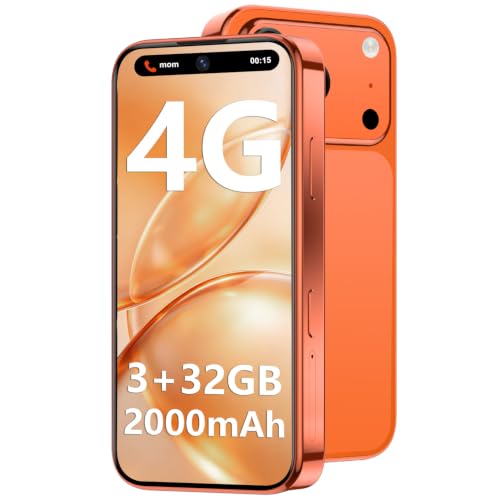
For unlocked mini phones such as the 4G Mini Smartphone for Kids, inspect supported network bands before buying. This model specifies LTE bands 2, 4, 5, 12, 17, 41, and 66, which align with carriers like T-Mobile and AT&T, but exclude CDMA-dependent systems like Verizon. Outdated 3G-only models, including the Zylofy Mini Phone, face significant operational limits because legacy cellular networks have retired across North America. Buyers should always confirm active 4G VoLTE support on the child’s intended carrier.
Screen Dimensions, Form Factor, and Ergonomics
Device dimensions dictate portability and usability for smaller hands. Standard modern smartphones feature displays exceeding 6 inches, which can lead to accidental drops and difficulty reaching navigation buttons. Mini handsets, such as the 3.7-inch BLKE S or 3.0-inch Zylofy, weigh under 0.2 pounds and fit securely inside school bags or smaller pockets. The trade-off is reduced keyboard surface area, which can make extended typing frustrating for older children.
For younger age brackets between 3 and 8 years old, screen ergonomics focus on visual comfort and durability rather than screen resolution. Devices such as the Meetrye Kids Smart Phone provide 3.5-inch displays framed by chunky silicone protection. Parents balancing digital engagement with offline focus might also consider reading alternatives such as dedicated reading devices, which eliminate high-stimulation video loops while preserving digital utility.
Battery Capacity and Thermal Performance
Battery specifications in child-friendly phones range from 600mAh in basic toy units to 2000mAh or more in cellular Android handsets. Smaller battery cells reduce overall chassis weight, but they require frequent daily recharging when GPS tracking or active mobile data remains enabled. The 4G Mini Smartphone for Kids incorporates a 2000mAh cell to sustain essential standby and calling functionality through a standard school day.
Children frequently charge electronics on soft bedding or near fabric materials, making battery stability and heat dissipation important considerations. Ensure devices adhere to regulatory standards such as FCC certification and CPSC safety requirements. Avoid high-draw gaming tasks on compact plastic housings that lack passive metal heat spreaders, as sustained loads can cause localized warmth during extended play sessions.
Location Services and Emergency Tracking Precision
Real-time location reporting depends on dedicated hardware satellite receivers rather than approximate Wi-Fi triangulation. Hardware with true GPS integration, such as the Bark Phone Pro and Teracube Thrive, supplies live map tracking, customizable boundary alerts, and check-in prompts directly to parent devices. This capability is critical for students walking to school or participating in extracurricular transit.
In contrast, offline toy handsets offer no location functions. When evaluating an everyday device for older kids who also use audio accessories like wireless earbuds for clear calls, verify that the handset’s Bluetooth and location modules function concurrently without draining the cellular battery within a few hours.
How We Compared These Products
Our comparative evaluation is based on technical specifications, operating system architectures, carrier band support, and documented hardware features provided by manufacturers. We examined parental management layers, display ergonomics, battery capacities, and child safety compliance across each device category. We did not conduct physical laboratory testing or hands-on measurements; rather, device capabilities and limitations were analyzed using published documentation and customer service guidelines.
Which Option Fits Your Needs?
For Comprehensive Teen and Tween Safety: Bark Phone Pro – Smartphone for Kids & Teens
The Bark Phone Pro integrates an octa-core processor and 6GB of RAM with advanced algorithmic monitoring across calls, texts, and over 30 applications. Its tamper-proof architecture prevents rule removal and unauthorized message deletion while delivering live GPS updates.
Pros: Exhaustive content monitoring, real-time location tracking, modern octa-core performance.
Cons: Requires a recurring monthly Bark data subscription; initial hardware cost is substantial.
Who should skip it: Families looking for a low-cost, off-contract handset or an offline device for toddlers.
For Controlled Everyday Android Communication: Teracube Thrive Kids Smart Phone
Equipped with the Thrive Parent application, this handset enforces remote approval for app installations, eliminates unknown incoming calls via spam blocking, and filters browsing access while including replacement coverage.
Pros: Safe online search, robust parental control app for iOS and Android, included protective case and screen guard.
Cons: Requires activation on Teracube Wireless; cannot be used with existing third-party carrier SIM cards.
Who should skip it: Parents who already maintain a family cellular plan with carriers like Verizon or AT&T.
For Compact Independent Cellular Backup: 4G Mini Smartphone for Kids
This 3.7-inch device runs Android 12 powered by 3GB of RAM and 32GB of expandable storage. It supports T-Mobile and AT&T 4G bands, providing calling, GPS, and Face ID unlocking in an ultra-compact 0.17-pound chassis.
Pros: True 4G network compatibility, modern Android 12 operating system, lightweight pocket footprint.
Cons: Lacks proprietary tamper-proof parent monitoring software; incompatible with Verizon networks.
Who should skip it: Buyers requiring strict automated content filters or non-tech-savvy children who need supervised web access.
For Early Learning Without Network Hazards: Meetrye Kids Smart Phone,3.5″ Touchscreen Learning[/acms_link]
Aimed at ages 3 through 8, this unit features a 3.5-inch touchscreen, dual cameras, habit-tracking routines, and educational puzzles in an offline configuration that eliminates internet exposure.
Pros: Completely safe from online predators and unwanted content, includes drop-resistant protective cover, long-lasting 1000mAh battery for toy play.
Cons: No cellular calling, GPS, or app downloading capabilities.
Who should skip it: Older children who need real-time communication, emergency calling, or school transit tracking.
Frequently Asked Questions
What is the difference between a kids smartphone and a learning toy phone?
A true smartphone contains a cellular modem, an operating system like Android, and wireless radios (LTE, Wi-Fi, Bluetooth) to facilitate live phone calls, text messaging, and internet browsing. A toy learning phone simulates touch interfaces, cameras, and games completely offline, lacking cellular hardware, SIM slots, and internet connectivity to prioritize toddler safety.
Do kids smartphones require mandatory monthly subscription plans?
Certain dedicated safe smartphones require bundled carrier plans to function. Devices like the Bark Phone Pro and Teracube Thrive require their respective monthly network services to run backend parental controls and cellular features. Unlocked mini phones, however, can be paired with compatible prepaid or standard family SIM cards without custom platform subscription fees.
Can standard parental control apps match a dedicated kids phone?
While software like Google Family Link or Apple Screen Time provides app timers and basic web filtering on standard consumer devices, resourceful children can sometimes bypass them using safe mode restarts, secondary user profiles, or system resets. Purpose-engineered solutions integrate tamper-proof security into the operating system firmware, preventing unapproved removals and monitoring encrypted communication channels.
Are 3G mini phones still usable in North America?
Major carriers across North America have retired their 3G CDMA and GSM networks. As a result, older mini phones that only support 2G and 3G bands cannot establish reliable cellular voice or data connections. When purchasing a mobile phone for active communication, verify that the device explicitly supports 4G LTE VoLTE bands compatible with your chosen service provider.
What safety certifications should parents check on children’s electronic devices?
Parents should confirm that connected devices comply with FCC standards regarding radio frequency exposure limits (SAR ratings). Additionally, non-connected toy electronics should conform to CPSC (Consumer Product Safety Commission) and ASTM standards governing non-toxic materials, shatter-resistant plastics, and secure lithium-ion battery compartments.



Write Your Review
No reviews yet. Be the first to share your experience!