

Airplanes and busy terminals call for quieter listening, but earbuds designed to block sound can make it harder to hear your surroundings. Battery life, fit, and whether you want noise cancellation or an open-ear design all affect what works on a trip. This guide to the best noise cancelling earbuds for travel compares the listed features of three options and explains which trade-offs matter for different travel habits.

Pros
- Active noise cancellation
- Bluetooth multipoint
- Customizable EQ
- Three eartip and stability band sizes
Cons
- Skip if you need more than 8.5 hours per charge

Pros
- Strong active noise cancellation for daily commutes
- Up to 8.5 hours of playback per charge
- Bluetooth multipoint supports seamless device switching
- Multiple eartip and band sizes ensure secure fit
Cons
- IPX4 rating resists splashes, not water submersion
- Swimmers and heavy water users should skip these

Pros
- 80-hour total playback with charging case
- IPX7 waterproof rating resists sweat and rain
- Earhooks provide secure fit for workouts
- Bluetooth 5.4 offers fast pairing
The Best Earbuds by Use Case
Best for Noise Cancellation and Long Listening: Bose QuietComfort Earbuds
The Dewdrop Mint Bose QuietComfort Earbuds suit travelers who prioritize active noise cancellation and substantial listening time between charges. The listing specifies up to 8.5 hours of playback, plus up to 2 additional hours after a 20-minute case charge. A trio of eartip and stability band sizes gives you options for adjusting the in-ear fit, which matters when earbuds will stay in place through a long flight.
Bluetooth multipoint lets the earbuds connect to multiple devices at once, a useful feature if you move between a phone and tablet. The listing also names a USB-C cable and wireless charging. These features make this color variant a practical fit for travelers who want noise cancellation, customizable EQ through the Bose QCE app, and more than one charging option.
Reasons to buy:- Active noise cancellation is specified for reducing distractions.
- Up to 8.5 hours of listed playback, with a quick case-charge claim.
- Bluetooth multipoint and three eartip and stability band sizes.
- The in-ear design blocks more of your surroundings than an open-ear style, so it may not suit travelers who need to stay alert to nearby announcements.
- The 8.5-hour figure is a manufacturer listing claim, not a guarantee of runtime in every listening mode.
Skip it if you want an open-ear fit that keeps surrounding sounds more accessible.
Best for a Black Color Option and Device Switching: Bose QuietComfort Earbuds
The Black Bose QuietComfort Earbuds have the same listed core features as the Dewdrop Mint variant, including active noise cancellation, Bluetooth multipoint, and up to 8.5 hours of playback. They may suit a traveler who prefers this color while keeping the same feature set: app-based EQ controls, customizable tap controls, and a quick-charge claim of up to 2 extra hours from 20 minutes in the case.
There is no available evidence that the Black version performs differently from the Dewdrop Mint version. The distinction is the listed color, not a separate noise-cancellation or battery specification. For travel, the meaningful decision is whether the listed Bose features suit your routine, rather than expecting a different experience based on the finish.
Reasons to buy:- Active noise cancellation is listed for reducing listening distractions.
- Multipoint supports connecting to multiple devices at once.
- USB-C charging, wireless charging, and customizable tap controls are listed.
- Its listed feature set overlaps with the Dewdrop Mint variant, so the data does not establish a functional reason to choose one over the other.
- Confirm that the in-ear fit feels comfortable for your ears before relying on it for extended trips.
Skip it if you want a distinct alternative to the other Bose color variant or prefer an open-ear design.
Best for Long Time Between Case Charges: Open Ear Wireless Earbuds Bluetooth Headphones
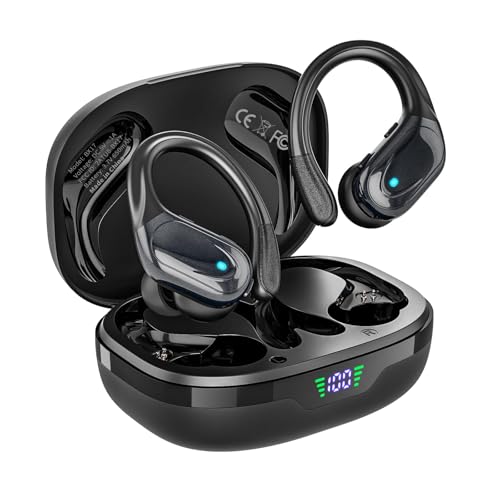
The Open Ear Wireless Earbuds Bluetooth Headphones from TRAUSI take a different approach: an open-ear design with earhooks, rather than in-ear noise cancellation. The listing claims up to 80 hours of total playtime with the charging case and describes the fit as suited to active use. That long total-playtime claim may appeal if you want fewer charging stops, but it is not an individual charge figure.
The open-ear format keeps you more aware of nearby sounds than sealed in-ear earbuds, which can help when walking through stations or listening for boarding announcements. Its listing describes ENC noise cancelling, but does not specify active noise cancellation for blocking ambient sound. Do not treat that call-related noise-cancellation wording as equivalent to the Bose models’ listed active noise cancellation for listening.
Reasons to buy:- Open-ear design helps keep surrounding sounds accessible.
- Up to 80 hours of total playtime with the case is claimed in the listing.
- Bluetooth 5.4 and earhooks are listed.
- The product listing does not specify active noise cancellation for quieting airplane or terminal noise.
- The 80-hour claim is total playtime with the case, not playback from one charge.
Skip it if your main goal is to reduce steady cabin noise with active noise cancellation.
How to Choose the Best Noise Cancelling Earbuds for Travel
Decide whether you need active noise cancellation
Active noise cancellation is the key distinction between the Bose models and the open-ear TRAUSI option in this comparison. If your priority is reducing background sound while listening during a flight, the Bose listings explicitly specify active noise cancellation. The TRAUSI listing mentions ENC noise cancelling, but does not establish that it provides the same listening-focused noise reduction.
Check the exact wording in product listings: cancellation for calls and active noise cancellation for listening describe different purposes. If you want to hear announcements and nearby conversation more readily, an open-ear style may be preferable, but it is not the choice here for blocking cabin sound.
Read battery figures with the case included or excluded
The Bose listings specify up to 8.5 hours of playback and say a 20-minute charge in the case can add up to 2 hours. TRAUSI claims up to 80 hours of total playtime with its case. These figures are not directly comparable: one Bose figure describes listening time, while TRAUSI’s headline total includes case charging.
For a long travel day, look for both single-charge playback and total playback with the case. Check whether the listing explains quick charging, and consider how often you can recharge between flights. Advertised maximums are manufacturer claims; the published data does not specify runtime under every setting or usage pattern.
Match the fit to your trip and surroundings
The Bose earbuds sit inside the ear, and their listing includes three eartip and stability band sizes. A secure, comfortable fit matters if you plan to wear earbuds for long stretches. The published information does not give dimensions or a fit guarantee, so you should check the seller’s fit and return details before buying if in-ear comfort is a concern.
TRAUSI uses an open-ear design with earhooks, which the listing positions for awareness during activities. That design may suit walking around a station, but open-ear listening lets more ambient sound reach you and is less suited to travelers seeking isolation. Choose based on the environments where you will use the earbuds, not only on the advertised battery figure.
Check connectivity and controls for your devices
The Bose models list Bluetooth 5.3, multipoint connection, and customizable tap controls. Multipoint can be useful if you want to connect to more than one device at once, but the listing does not specify every phone, tablet, or computer feature. TRAUSI lists Bluetooth 5.4 and touch controls, along with compatibility language covering multiple devices; that does not guarantee identical switching behavior across devices.
Before buying, confirm that your device supports Bluetooth audio and check any app needs. Bose names the Bose QCE app for EQ adjustment and device management. The listings do not provide codec support details, so buyers with a specific codec requirement should verify it directly rather than assume it is included.
Consider charging, water resistance, and travel routines
The Bose listings specify a USB-C cable, wireless charging, and an IPX4 rating. TRAUSI lists an IPX7 rating and fast charging, but the published description does not give a fast-charge duration. Water-resistance ratings do not mean earbuds are suitable for every kind of liquid exposure, and the product details do not provide a travel-specific durability assessment.
Think through how you will charge and carry your earbuds, then confirm the included charging equipment and case details in the current listing. Bose names a USB-C cable, while the supplied TRAUSI details do not specify an included cable. For other audio needs, see our guides to wireless earbuds for phone calls and wireless earbuds for small ears.
How We Compared
This comparison uses the published product listings, including stated battery claims, connection details, fit designs, controls, and noise-cancellation wording. The two Bose entries share the same listed core features, with different colors, so we do not treat them as distinct performance options. Customer-review evidence was not supplied, and no recurring owner experience or measured performance is claimed here.
Frequently Asked Questions
Are open-ear earbuds a good choice for airplane travel?
They can suit travelers who want to stay more aware of their surroundings, but they are not the best fit if your primary goal is reducing cabin noise. The TRAUSI listing describes an open-ear design and ENC noise cancelling, but does not specify active noise cancellation for listening.
Do the Bose color variants have different features?
The published listings show the same core features for both Bose QuietComfort Earbuds variants, including active noise cancellation, multipoint, and up to 8.5 hours of playback. One is Dewdrop Mint and the other is Black. The published details do not establish a performance difference between them.
Does 80 hours mean the TRAUSI earbuds play for 80 hours on one charge?
No. The listing says up to 80 hours of total playtime with the charging case. It does not state the earbuds’ playback time on a single charge in the published information.
Can the Bose earbuds connect to a phone and tablet?
The Bose listings specify Bluetooth multipoint, which allows connection to multiple devices at once. They do not list every compatible device or explain all switching behavior, so confirm your device requirements and app support before purchase.
What does ENC noise cancelling mean on the TRAUSI listing?
The published listing mentions ENC noise cancelling but does not explain its implementation or specify active noise cancellation for listening. Do not assume it will block airplane or terminal noise like a product explicitly listing active noise cancellation.


Write Your Review
No reviews yet. Be the first to share your experience!