

Loud events, school noise, and travel can feel overwhelming for children with sound sensitivities. The best noise cancelling headphones for autistic child should match the child’s comfort needs and intended setting, while reducing noise without being treated as a way to block every sound or replace supervision.
This guide compares passive over-ear earmuffs by listed noise-reduction rating, age guidance, fit details, portability, and pack quantity. The products below are hearing-protection earmuffs, not wireless audio headphones: the published listings do not specify Bluetooth, batteries, microphones, or music playback.
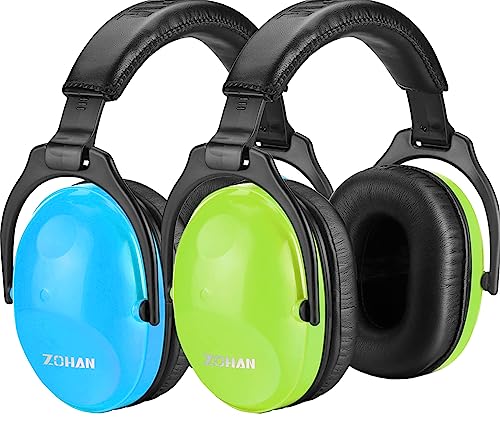
Pros
- Two earmuffs in one pack
- Manufacturer-rated 25 dB NRR
- Soft foam cushions
- One-year warranty listed
Cons
- One size only
- Who should skip it: families needing size-specific fit options

Pros
- Adjustable headband for growing children
- Cushioned ear cups
- Designed for ages 3 to 16
Cons
- Who should skip it: Buyers needing independently verified attenuation ratings

Pros
- Six earmuffs in one pack
- Adjustable fit with rotating cups
- Folds for compact storage
- ANSI S3.19 and CE EN 352-1 stated
Cons
- Reduces noise but does not block all sound
- Who should skip it: shoppers needing only one pair

Pros
- Twelve pairs in one pack
- Six-color mix
- Rotating cups and padded headband
Cons
- Skip if you need only one pair

Pros
- Twelve pairs in three colors
- Rotating cups for adjustable fit
- Padded headband and soft ear pads
- Listed ANSI and CE standards
Cons
- Description gives both 26 dB SNR and up to 28 dB attenuation
- Skip it if you need one consistent attenuation rating

Pros
- Stated 25 dB NRR
- Folds for travel
- Designed for ages 3 to 12
- Listed ANSI and CE compliance
Cons
- Who should skip it: children outside ages 3 to 12

Pros
- Adjustable headband
- Lightweight with travel bag
- Easy-to-clean materials
- Stated 21 to 28 dB attenuation
Cons
- Reduces sound but does not eliminate it
- Who should skip it: children outside the stated 3 to 16 age range

Pros
- Foldable for travel and outings
- Soft ear cushions
- Age range clearly specified
Cons
- Who should skip it: children outside ages 3 to 12

Pros
- Two earmuffs included
- Padded headband and ear pads
- Rotatable ear cups
- ANSI and CE standards listed
Cons
- Who should skip it: buyers needing a specified fit range
- Noise reduction does not eliminate loud-sound risk
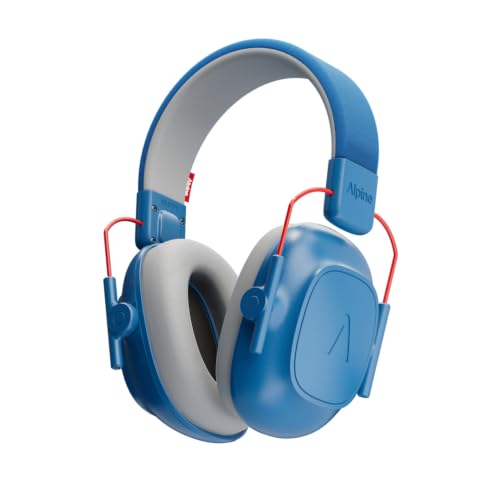
Pros
- Adjustable headband
- Soft, easy-clean materials
- Designed for sensory-sensitive children
Cons
- No safety standard listed
- Who should skip it: shoppers needing documented safety certification
The Best Noise-Reducing Earmuffs by Use Case
Best Two-Location Set: ZOHAN Kids Ear Protection 2 Pack
The ZOHAN Kids Ear Protection 2 Pack suits families who want one pair for school and another for home or outings. Its listing specifies a 25 dB NRR, ANSI S3.19 and CE EN 352.1 compliance, soft foam, and a metal-free construction. The two-color set is a practical fit when earmuffs need to stay in more than one place. For a different audio need, see our wireless earbuds guide for phone calls.
Reasons to buy:
- Two pairs support separate school and home storage.
- The listing gives a 25 dB NRR and names ANSI and CE standards.
- Soft foam and metal-free construction are specified.
Reasons to avoid:
- The listing does not give an age range or folding details, so check fit and storage needs before choosing.
- Its stated NRR is lower than some SNR figures elsewhere in this guide, but NRR and SNR are different rating systems and should not be compared as if identical.
Skip it if you need one individually specified pair with a clearly stated age range.
Best Lightweight Option: MelonArt Noise Cancelling Headphones for Kid
MelonArt Noise Cancelling Headphones for Kid is listed at 190 g and described as adjustable for ages 3 to 16. The listing specifies an SNR of 27 dB, soft ear cups, and a padded headband, making it worth considering when low listed weight and broad age guidance matter. The listing also describes its materials as BPA-free and non-toxic; those are manufacturer claims, not independent findings. Our small-ear earbuds guide covers a different fit problem, since earbuds sit inside the ear rather than over it.
Reasons to buy:
- The stated 190 g weight gives a concrete point of comparison for portability.
- Adjustability and listed ages 3 to 16 cover a wide span of childhood and youth.
- The listing specifies an SNR of 27 dB and padded ear cups.
Reasons to avoid:
- The listing does not name a safety standard, so confirm any required certification directly before buying for a particular activity.
- It is a single pair, not a multi-pair set for school and home.
Skip it if you need a stated NRR or a listed ANSI or CE standard as a deciding requirement.
Best Budget Pick: PROHEAR 032 Kids Ear Protection
PROHEAR 032 Kids Ear Protection is the lower-cost single-pair option among these picks, and its listing gives an NRR of 25 dB for children ages 3 to 12. It specifies 360-degree rotating cups, a padded headband, a folding design, and ANSI S3.19-1974 and CE EN 352-1 compliance. Those details make it a useful candidate for families prioritizing a portable pair for outings, school, or events. For gaming audio, see our guide to wireless gaming earbuds; these earmuffs are not listed as audio playback devices.
Reasons to buy:
- The 25 dB NRR and named ANSI and CE standards are stated in the listing.
- Rotating cups and a folding design support compact packing.
- The specified age range helps families assess whether it may suit their child.
Reasons to avoid:
- The stated age range ends at 12, so older children should check fit rather than assume compatibility.
- The two color variants in this guide have different ASINs and listed prices; confirm the selected option and its details.
Skip it if you need a two-pair bundle or the broader listed age span of the MelonArt model.
Best for a Travel Bag: Alpine Muffy Kids Ear Protection Ear Muffs
Alpine Muffy Kids Ear Protection Ear Muffs are listed for ages 3 to 16 and include a travel bag, a useful detail for families carrying hearing protection between home, school, and events. Alpine specifies sound attenuation from 21 to 28 dB under US and EU regulations, while the product name lists 22 dB sound reduction. The listing describes an adjustable headband and materials that are soft and easy to clean. Our Bose and Sony comparison discusses electronic active noise cancellation, a different category from these passive children’s earmuffs.
Reasons to buy:
- The included travel bag is specifically listed for carrying the earmuffs.
- The stated age range is 3 to 16 years.
- The adjustable headband and easy-clean materials are relevant for repeated outings.
Reasons to avoid:
- The listing gives a 21 to 28 dB attenuation range, while the product name says 22 dB; check the exact rating details for the color and listing you select.
- The supplied black and blue variants have separate ASINs and ratings, so verify the chosen version.
Skip it if you want a two-pack or prefer a listing that states an NRR rather than an attenuation range.
Also Considered
Open-office earbuds are a separate category; for passive earmuffs in a larger household set, consider Floriogra 6 Pack Noise Cancelling Headphones, whose listing describes six pairs, folding storage, and an SNR rating, but does not give a clear, consistent rating across its published details.
Floriogra 12 Pack Noise Cancelling Headphones may suit organizations or families needing many pairs; its large quantity makes it less practical when one child needs one pair, and its rating is stated as 26 dB SNR in the features despite a 28 dB claim elsewhere in the listing.
Floriogra 12 Pack Noise Cancelling Headphones with ASIN B0FX9KCFX7 has the same published description and quantity as the other 12-pack entry; confirm that this is the intended listing before ordering, since the data does not establish a meaningful feature difference.
Floriogra 2 Pack Noise Canceling Headphones could suit a household that needs two pairs at a smaller bundle size; its listing specifies 26 dB SNR in one feature and up to 28 dB attenuation in another, so verify the rating details first.
How to Choose Noise-Reducing Headphones for an Autistic Child
Understand the rating and what it does not mean
NRR and SNR are different rating systems. A higher number in one system cannot be directly ranked against a number in the other as though both were measured and reported identically. The ZOHAN and PROHEAR listings specify NRR, while Floriogra, MelonArt, and Alpine use SNR or attenuation language. Check the exact rating system and standard on the product listing, especially if you are choosing protection for a particular loud setting.
These are passive earmuffs, not a guarantee that all sound disappears. PROHEAR explicitly says its earmuffs reduce harmful noise without blocking all sounds. The listings do not provide a measured level for every real-world setting, so do not treat the rating as a promise that any loud environment becomes safe.
Check fit, age guidance, and the child’s comfort
A listed age range is a starting point, not proof that the earmuffs will fit every child in that age group. PROHEAR lists ages 3 to 12; MelonArt and Alpine list ages 3 to 16. Compare the headband adjustment and ear-cup design with the child’s needs, and check whether the cups can cover the ears without an uncomfortable fit. Rotating cups appear in the PROHEAR and Floriogra descriptions, while ZOHAN lists soft foam.
For sensory sensitivities, comfort is a personal decision. If a child dislikes pressure or a particular material touching the skin, review the construction details and, where possible, check return terms before choosing. The available listings do not establish that one design will feel comfortable to every child.
Match pack size and portability to routine
A single pair may make sense when earmuffs travel with the child. A two-pack can keep one pair at school and one at home, which is the specific use case ZOHAN describes. Larger Floriogra packs may fit families or groups that need multiple pairs, but they require more storage and are unnecessary if only one child needs protection.
For travel, look for a stated folding design or a listed carrying accessory rather than assuming every earmuff packs the same way. PROHEAR describes folding cups, and Alpine lists a travel bag. Floriogra’s six-pack listing also describes a folding design. Confirm the details for the exact selected variant because color and pack listings have separate ASINs.
Separate hearing protection from active noise cancellation
Product titles often call passive earmuffs “noise cancelling headphones,” but the listed models are described as hearing-protection earmuffs. They have no listed Bluetooth connection, battery, microphone, or audio input. If your child needs music, communication, or electronic active noise cancellation, these listings do not establish those features. Compare them with conventional headphones only when those capabilities matter.
Passive earmuffs can be simpler when the goal is reducing exposure to loud sound at events or creating a quieter-feeling environment. They do not need charging based on the published product information, but no published listing describes electronic controls or selectable cancellation modes. For more general audio shopping, browse our Audio category.
Check standards and use the earmuffs safely
Some listings name ANSI and CE standards: ZOHAN specifies ANSI S3.19 and CE EN 352.1, while PROHEAR specifies ANSI S3.19-1974 and CE EN 352-1. Floriogra also names ANSI S3.19 and CE EN 352 in its multi-packs. MelonArt’s published details do not name a standard. If a venue, school, or activity requires a particular certification, verify that exact model’s documentation rather than relying only on a broad product title.
Children may need to hear instructions, announcements, traffic, or a caregiver. Earmuffs reduce sound; they do not remove the need for adult supervision or make every environment safe. For loud activities, follow venue guidance and keep the child able to respond to important cues.
How We Compared
This comparison uses the published product descriptions and listed features, including rating systems, age guidance, comfort and fit details, pack quantities, portability, named standards, and included accessories. Where listing details conflict, such as a stated SNR alongside a different attenuation claim, the discrepancy is called out rather than resolved by assumption. The published product data includes no usable customer-review text, so this guide does not infer buyer consensus or long-term ownership results.
Frequently Asked Questions
Are these earmuffs Bluetooth headphones?
No Bluetooth, batteries, microphones, or playback features are specified for the products in this comparison. They are listed as passive hearing-protection earmuffs. Check a separate audio-headphone listing if your child needs music or calls.
Do noise-reduction earmuffs block every sound?
No. They reduce sound rather than making a child unable to hear everything. The PROHEAR listing explicitly describes reducing harmful noise without blocking all sounds. Actual fit and the environment also matter, so do not interpret a rating as complete silence.
Can I compare an NRR number directly with an SNR number?
No. NRR and SNR are different rating systems, so compare products within the same system and check the named standard. A 25 dB NRR should not be treated as directly higher or lower than a 27 dB SNR based only on the printed numbers.
Which listed models include a travel feature?
PROHEAR describes a folding design, and Alpine lists an included travel bag. Floriogra’s six-pack description also says the earmuffs fold for storage. The published data does not list a carrying case for every model, so verify the exact version if a case matters.
How should I choose between a one-pair and multi-pair set?
Choose one pair when the child will carry the same earmuffs between settings and storage is limited. A two-pack can support separate home and school locations, while six- and twelve-pair options suit households or groups that need several pairs. More pairs do not make each earmuff more suitable for a child, so prioritize fit, comfort, and the stated rating.




Write Your Review
No reviews yet. Be the first to share your experience!