

TV speakers can make dialogue hard to hear and action scenes feel flat, but a soundbar that adds channels or surround speakers may need more room and setup. This guide to the best soundbar for LG TV compares LG models with options from other brands, helping you weigh LG control features, audio formats, physical connections, and the type of listening you want.

Pros
- Up-firing center channel for dialogue
- Wireless subwoofer
- LG TV integration features
- Dolby Atmos and DTS:X support
Cons
- Who should skip it: shoppers who need rear speakers included

Pros
- 3.1.3-channel layout with triple up-firing speakers
- Dialogue-focused up-firing center channel
- LG TV integration through WOW Orchestra and WOW Interface
Cons
- Who should skip it: shoppers without an LG OLED evo C Series TV seeking the intended matching setup
- Rear speakers are not specified as included

Pros
- 3.1-channel setup with dedicated center channel
- Wireless subwoofer
- LG TV integration features
Cons
- Who should skip it: buyers needing detailed connectivity specifications

Pros
- Includes wireless rear speakers
- Includes wireless subwoofer
- No separate receiver needed for rear speakers
- One-remote control with LG TVs
Cons
- Skip if you want a single-bar setup

Pros
- Multiple wired and wireless connection options
- Included wired subwoofer
- Remote control included
Cons
- Wired subwoofer may limit placement flexibility
- Skip if you need a wireless subwoofer

Pros
- Compact 23.98-inch length
- HDMI cable included
- Bluetooth audio streaming
- Fire TV remote integration
Cons
- 2.0-channel design; who should skip it: shoppers prioritizing a multi-speaker setup

Pros
- No rear speakers required
- HDMI eARC and CEC
- App-based EQ and sound presets
- Dedicated wired subwoofer
Cons
- Wired subwoofer may limit placement flexibility
- Skip it if you need a wireless subwoofer
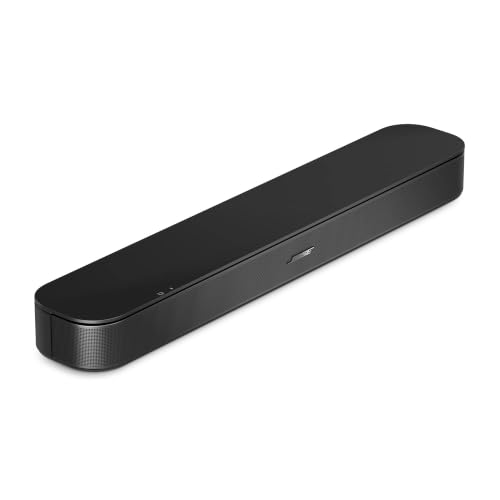
Pros
- Dialogue Mode for clearer speech
- HDMI cable included
- Bluetooth audio streaming
- Compact, low-profile design
Cons
- Optical audio cable sold separately
- Who should skip it: buyers needing an included optical cable
The Best Soundbars by Use Case
Best for LG QNED TVs: LG S70TY 3.1.1 ch QNED TV Matching Soundbar
The LG S70TY 3.1.1 ch QNED TV Matching Soundbar pairs a wireless subwoofer with Dolby Atmos and DTS:X support, plus an up-firing center channel intended to keep voices clear. LG says its compact shape is designed to fit beneath a QNED TV, and WOW Orchestra can play the TV and soundbar speakers together on compatible LG TVs. Its WOW Interface also lets you adjust soundbar settings through the TV remote. Compare 55-inch TV options if you are still planning your screen setup.
Reasons to buy:
- Dolby Atmos and DTS:X support, with wireless subwoofer included.
- LG WOW Orchestra and WOW Interface support shared audio and TV-remote control.
- Rear speakers can be added separately for expanded surround sound.
Reasons to avoid:
- Rear speakers are not listed as included, so check the additional purchase and room placement needed.
- Its LG-specific matching features matter less if your TV is from another brand.
Skip it if you want a complete rear-speaker setup in the box or do not need LG TV integration.
Best for LG OLED C Series: LG SC9S 3.1.3-Channel Perfect Matching Soundbar
The LG SC9S 3.1.3-Channel Perfect Matching Soundbar is aimed at LG OLED evo C Series owners who want three up-firing channels and wireless Dolby Atmos. Its listed features include an up-firing center channel, AI Room Calibration Pro, Clear Voice Plus, and WOW Orchestra. LG also describes a Synergy Bracket designed to attach to a C Series TV, but buyers should confirm that their specific television is compatible before choosing a mounting arrangement.
Reasons to buy:
- Three up-firing channels and wireless Dolby Atmos are specified.
- Clear Voice Plus targets dialogue clarity, while room calibration adjusts sound for the space.
- WOW Orchestra and WOW Interface support shared audio and control with compatible LG TVs.
Reasons to avoid:
- The TV bracket is specifically described for OLED evo C Series models, so check fit for your exact TV.
- Rear speakers are listed as an optional expansion, not part of the stated package.
Skip it if you have no need for its LG OLED mounting approach or prefer a system with rear speakers included.
Best for Rear Surround Included: LG S40TR 4.1 ch. Home Theater Soundbar with Rear
The LG S40TR 4.1 ch. Home Theater Soundbar with Rear includes wireless rear speakers and a wireless subwoofer, making it a practical fit for viewers who want sound coming from behind the seating area. The listing specifies Dolby Audio and DTS Digital compatibility, Clear Voice Plus, and a smart up-mixer that can turn two-channel audio into a multi-channel experience. LG WOW Interface and WOW Orchestra provide added convenience when paired with a compatible LG TV.
Reasons to buy:
- Rear speakers and wireless subwoofer are part of the described system.
- Clear Voice Plus is designed to improve speech clarity.
- Dolby Audio and DTS Digital compatibility cover common movie and TV audio formats.
Reasons to avoid:
- Rear speakers still need suitable placement near the listening area.
- The listed formats do not include Dolby Atmos, unlike the S70TY and SC9S.
Skip it if your priority is Atmos support or your room cannot accommodate rear speakers.
Best for Dialogue-Focused Simplicity: Bose TV Speaker (2nd Gen)
The Bose TV Speaker (2nd Gen) is a compact, single-bar option for viewers who mainly want clearer speech without adding a separate subwoofer or rear speakers. Bose lists a center tweeter and Dialogue Mode, along with Bluetooth for streaming music or podcasts. The package includes an HDMI cable for setup, while optical connection is also supported; the optical cable is sold separately.
Reasons to buy:
- Dialogue Mode is designed to raise vocals over background sound.
- HDMI connection uses the included cable, and Bluetooth supports wireless audio streaming.
- Its compact design may suit a crowded TV stand.
Reasons to avoid:
- No subwoofer or rear speakers are listed as included.
- Optical setup requires a separately purchased cable if you choose that connection.
Skip it if you want a multi-speaker surround system or an included subwoofer for stronger bass.
Best Budget Compact Option: Amazon Fire TV Soundbar, 2.0 speaker with DTS
The Amazon Fire TV Soundbar, 2.0 speaker with DTS is a compact two-speaker bar for buyers who want a straightforward TV audio upgrade. It connects through HDMI eARC or ARC using the included HDMI cable, and the listing specifies Dolby Audio and DTS Virtual:X. Bluetooth adds a way to stream audio from a phone or tablet, while Fire TV integration is intended to work with one remote.
Reasons to buy:
- HDMI eARC/ARC connection supports a simple TV hookup.
- DTS Virtual:X and Dolby Audio are listed for virtual surround and audio detail.
- Bluetooth streaming and compact design suit basic living-room or bedroom setups.
Reasons to avoid:
- It is a 2.0 system, with no separate subwoofer or rear speakers specified.
- Fire TV one-remote integration is described for Fire TV; verify control behavior with an LG TV.
Skip it if you want LG WOW features, dedicated rear speakers, or a separate subwoofer.
Also Considered
Browse more soundbars alongside these alternatives. The LG S60T 3.1 ch. Soundbar with Wireless Subwoofer could suit LG owners seeking a simpler 3.1-channel setup, but its listing does not specify Atmos or rear speakers. The Maraawa Sound Bar with Subwoofer,120W Sound Bar offers Bluetooth 5.3 plus ARC, optical, and AUX connections, but its wired subwoofer and lack of listed LG-specific controls make it less tailored to LG integration. The ULTIMEA 5.1CH Surround Sound Bar System with Dolby lists HDMI eARC, app-based EQ, a wired subwoofer, and side-firing drivers, but buyers should verify how its Atmos support works with their TV and source devices. These models offer distinct features, but the five main picks align more directly with the guide’s use cases.
How to Choose the Best Soundbar for LG TV
Check HDMI ARC or eARC before choosing a connection
HDMI ARC or eARC can carry TV audio to a soundbar through one cable, and HDMI-CEC may allow shared volume control. The Fire TV bar specifies HDMI eARC/ARC, while ULTIMEA lists eARC and CEC. Check your LG TV’s manual or port labels to confirm which HDMI port supports ARC or eARC, then compare that with the soundbar’s stated inputs. Do not assume every HDMI port supports audio return or that every soundbar offers the same format support.
Match channel layout to your room and viewing habits
A center channel is useful when dialogue is a priority, while separate rear speakers can place effects behind the listener. The S70TY and SC9S list up-firing channels for spatial audio, whereas the S40TR includes rear speakers. A compact 2.0 option such as the Amazon bar asks less of the room, but does not include dedicated rear speakers or a subwoofer. Consider speaker placement, seating position, and whether you can run power to rear units before selecting a layout.
Separate format support from marketing terms
Dolby Atmos, DTS:X, Dolby Audio, and DTS Virtual:X describe different formats or processing features, not interchangeable guarantees of the same result. The S70TY lists Dolby Atmos and DTS:X; the SC9S lists wireless Dolby Atmos; the S40TR lists Dolby Audio and DTS Digital. For Atmos playback, check the TV, soundbar connection, streaming device, and content support together. A soundbar’s format label alone does not confirm that every source will deliver that format.
Decide whether LG TV integration is worth prioritizing
LG’s WOW Interface is designed to put soundbar controls in the TV interface, while WOW Orchestra uses compatible TV speakers alongside the soundbar. Those features can reduce remote switching, but they are most relevant to buyers with a compatible LG TV. Confirm your TV model and software compatibility in LG documentation before purchase. If you have a different brand of TV, focus instead on the connection and audio features that are explicitly supported.
Account for subwoofer wiring, placement, and expansion
A separate subwoofer can add low-frequency sound, but its connection type affects where it can go. Several LG options list wireless subwoofers, while Maraawa and ULTIMEA specify wired subwoofers. “Wireless” does not mean every component is cable-free, so check power needs and room layout. Also distinguish included speakers from optional expansion: LG describes rear-speaker readiness for some models, but readiness does not mean rear speakers come in the box.
How We Compared
We compared the published product listings, focusing on channel layouts, stated audio formats, connection options, included or optional speakers, and LG-specific control features. We also considered listed app functions and dialogue modes where relevant. The recommendations reflect how those documented features suit different room and listening needs; missing details are treated as points to verify rather than assumed capabilities. Customer feedback was supplied only as aggregate rating data without review text, so it does not support conclusions about recurring owner experiences.
Frequently Asked Questions
Will any of these soundbars work with an LG TV?
The listings describe several models as compatible with smart TVs or as using common TV audio connections, but exact compatibility depends on your TV’s ports and supported audio formats. Check the TV manual for HDMI ARC/eARC or optical output, then confirm the soundbar accepts that connection. LG WOW features are specific integration benefits, not a requirement for basic audio playback.
Do I need HDMI eARC for Dolby Atmos?
Not every Atmos setup uses the same connection, so check the soundbar, TV, and playback source specifications together. ULTIMEA specifically says its HDMI eARC connection supports lossless Dolby Atmos 5.1-channel audio. For other models, use the connection guidance provided for that model and verify whether your TV passes the audio format from the apps or devices you use.
Is a soundbar with rear speakers better than an Atmos soundbar?
They address different priorities. The LG S40TR includes rear speakers for sound behind the seating area, while the S70TY and SC9S list up-firing channels and Atmos support. A rear-speaker system may suit a room where you can place speakers behind the listener; an up-firing design may suit someone who wants a more compact setup. Neither listing establishes which will sound better in every room.
Can I control an LG soundbar with my LG TV remote?
The LG models in this guide list WOW Interface, which is designed to let users adjust soundbar settings through an LG TV remote. The feature depends on a compatible TV and connection, so confirm support for your exact TV model. Other brands may offer HDMI-CEC control, but the published descriptions do not establish identical menu integration.
Should I choose a wired or wireless subwoofer?
A wireless subwoofer can reduce the audio cable running between it and the bar, while a wired subwoofer needs a connection cable. Both types still need suitable placement and power. Check the product listing and setup instructions for cable and outlet requirements, and do not interpret wireless audio connection as meaning the subwoofer needs no power cord.
Can a soundbar improve dialogue at low volume?
Models here list dialogue-related features, including Clear Voice Plus on LG products and Dialogue Mode on the Bose TV Speaker. These are designed to make speech more prominent, but the descriptions do not provide measured results for every program or room. If quiet viewing is important, prioritize a stated voice mode and check whether it can be enabled with the included remote or TV controls.







Write Your Review
No reviews yet. Be the first to share your experience!