

Smart home platforms often lock useful automation features, video storage, or external integrations behind monthly memberships. Choosing the best smart home hub without subscription lets you manage sensors, lighting, and locks locally without continuous operating costs.
Hardware differences dictate device support, wireless range, and setup complexity. This guide compares local-processing hubs across supported protocols like Matter, Zigbee, and Z-Wave to help match your current devices to the right system architecture.
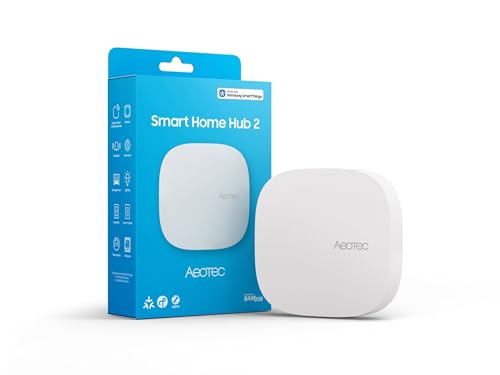
Pros
- Supports modern Matter and Zigbee device protocols
- Local automation execution works during internet outages
- Flexible setup via Wi-Fi or wired Ethernet
Cons
- Lacks Z-Wave support for legacy smart devices
- Users with existing Z-Wave setups should skip it

Pros
- Runs automations locally without cloud internet reliance
- Supports Matter, Zigbee 3.0, and Z-Wave 800
- No recurring subscription fees for core platform features
- Dedicated external antennas improve wireless mesh coverage
Cons
- Complex Rule Machine tools require a learning curve
- Casual users seeking basic plug-and-play setups should skip it

Pros
- Power over Ethernet and dual-band Wi-Fi connectivity
- Matter controller and Thread border router capabilities
- Local automation processing reduces cloud reliance
- Encrypted storage with no microphones or cameras
Cons
- Does not support third-party Zigbee devices
- Required 2A power adapter is not included
- Exposes only one air conditioner through Matter
Buying Guide: Choosing the Best Smart Home Hub Without Subscription
Wireless Protocol Support and Radio Types
A central controller communicates with peripheral devices using dedicated low-power radio standards. Hubs featuring Matter and Zigbee handle newer lighting and plug hardware, but older systems frequently depend on Z-Wave frequencies. For instance, the Aeotec Smart Home Hub2 – V4 explicitly lacks Z-Wave radios, focusing instead on Matter and Zigbee. In contrast, the Hubitat Elevation C-8 Pro Smart Home Hub integrates Matter 1.5, Zigbee 3.0, and Z-Wave 800 Series with Long Range. Matching existing hardware radios prevents the need for extra bridges.
Local Processing vs. Cloud Dependency
Subscription-free ownership provides the most reliability when logic rules run on the hub hardware rather than remote servers. Local execution ensures scheduled lighting, door sensors, and security triggers operate without an active internet connection. Hubitat runs its core Rule Machine entirely on local hardware, protecting automation reliability and data privacy. Aeotec also supports local automation execution for compatible SmartThings routines, though specific integrations still require internet connectivity.
Voice Assistant and Third-Party Ecosystem Bridges
Local hubs must interface with broader ecosystems for spoken controls and unified phone dashboards. The Aeotec unit works inside the Samsung SmartThings environment, interfacing directly with Amazon Alexa and Google Assistant. The Hubitat C-8 Pro connects to Amazon Alexa, Google Home, and Apple HomeKit, while also offering integrations for Ring cameras. Understanding smart home hub vs bridge clarifies how standalone controllers translate third-party voice commands to mesh networks.
Network Connectivity and Antenna Placement
System stability starts at the router connection. Both Ethernet jacks and Wi-Fi radios offer installation flexibility. Hardwired Ethernet reduces latency and signal drops. Wireless range within dense walls also matters. Hubitat includes two external antennas dedicated to Z-Wave and Zigbee transmissions, helping signal coverage in larger floor plans. The Aeotec hub supports Wi-Fi or wired Ethernet connections for straightforward positioning in living spaces.
Software Complexity and Automation Depth
Hub software interfaces range from consumer-friendly visual builders to complex logic engines. SmartThings software on the Aeotec model provides accessible routine creation suitable for beginners. Hubitat offers an AI-assisted routine builder for simple setups, alongside Rule Machine for advanced multi-condition programming, geofenced triggers, and custom drivers created by community developers.
How We Compared These Products
Our evaluation relies on manufacturer technical documentation, platform architecture specifications, protocol support data, and verified customer feedback patterns. We analyzed physical connectivity options, system expansion potential, local execution capabilities, and ecosystem integration without hands-on lab measurement.
Which Option Fits Your Needs?
For homeowners seeking an accessible setup backed by a major mobile ecosystem, the Aeotec Smart Home Hub2 – V4 delivers Matter and Zigbee compatibility inside the SmartThings application. It connects via Wi-Fi or Ethernet and runs automations locally during internet outages. Pros include mainstream app usability and broad Matter device compatibility. Cons include the total absence of Z-Wave radio hardware. Who should skip it: Buyers with existing Z-Wave locks, switches, or sensors should choose a different hub.
For power users requiring broad protocol support and deep local privacy, the Hubitat Elevation C-8 Pro Smart Home Hub covers Matter 1.5, Zigbee 3.0, and Z-Wave 800 Series. It includes dedicated external antennas and operates complex routines via its Rule Machine without subscription costs. Pros include Apple HomeKit, Google Home, and Alexa compatibility with zero mandatory cloud processing. Cons include a steeper learning curve for custom driver management. Who should skip it: Users wanting a completely automated setup without navigating detailed configuration menus may find it overly complex.
Frequently Asked Questions
Do smart home hubs require an ongoing monthly fee?
Dedicated standalone hubs like Aeotec and Hubitat operate without recurring subscription fees. Core logic, device pairing, and platform automations function out of the box without added service charges.
What happens to automations if the home internet disconnects?
Hubs with local processing capability execute supported rules, schedules, and sensor-to-switch actions directly on the hardware. Cloud-dependent tasks like voice assistant commands pause until internet service resumes, but local mesh triggers continue working.
Can these hubs replace a standard home Wi-Fi router?
No. A smart home hub manages low-power automation protocols such as Zigbee, Z-Wave, and Matter over Thread. It connects to your existing router via Ethernet or Wi-Fi to communicate with mobile apps. For structural details, review our smart home hub vs WiFi.
What is the difference between a hub and a gateway?
A hub translates commands across multiple protocols to coordinate automations across different brands. Gateways typically connect a single manufacturer’s proprietary devices to a home network. Read our analysis on smart home hub vs gateway to see how they differ.
Can I control Z-Wave devices with the Aeotec Smart Home Hub2 – V4?
No. The Aeotec Smart Home Hub2 – V4 does not contain Z-Wave hardware radios. It supports Zigbee, Matter, and Wi-Fi devices only. Homes relying on Z-Wave gear require a multi-protocol controller like the Hubitat Elevation C-8 Pro.
Will these controllers work with Google Assistant?
Both the Aeotec and Hubitat platforms integrate with Google Assistant for voice management. Readers standardizing on Google hardware can also review our list of the best smart home hub for google ecosystem setups.


Write Your Review
No reviews yet. Be the first to share your experience!