

Choosing personal audio gear often brings up a confusing question about design: true wireless earbuds vs wireless earbuds. While both styles connect to your smartphone or laptop through Bluetooth, traditional wireless models keep a short cord running between the left and right earpieces. In contrast, true wireless designs abandon cables entirely, storing and charging each independent earbud in a pocket-sized case.
This physical difference directly influences daily battery stamina, physical fit during runs, and how easily you carry the case in a pocket. This guide examines how modern audio pairs compare across driver sizes, Bluetooth standards, and background noise management so you can pick the right design for your daily habits.

Pros
- Long battery life reaching up to 36 total hours
- IP7 waterproof rating protects against sweat and rain
- Dual 14.2 mm dynamic drivers support AAC decoding
- Clear LED case display tracks remaining battery life
Cons
- Lacks active noise cancellation relying solely on passive isolation

Pros
- Compact case fits easily into small pockets
- Up to 35 hours of total playback time
- Customizable EQ settings via JLab mobile app
- Be Aware ambient pass-through mode included
Cons
- Lacks active noise cancellation for loud environments
- Users requiring advanced audio codecs should skip it
Pros
- Active noise cancelling with Smart Ambient awareness
- Up to 40 hours total battery life
- IP54 dust and splash resistance rating
- Fast USB-C charging adds three hours in ten minutes
Cons
- Advertised 40-hour runtime requires turning off active noise cancellation
- IP54 rating resists splashes but cannot handle water immersion
- Skip if requiring advanced high-resolution wireless audio codecs

Pros
- Over 35 hours of total battery life
- Three onboard EQ presets via touch
- Independent earbud use with Dual Connect
- Backed by two-year warranty
Cons
- Conflicting water resistance ratings in product data
- Skip if needing advanced audio codec support

Pros
- Bluetooth 5.4 multipoint links two devices simultaneously
- Semi in-ear design prevents ear canal pressure buildup
- Quick charge provides 90 minutes playback in 10 minutes
- IPX4 rating protects against sweat and liquid splashes
Cons
- Semi in-ear design lacks passive silicone noise isolation
- Listeners wanting strong seal isolation should skip them

Pros
- Up to 32 hours total playback
- Ten-minute quick charge yields two hours
- IPX4 water and sweat resistance
- Four microphones with VoiceAware call technology
Cons
- Single-charge battery drops to six hours with noise cancellation
- Skip if requiring full waterproof submersion beyond IPX4

Pros
- Over nine hours playback per single earbud charge
- Independent single-earbud listening via Dual Connect
- IPX4 sweat and light rain resistance
- JLab app supports equalizer tuning and touch customization
Cons
- IPX4 rating prevents sweat damage but not water submersion
- Swimmers and water sports users should skip it

Pros
- Multipoint Bluetooth 5.3 connects two devices simultaneously
- Adaptive noise cancellation with awareness mode
- Twenty-four hours total battery life with case
- Four ear tip sizes provide secure fit
Cons
- IPX4 rating protects only against light splashes
- Water sports users should skip unit

Pros
- Large 13mm drivers for punchy audio
- AI noise reduction for clear call clarity
- Stable Bluetooth 5.3 connection up to 10 meters
- IPX4 water resistance protects against splashes and sweat
Cons
- Playback limited to five hours per single charge
- IPX4 rating protects against splashes but not submersion
Buying Guide: True Wireless Earbuds vs Wireless Earbuds
Form Factor and Daily Portability
The primary distinction between true wireless and standard wireless designs comes down to cords. Traditional wireless models drape a wire behind your neck, which lets you pop an earbud out to hang on your chest without dropping it. However, that connecting cord can catch on coat collars, gym equipment, or bag straps during transit.
True wireless earbuds eliminate snag hazards by operating as two isolated earpieces. They rest directly in your ears and tuck away inside a dedicated charging battery capsule when not in use. If you need something light for daily transit, compact options like the JLab Go Air Pop+ use miniature cases designed to slide into small coin pockets. Readers with narrower ear canals may also want to browse our guide to the best wireless earbuds for small ears to ensure a stable fit.
Speaker Drivers and Audio Output
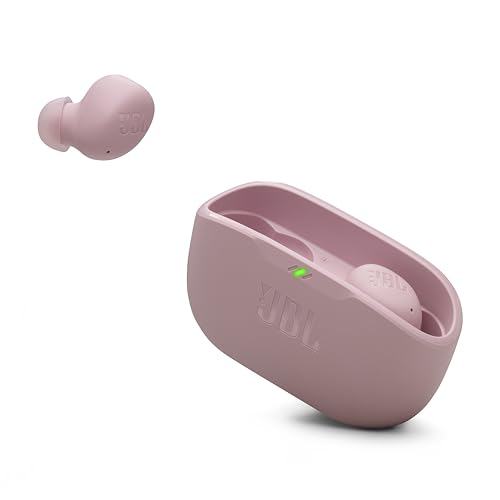
Driver diameter heavily shapes low-frequency resonance and sound reproduction. Small drivers around 8mm, like those in the JBL Vibe Buds 2, deliver clear vocal registers and balanced response in tiny shells. Mid-size 10mm to 12mm drivers, such as the units in the PHILIPS TAT3519 and JBL Tune Flex, provide fuller basslines suited for upbeat music playlists.
Larger drivers move more air inside the acoustic chamber. The Lenovo E310 includes 13mm drivers, while the Btootos model incorporates dual 14.2mm dynamic composite drivers for wide stereo separation. Still, raw driver size means little without a proper acoustic seal against your ear canal. Earbuds with interchangeable silicone gel tips give you the flexibility to seal out ambient room air and preserve punchy bass response.
Bluetooth Generations and Multipoint Switching
Modern wireless designs rely on Bluetooth 5.3 or Bluetooth 5.4. These recent protocols improve signal consistency, reduce audio lag, and minimize battery drain across typical 10 to 15 meter operating distances. A stable connection keeps your stream from stuttering when walking through crowded transit hubs with heavy wireless interference.
If you juggle work calls on a computer while keeping an eye on your mobile phone, check for Bluetooth multipoint support. Both the Belkin SoundForm Anywhere and PHILIPS TAT3519 support dual-device pairing, switching audio streams automatically when a call rings. For workplace communication tips, check out our roundup of the best wireless earbuds for teams meetings.
Noise Management: ANC Versus ENC
Audio makers use two distinct noise control systems that buyers often mix up. Active Noise Cancelling (ANC), found on the JBL Vibe Buds 2, uses exterior microphones and inverse sound waves to reduce steady low-frequency background hum, such as airplane engines or air conditioners. These sets often include transparency or ambient modes to let traffic sounds pass through safely.
In contrast, Environmental Noise Cancellation (ENC) focuses strictly on your voice during calls. Models like the Lenovo E310 use microphone algorithms to filter out room reverberation and street chatter so the person on the other end hears you cleanly. If call clarity is your primary priority, explore our recommendations for the best wireless earbuds for calls.
Moisture Resistance Ratings
Ingress Protection (IP) ratings indicate how well an audio device withstands sweat, dust, and rain. An IPX4 rating represents the everyday benchmark, shielding internal circuitry against water splashes from any direction. This level protects the Belkin SoundForm Anywhere during sweaty treadmill sessions or unexpected rain showers.
Higher ratings provide added defense against tough outdoor conditions. The JBL Vibe Buds 2 offer an IP54 build that blocks grit and dust alongside moisture. For high-perspiration activities, the Btootos pair features an IP7 rating for strong water submersion resistance. For dedicated exercise audio, consult our guide to the best wireless earbuds for working out.
How We Compared These Products
Our analysis relies on detailed manufacturer specifications, technical data sheets, physical form factors, and verified customer feedback across everyday use cases. We evaluated dynamic driver dimensions, listed battery reserves, Bluetooth versions, and water protection ratings across each model. This structured research approach highlights practical operational differences without speculative performance claims.
Which Option Fits Your Needs?
For office tasks and seamless multitasking, Belkin SoundForm Anywhere Ultra-Compact True delivers reliable dual-device Bluetooth multipoint pairing, clear call microphones, and a lightweight semi in-ear fit.
Pros:
- Bluetooth multipoint maintains simultaneous links to a laptop and smartphone
- Semi in-ear shape avoids ear canal pressure buildup
- Compact case includes a handy key ring attachment
- Three onboard EQ sound presets
Cons:
- Lacks active noise cancellation for droning ambient sound
- Semi in-ear shell provides less passive isolation than deep silicone tips
Who should skip it: Commuters who travel on noisy trains and require strong background sound suppression.
For daily travel and noisy public commutes, JBL Vibe Buds 2 – True Wireless Noise Cancelling provides active noise cancellation, adjustable ambient awareness, and a durable IP54 build.
Pros:
- Active Noise Cancelling reduces distracting low-frequency drone
- Smart Ambient passthrough mode keeps you aware of traffic
- IP54 rating certifies both dust and water resistance
- Up to 40 hours of total playback reserve using the charging case
Cons:
- Compact 8mm drivers offer less natural low-end punch than larger speaker units
- Full EQ adjustment requires installing the companion smartphone app
Who should skip it: Listeners who prefer open-ear designs that let in all ambient sound naturally without software modes.
For high-intensity workouts and rough gym use, True Wireless Earbuds Bluetooth Headphones HiFi offers substantial IP7 waterproofing, dual 14.2mm composite drivers, and a detailed battery display.
Pros:
- IP7 waterproof rating resists intense sweat and wet weather
- Dual 14.2mm dynamic composite drivers provide punchy output
- Digital LED display provides exact real-time battery status
- Modern Bluetooth 5.4 wireless connectivity
Cons:
- Lacks a dedicated smartphone app for custom EQ tuning
- Larger driver enclosure may feel bulky in smaller ears
Who should skip it: Users who want deep software customization and app-based equalizer controls.
Frequently Asked Questions
What is the core difference between true wireless and wireless earbuds?
Standard wireless earbuds connect to your source device via Bluetooth but use a physical neckband cable between the left and right pods. True wireless earbuds eliminate that connecting cable entirely, using independent wireless receivers inside each earbud.
Can I use just one earbud while the other stays in the case?
Yes, many modern pairs offer independent listening modes. Models like the JLab Go Air Pop+ feature Dual Connect circuitry, allowing you to route stereo or mono sound through a single earbud while the opposite bud charges inside the case.
Does Bluetooth 5.4 improve sound quality over Bluetooth 5.3?
Bluetooth 5.4 primarily refines connection reliability, power conservation, and broadcasting security. Actual audio quality depends far more on driver engineering, the ear tip acoustic seal, and supported audio codecs such as AAC and SBC.
How does multipoint pairing work during daily use?
Multipoint pairing maintains active wireless links to two host devices simultaneously, such as a laptop and a phone. If you are watching video on your laptop and a phone call comes in, the earbuds automatically switch the audio channel to let you answer without manual re-pairing.
What is the functional difference between ANC and ENC?
Active Noise Cancelling (ANC) uses microphones to isolate and silence background ambient roar so you can enjoy your audio undisturbed. Environmental Noise Cancellation (ENC) focuses on outbound microphone clarity, stripping away room noise so callers hear your spoken voice clearly.



Write Your Review
No reviews yet. Be the first to share your experience!