

Open-ear vs. in-ear earbuds comes down to how you want sound to meet your ears. Open designs leave your ear canal unobstructed, which can help you hear more of your surroundings. In-ear models can offer noise cancellation and a closer listening experience, but fit and ear tips matter.
The products here show both approaches: three open-ear options, plus two models focused on noise cancellation or a sealed fit. Compare what each listing specifies, then consider your typical setting and priorities.
Pros
- Adaptive noise cancellation
- Translation in over 100 languages
- Up to 50 hours with case
- Fast charging claim
Cons
- Skip if translation features are not useful
- Driver size and frequency response not provided

Pros
- Open-ear listening preserves awareness of surroundings
- Four adjustable hook positions
- Four microphones for calls
- Bluetooth 5.4 with multipoint
Cons
- Open design does not isolate outside sound
- Who should skip it: listeners seeking noise isolation

Pros
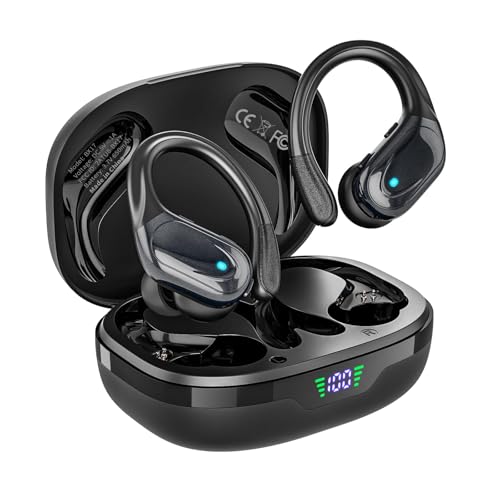
- 80-hour total playback with charging case
- IPX7 waterproof rating resists sweat and rain
- Earhooks provide secure fit for workouts
- Bluetooth 5.4 offers fast pairing

Pros
- Active Noise Cancelling and Transparency modes
- Up to 36 hours of listening time
- Four silicone tip sizes included
- Apple and Android compatibility
Cons
- Who should skip it: swimmers needing greater water resistance
Quick Verdict
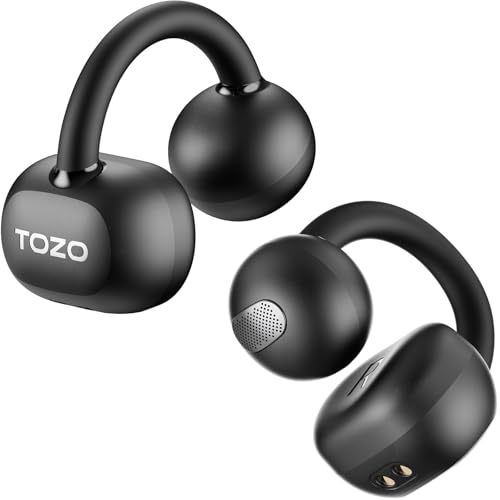
Choose open-ear earbuds if you want to listen while staying more aware of nearby sounds. The workout-focused open-ear options include the Soundcore V20i by Anker Open Ear Earbuds, with adjustable hooks, and the TOZO OpenEarRing Open Ear Earbuds 40H Bluetooth, with a clip-on design.
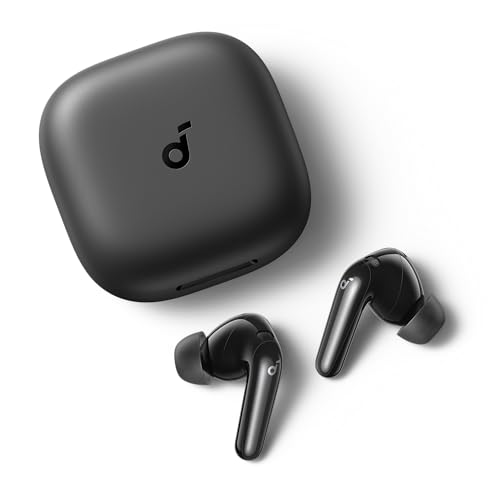
Choose an in-ear-style option if you want noise cancellation or a silicone-tip seal. The Beats Studio Buds + | True Wireless Noise specify ANC and four tip sizes. The soundcore P31i listing highlights adaptive ANC and translation features, but does not specify tip sizes, so confirm its fit before buying.
Open-Ear vs. In-Ear Earbuds: Key Differences
Awareness and noise control
Open-ear designs do not seal the ear canal, and the listings for the TOZO OpenEarRing, Soundcore V20i, and TRAUSI Open Ear Wireless Earbuds emphasize awareness of your surroundings. That can suit outdoor activity or situations where you want to hear nearby sounds, though it does not block ambient noise like ANC can.
The Beats Studio Buds + offer ANC and Transparency mode, while the soundcore P31i listing specifies adaptive ANC. Those features may suit travel or noisy spaces when you want less background sound. Who should skip open-ear: listeners who need stronger noise reduction. Who should skip ANC models: anyone who prioritizes an unobstructed ear canal.
Fit and comfort
The TOZO uses a clip-on design and lists each earbud at 5.1 grams, with a design intended to avoid conflict with glasses frames. Soundcore V20i uses adjustable hooks with four positions. TRAUSI describes an earhook and active fit. These shapes keep the earbuds outside or around the ear, but comfort depends on your ear shape and should not be assumed from the design alone.
Beats supplies four pairs of silicone tip sizes, which can help you find a seal. The soundcore P31i listing does not specify its tip arrangement, so verify included fit options. Who should skip the TOZO: buyers who prefer an in-ear seal. Who should skip the Beats: people who find silicone tips uncomfortable.
Battery claims and charging
Listed total playback ranges from 36 hours for the Soundcore V20i to 80 hours for TRAUSI, with the case included. TOZO specifies up to 10 hours per charge and 40 hours total. Soundcore P31i lists up to 10 hours per charge and 50 hours with its case, or 8 and 40 hours respectively with ANC on. Beats lists up to 36 hours total. These are manufacturer claims, and actual playback can vary with use and settings.
For fewer charging stops according to the listed totals, TRAUSI has the largest stated figure. Its listing does not give per-charge playback, so check that detail if you often leave the case behind. Who should skip TRAUSI: buyers who need a clearly stated single-charge runtime.
Calls, controls, and app features
Soundcore V20i lists four microphones and AI call enhancement; soundcore P31i lists six microphones and AI noise reduction. TOZO offers touch controls and app-based EQ, while the V20i supports the soundcore app, EQ modes, HearID, and Spatial Audio. These details may matter if calls and sound customization are regular parts of your day. Microphone counts alone do not establish call quality in every setting.
TRAUSI lists tap controls but does not specify an app or microphone count. Beats highlights voice-targeting microphones and Apple and Android features, but its listing does not describe an EQ app. Who should skip TRAUSI: buyers who need detailed app customization. For more call-focused choices, see our wireless earbud call guide.
Water resistance and connectivity
Soundcore V20i and soundcore P31i list IP55 ratings; TRAUSI lists IPX7, and Beats lists IPX4. These ratings are not interchangeable, and the listing details do not establish protection from every kind of liquid exposure. Check the manufacturer’s care instructions for your intended activity.
TOZO, V20i, and TRAUSI specify Bluetooth 5.4. Soundcore V20i also lists multipoint connection. Beats specifies Class 1 Bluetooth, while the P31i listing does not state a Bluetooth version. If you need to switch between devices, confirm that the feature supports your devices and usual setup. Who should skip the Beats: buyers who specifically need a stated IP55 or IPX7 rating.
Which Should You Buy?
For outdoor workouts: Consider the Soundcore V20i if adjustable hooks and an open-ear design fit your priorities. The wireless workout earbud guide can help compare other activity-focused options.
For glasses wearers: The TOZO OpenEarRing listing specifically describes a clip-on shape designed with glasses in mind. Its 5.1-gram listed weight may also appeal if you want a lightweight design, though fit remains personal.
For travel or noisy rooms: Consider the Beats Studio Buds + for stated ANC and Transparency mode, or soundcore P31i for adaptive ANC. Verify the P31i’s fit details if ear-tip choice is important to you.
For longer listed case runtime: TRAUSI specifies up to 80 hours total. Choose it only if its unspecified per-charge runtime and other fit details meet your needs.
How We Compared
We compared the published product listings by design, fit details, battery claims, noise-control features, connectivity, controls, microphone information, and stated water-resistance ratings. Customer feedback was not supplied, so this guide does not draw conclusions from owner reports. Manufacturer playback and feature claims are not independent performance measurements.
Frequently Asked Questions
Are open-ear earbuds safer outdoors?
Open-ear designs can leave you more aware of surrounding sounds than a sealed design with ANC. They do not guarantee that you will hear every sound, so stay attentive and follow local rules when walking, running, or cycling.
Do open-ear earbuds have noise cancellation?
The open-ear products in this comparison emphasize awareness and do not list ANC. The soundcore P31i and Beats Studio Buds + specify ANC, making them options to consider when reducing background noise is a priority.
Which style is better for phone calls?
Check each model’s microphone and call-processing details rather than choosing by style alone. Soundcore V20i lists four microphones with AI enhancement, and soundcore P31i lists six microphones with AI noise reduction. Those specifications do not guarantee the same call results in every environment.
Can I use these earbuds with an iPhone or Android phone?
The published listings describe Bluetooth connectivity, and Beats specifically highlights Apple and Android compatibility. The other listings do not name every compatible device, so check the product details and app requirements for your phone before purchase.
Should I choose earbuds by total battery life?
Compare both per-charge playback and the case-inclusive total. ANC can change runtime: soundcore P31i lists up to 10 hours per charge without ANC and 8 hours with ANC. Your volume, calls, and settings can also affect actual playback.


Write Your Review
No reviews yet. Be the first to share your experience!